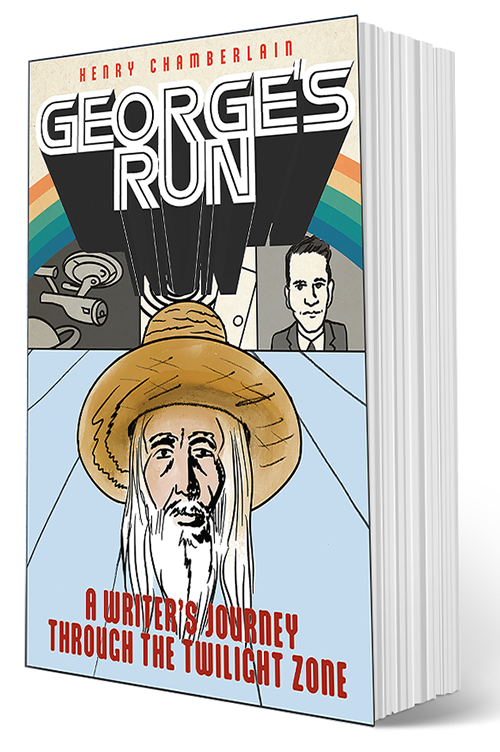
Two books you should check out: See You at San Diego and George’s Run.
See you at San Diego! I’m saying this now, since I am actually heading out to San Diego for Comic-Con, as a lot of you are also doing. I will have a table under Comics Grinder Productions in the Small Press Pavilion, Table L-05, and I welcome anyone to chat with me on what I’m about to lay out for you here. Okay, so I go with my own set of particulars regarding Comic-Con, this landmark pop culture institution. In fact, my going to Comic-Con, over the years, led to my creating a graphic biography, George’s Run, published by Rutgers University Press, a book about one of the most notable figures so inextricably linked to Comic-Con: George Clayton Johnson. I’ve written various pieces about this but I never tire about talking about it. That’s exactly what George would have advised me: Keep being a storyteller, you never give up! And so I don’t, won’t and will never give up.

Here’s the thing, there’s always someone else ready to tell another story and so, yeah, I feel obligated all the more to keep setting the record straight. Now, don’t get me wrong, I am not leading up to something unsavory. On the contrary, I just need to point out a few things. Okay, a couple of years ago, back in 2022, Fantagraphics published Mathew Klickstein’s See You at San Diego, a veritable phone book of data (480 pages) on San Diego Comic-Con. It is fueled by about a dozen or so extended interviews with some of the people, going back to the origins of Comic-Con (founded in 1970) who were, or even still are, intimately involved with Comic-Con. The interviews were then sliced and diced into various categories so that you have a collection of snippets hanging together under certain themes that the book pursues. All well and good. However, it will be a challenge for some readers to know just where to begin but I definitely welcome this amazing undertaking. It’s a lot of what amounts to a mountain of data to sift through. My point is that I did something similar by focusing on one person who, in some very significant ways, acts as a portal in my book to a vast array of things somewhat similar to what Klickstein’s book engages with. Similar, in spirit to some extent, but also very different. It’s very, very different, in fact, in the way that I seek to create clarity as well as maintain a playful and artful tone, turning it all into one free-wheeling but driven and focused narrative.

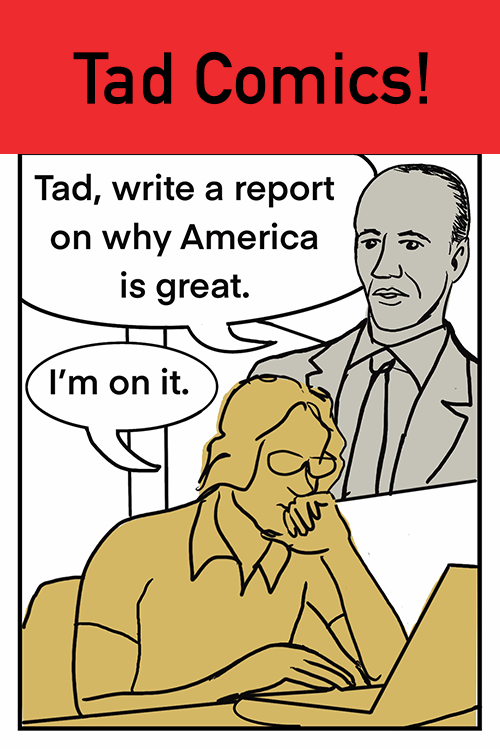
Wonderful part of book referring to George Clayton Johnson.
Is one way of tackling a subject better than another? Well, no, I would argue you want as many ways of looking at things as possible. I am simply asking for my due. See You at San Diego has gotten plenty of attention and has been celebrated rightly so. What I propose is, if you are at all interested in a dive into the origins of pop culture, then, by all means, seek out both books. Perhaps that’s the best way to put it. Heck, folks, my book is focused in such a way that compliments the more massive everything-but-the-kitchen-sink approach that Klickstein is going after by default. I would venture to say that, if you didn’t know where to look, you would miss some genuine nuggets in Klickstein’s book simply by the fact that you can’t see the forest for the trees. It’s just that kind of a book, the sort that you cozy up with and take in a bit here and there.

The reference to George Clayton Johnson is the highlight to Klickstein’s book.
But let’s follow that trail of thought. If you were not sensitive to, or any bit aware of, the whirlwind of creative talent involved in some of the most iconic pop culture, then it is inevitable that you will miss the more subtle and finer points being advanced by some of the quotes to the interviews. That said, I certainly picked up on the ferocious loyalty to Ray Bradbury and the arguments being made by some that somehow Ray Bradbury should have received more credit for helping influence the original Twilight Zone, created by Rod Serling, who, in point of fact, was already an accomplished writer going back to the early years of television’s golden age and had his own vision of what he wanted for the show. Klickstein’s book provides some casual, unsubstantiated and simply inaccurate observations regarding this subject, which, for me, are priceless and worthy of further discussion. I’m so glad to have read them but I can sift through what is correct and what is not. Basically this collection of interviews amounts to people’s opinions and recollections without any filter or fact-checking. You need to know what you’re looking for with this book.

And it’s not like Mathew Klickstein could not have interviewed George Clayton Johnson, a key figure while he was very much alive. I did a number of times. I got to know George. I think the portion of Klickstein’s book that refers to George is one of the better parts to his whole book. In fact, it is quite clear that Klickstein finds great value in including George in his book. Klickstein most certainly could have gone on to interview George but, unfortunately, he did not. He should have. It would have been easy. It would have been totally possible given that Klickstein interviews Comic-Con co-founder Richard Alf which dates this work to at least before Alf’s death in 2012. George passed away in 2015. My final interview with George was in 2014. Reaching out to George would have been completely in the spirit of what Comic-Con is all about. George was of that generation of creatives who opened their homes to people seeking answers. I was, and I still am, one of those persons seeking deeper answers.
In my book, I steadily pursue the creative process and give the reader a variety of scenes, observations and research distilled within the narrative. You get to know the charismatic, yet enigmatic, storytelling wizard who was George Clayton Johnson and, through his life’s journey, you get to know many of the other key figures: Rod Serling, Ray Bradbury, Theodore Sturgeon, Richard Matheson, William F. Nolan, Charles Beaumont, and so on. You need context, and solid storytelling, for this to make sense and I do exactly that. This is very important stuff. It’s a big deal. It’s not something to simply drop in someone’s lap. That said, raw information has its place and has an essential role to play. Just don’t ever expect that to be the only version. The more said, the better. I have plenty to say. Believe me, I will keep talking about this and that is a good thing.