
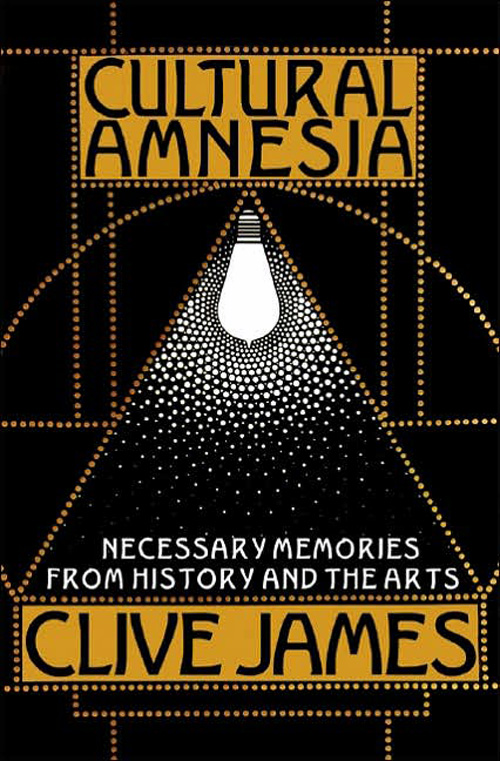
If the humanism that makes civilization civilized is to be preserved into the
new century, it will need advocates. These advocates will need a memory, and
part of that memory will need to be of an age in which they were not yet alive.
— Clive James, “Cultural Amnesia: Necessary Memories from History and the Arts.”
My friend, Roy, was telling me all about his favorite radio station, WFMT and its celebrated “The Midnight Special” program where folk and satire and oddball antics collide. It used to be more common to find eccentric shows on the radio dial. Thanks to YouTube, if you know where to go, you can still find a lot of treasures. And, of course, you can still tune in to WFMT and listen to “The Midnight Special” archives whenever you want or check the “The Midnight Special” site for a station that carries the syndicated show.
Here are just three personalities from yesteryear that Roy mentioned to me in relation to his adventures in late night radio. There are plenty more but I thought it interesting to focus on these three as a set given that I did not find them through trial and error but from a real human being. These are entertainers you would have found on the radio in the ’50s to ’60s: Flanders & Swann, Anna Russell and Tom Lehrer. What do they share in common? Well, Roy loves them and that’s really a good place to start. Given what I know about Roy and my initial sampling, all three of these acts have a wry sense of humor and love of musical whimsy.

Flanders & Swann – “The Hippopotamus Song” This is one of the songs that Flanders & Swann are best known for. You can hear a theater crowd roaring with laughter. Very cool. Very vaudevillian.

Anna Russell – “The Ring of the Nibelungs” If you like Victor Borge’s antics, then you’ll love Anna Russell. She’ll bring classical music down to Earth for you.

Tom Lehrer – “The Elements Song” This may be your lucky day, or night, if you’re new to this song. It is a major hipster find that keeps being covered by new artists.
You start to think about it, these entertainers, perhaps more obscure for some audiences, will bring to mind other entertainers from that time period, Victor Borge, The Smothers Brothers, Woody Allen, and then other entertainers up to the present, They Might Be Giants, Flight of the Conchords, Sarah Silverman. It’s all just a matter of keeping an eye out for new talent, new to you. One of the most asked questions by casual observers is a very direct and honest question, “How do you find out about all this stuff?” It’s not a question to dismiss by any means! The answer, my friend, is blowing in the wind: Just ask, search around, pan for gold, if you will. Not so long ago, one of the most respected ways of stumbling upon something cool and new was to go look in the bins at your local record shop. You know, with the passion for vinyl unabated, specialty shops are still there for you to explore.
Remember the movie, “High Fidelty,” about a record shop owner, played winningly by John Cusack, and his staff who were walking encyclopedias of pop culture? All very pre-internet. You were sort of at the mercy of the hipster geeks who seemed to have hoarded all the information. A small price to pay in retrospect. Either they took pity on you, actually liked you, or cast you out as soon as they set eyes on you.

Remember Jack Black in that movie? He was the ultimate gatekeeper of cool. If he didn’t think you could handle it, or should handle it, out you went.
Pretend Jack Black decided you were okay and recommended to you Flanders & Swann, Anna Russell and Tom Lehrer.
This is all part of a grand continuum. It’s a particular mindset: folky, lefty, offbeat. A way of life. So many interconnections. Until next time, chin up, and don’t forget the patron saint of lowkey deadpan humor…

Mr. Bob Newhart. Don’t ever forget Bob.











Cleveland Amory and the Dawn of Pop Culture
There was Andy Warhol. And there was Marshall McLuhan. But, also leading the way at the dawn of contemporary pop culture, there was Cleveland Amory. This post is going to be personal. It’s going to be one that I highlight and refer back to and I hope might inspire you. Amory’s was a remarkable life. He was gifted with something any blogger would appreciate: a way with words. He was such a keen observer of his times and what lay ahead. When I was describing my blog to a friend awhile ago, I mentioned Amory. It made sense in that instance although I’m not sure my friend caught the significance. It felt like an epiphany to me: I hadn’t thought of Amory in years, and now, it was clear that I should look back to what I knew about him and learn more. I think, as I recall, my friend nodded, as we continued our conversation. For all I know, he had just nodded, did not actually know who Cleveland Amory was! And there lies the purpose of this post. I want you to know, or rediscover, Cleveland Amory and see why he’s such a big deal.
In the beginning, and that would be at the end of World War II and with the rise of American prosperity, there was pop culture and it was good–but it had a ways to go in defining itself. Cleveland Amory arrived at the party just as it started. Fresh out of college, Harvard no less, Amory wrote his first bestseller, “The Proper Bostonians,” in 1947, which chronicled the world of old families and their old money. Amory was describing a world that held to the highest esteem those that fit into what was then known to be “high society.” Amory, an honest social observer, was not hesitant about questioning the importance or relevance of the “blue bloods.” He was one of them. He was also quick to note their decline and the emergence of a new order, celebrity culture. And with each new bit of insight, Amory took it all with a grain of salt. He was not enamoured by any of it. He was amused by it which makes him such a healthy role model for those who keep up with and write about pop culture. The man had his priorities straight. In the end, what he really found compelling was the rights of animals. He founded The Fund For Animals, which would go on to merge with The Humane Society. Instead of only focusing on social commentary, he was able to parlay his formidable connections and skills to help animals in a variety of ways from harm by hunters, questionable practices in laboratories, exploitation and slaughter.
A book that opened my eyes to the multi-faceted Mr. Amory is the impressive biography written by Marilyn Greenwald, Cleveland Amory: Media Curmudgeon and Animal Rights Crusader. That book has gotten me to thinking about spreading the word about Cleveland Amory. The comic strip below is a taste of what I’m working on. Here is a moment of truth for Amory. He is enjoying one of his peaks of popularity as a regular commentator on “The Today Show.” He is already on the board of directors of The Humane Society and his animal activism is growing. With his platform to say whatever he wished, with no prior approval needed on his commentary, it was just a matter of time before Mr. Amory rocked the medium he was so much a part of on behalf of animals…
Suffice it to say, there are no more annual “Bunny Bops.” It was also the end of Amory’s free rein at “The Today Show.” His scripts would be tightly supervised from then on. His days at NBC were no longer so golden. But that’s when a new door opened at “TV Guide.” My interest in Cleveland Amory goes back to childhood when I read his reviews in “TV Guide” towards the end of his time there as chief critic. I’m just old enough to remember finding him to be a really cool dude in an upper crust sort of way. He was clearly someone of refined sensibilities who had taken upon himself the burden of making sense of the new untested mass medium. He wrote his “TV Guide” columns from the 1960s to 1970s, just as TV was coming into its own. It’s no mistake that “YouTube” takes its logo directly from “TV Guide.” Television and “TV Guide” used to go hand in hand, both leading each other into uncharted waters. Even “Entertainment Weekly,” today’s influential media weekly, can not truly compare with the impact of “TV Guide” in its heyday, with its analysis and support of television. I was just a little kid back then but I was already hip to what “TV Guide” was doing and the one person who most personified the effort to make sense of television was Cleveland Amory. Thankfully, Amory did far more than make sense out of television. He helped us all make more sense of how to live a worthwhile life.
Share this:
Like this:
9 Comments
Filed under Cleveland Amory, Commentary, Culture, pop culture
Tagged as Entertainment, Pop Culture