

A love of Hip Hop expressed in Piskor’s beloved comics medium.
I recognized many years back, from it being serialized on Boing Boing, that Hip Hop Family Tree was something very significant. And, the more I loosely followed Ed Piskor’s career, I recognized the deep dive passion he had for certain subjects, most importantly, classic comic book figures. In time, Piskor would team up with Marvel Comics, along with Jim Rugg and Tom Scioli, to each create their own takes on Marvel legends with the Grand Design series. Piskor did his take on X-Men; Rugg did his take on The Hulk; Scioli did his take on The Fantastic Four. Quite honestly, the whole Grand Design series came out during one of my draw downs on superheros. It’s only now, in retrospect, that I can turn to these titles with the best sense of appreciation. And so that brings me back to Hip Hop Family Tree. At a time when the comics community is in tumult over the death of Ed Piskor, it’s with a heavy heart that a reader can go back and experience what is, undoubtedly, Piskor’s highest achievement.

Hip Hop Family Tree: The Omnibus
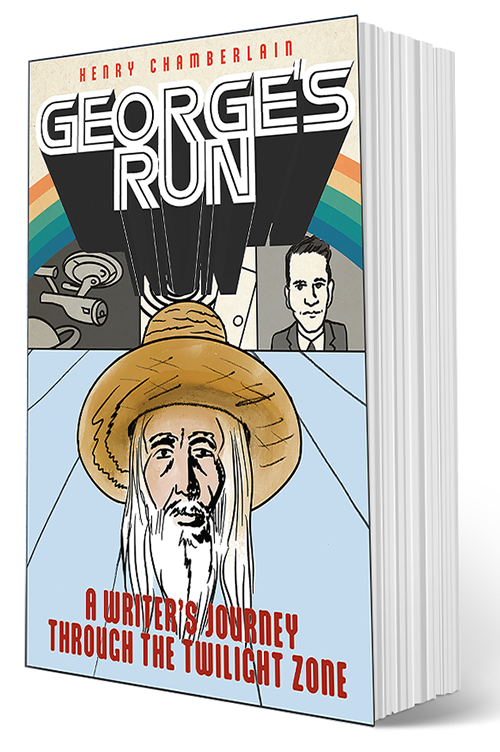
Hip Hop Family Tree: The Omnibus, published by Fantagraphics, came out only last year. It is easily the best investment you’ll make in the appreciation of Hip Hop, and the comics medium. For me, I am a cartoonist that gravitates towards projects that have a lot of moving parts and require a way in. I invested what amounted to a decade in carving an accessible way into the origins of some of the most celebrated landmark television, the original Twilight Zone and Star Trek. That project, George’s Run, is a prime example of my passion at play. So, yeah, I recognize that same deep dive passion as I read Ed Piskor on a quest to make the Byzantine world of Hip Hop accessible to as wide an audience as possible. That is clearly this work’s driving purpose, an evangelist’s zeal to reach the masses, which ultimately anoints Piskor with the cred, as a white dude, to tell a Black story. It just makes sense. Piskor loved Hip Hop so much that he knew it like the back of his hand and was compelled to express his passion within a massive work in comics, a medium with some of the greatest demands on time and effort as any other art form.

As the above excerpt demonstrates in a couple of panels, Piskor honed his cartoonist skills in the pursuit of clarity. Here, his purpose is to concisely convey a distinction between various notable Hip Hop artists and their place in history. If only DJ Hollywood wouldn’t have just performed in expensive downtown nightclubs, maybe his influence would have been much broader. Suffice it to say, it takes a long time to get any good as a cartoonist and fine tune every aspect of the art form. There is no guarantee that your efforts will be rewarded. And, most important, even if you do make it, the worldly rewards will pale in comparison to the soulful rewards.

Jim Rugg, Ed Piskor and Tom Scioli on Cartoonist Kayfabe.
Right now, you’re seeing an outpouring of grief, fond recollection, and uncanny rediscovery of Cartoonist Kayfabe, the comics podcast on YouTube, hosted by Ed Piskor and Jim Rugg, that is now the stuff of legend. It became a lightning rod of highly impassioned discussion on the comics medium, primarily superhero comics, along with as many related topics as possible. But, as Piskor would tell you himself, the most important thing is to go to the source, and read more comics.

Ed Piskor’s death is not something that can be processed to the point where the pain has subsided any sooner than its natural course will take. Piskor’s works will continue to shine, evolve in the reader’s mind and come into focus for generations to come.





Damn Henry. I just read your article about his passing. The internet sucks sometimes.
Pingback: Imprinted Image: Enjoying the Weather the week of April 12 – Divining Comics