Monthly Archives: May 2012

HELL ON WHEELS Season One Review

“HELL ON WHEELS” is a wild ride into the Wild West packed with surprises. It holds its own among the trend in high quality American television. Each character is gradually stripped of its armor and must bare their souls. Given the rough terrain, and the harsh reality of life, none of these people are going to reveal their secrets easily which is part of the fun of this show. Once the dust settles, we see who was meant to survive and move things forward. Two of the main players to prove their might are a mysterious outlaw, Cullen Bohannon (Anson Mount) and a former slave, Elam Ferguson (Common). With a hint of “Huckleberry Finn,” we have these two characters thrown together by fate with every reason to distrust the other but somehow finding reasons to do just the opposite. They don’t come right out and say much about it but these two need each other.

I’ve been thinking a lot about “Huckleberry Finn” lately. You can read my recent essay here. “Hell On Wheels” embraces that novel’s spirit in its unabashed look at America’s struggle to find itself. The story is set in 1865, immediately after the American Civil War. Much blood has been spilled and much more will be shed. Post-Civil War America is an open wound with great need of healing. The hope and dream is to mend America with the construction of the first transcontinental railroad but that proves, time and again, easier said than done. Such an undertaking is, after all, “hell on wheels,” which is also the name of the company town that sets camp at each work site along the way of construction of the Union Pacific leg of the project which is heading west to ultimately meet with the Central Pacific heading east.

Created by the brothers Joe and Tony Gayton, this series is larger-than-life and has a similar authentic vibe like another AMC hit, “The Walking Dead.” It’s hyperreal quality, in no small part due to its highend production, will blow you away. You might even expect a zombie to jump out but “Hell On Wheels” already has enough of its own gore and mayhem to deal with. It also has the magic ingredients of a stellar cast and excellent writing.

So what is “Hell On Wheels” all about? It’s about greed, corruption, lust, sex, revenge, violence, justice, history, race and a whole lot more. This is America at a turning point nearing breaking point. African Americans are no longer slaves but they don’t feel much different except for getting paid for their hard labor. It is the beginning of the end for Native American claims to their land and many will die in the process. And it’s a time when a former Confederate soldier by the name of Cullen Bohannon can just about get away with exacting revenge for the death of his wife by going on a demented killing spree. Like Clint Eastwood before him, Anson Mount has found a sweet spot where the audience will root for the misunderstood killer who really isn’t as bad as he may seem. Truth be told, this is a pretty honorable guy. And he’s capable enough to turn his psychosis into a carrer opportunity, more than once. He joins the “Hell On Wheels” crew with relative ease but he only does this because the crew leader is next on his list of his wife’s killers that he must now kill. All pretty grim except that the guy has a point and he’s got a certain charisma about him.

Meanwhile, and there are a number of meanwhiles in this series, there is Thomas Durant (Colm Meaney) who is the mastermind behind this whole railroad venture. He must grease the right palms in Congress and manipulate, coerce and decieve all in the right measure to assure that his Union Pacific will maintain a pipeline of nearly unlimited government cash to keep things rolling. It doesn’t help matters, or maybe it does, that he must contend with an idealist beauty by the name of Lily Bell (Dominique McElligott). She holds the key, in more ways than one, to keeping Durant afloat.

You mention one character and you open up a whole new world. For instance, who is Lily Bell? She is the wife of the master surveyor who was killed during a raid by the natives. She got shot by an arrow in the hand and, by sheer force of will, was able to get the arrow out and thrust it into her husband’s killer’s throat. She may have an English aristocratic background but she keeps proving to be a tough enough. Then there’s “The Swede,” (Christopher Heyerdahl) an amoral accountant turned henchman. It’s this guy who is forever on the heels of Bohannon. He also gives the whole town a hard time by extorting money from all the vendors and they try to put an end to it by literally tarring and feathering him. There are numerous colorful and defining moments like this in the series.

The characters, to varying degrees, continue to intrigue all the way to the end of the season. There are three romances on a slow simmer. We’ve had time to feel sorry for Durant, the ruthless railroad tycoon while the town preacher proves to be far more complicated than first expected. There’s even a subplot about a young man caught between the world of the settlers and his native land.  And, in all this time, Bohannon has yet to kiss Lily Bell. At least that’s what we think should happen. The style of the show has been to paint in broad cinematic strokes while striving for storytelling substance. There’s been a bit of hit or miss here but, overall, the show is engaging.

The DVD and Blu-ray for the complete Season One of “Hell on Wheels” has just come out and this show has proven to be marathon viewing worthy. Now is the time to revisit it or dive in and get caught up before the second season on AMC later this year.

Leave a comment

Filed under AMC, Hell On Wheels, Reviews, Television

ANGEL AND FAITH #10 Review

It is Angel’s desire and duty to bring back from the dead, Rupert Giles, the Watcher. It hangs over everything Angel and Faith do. The new arc, “Women of a Certain Age,” introduces us to two sisters: one who can help; and one who can hinder the process!

Series writer Christos Gage teams up with guest artist Chris Samnee to create some work with a smilar noir vibe as in their colloboration in Vertigo’s “Area 10.” This creative team is wonderful in tackling this opening story which has its fair share of vintage glamour revolving around the two mysterious young women that have all but crash landed into Angel and Faith’s lives.

Here is Gage and Samnee working together on “Area 10.”

Now, compare that with their work in this issue of “Angel and Faith.”

Samnee is a master with light and dark. We see it from the first page on as he provides perfectly places spots of black where needed. He introduces us to the two mystery girls byway of two dark shadows with fresh bright red polish just applied to their nails. Ah, that’s the mood we’re looking for as this story is not exactly crime fiction. It’s more ’60s mod meets young romance comics. The two girls in questions are really Giles’s great aunts, Lavinia, the redhead, and Sophronia, the blonde. They’re a couple of hotties although each is well over a hundred-years-old. What’s their secret? Any chance they’ve had to use magic, it’s all gone into keeping their youthful glow. This obsession with youth has made them two shallow old crones who simply look fabulous. Oh, and they happen to owe an array of monsters and ghouls for providing magical fixes along the way to avoid those crow’s feet and the like. Angel and Faith spend a good long while defeating various baddies before they can get some answers from the girls.

What Lavinia and Sophronia provide is a look back to London in the ’60s and a particular tale involving Rupert Giles as a boy. This story is key to what follows so I won’t go too much into it except to say that it is connected to Angel’s quest to bring Giles back. It is also jolly good fun. It is a family affair involving the supernatural and might bring to mind, “Bell, Book and Candle” or episodes of “Bewitched.” All in a good way, mind you. The upshot to this story is pretty big. And, just as everyone is ready to turn in to bed, we get a last minute surprise guest that is sure to add much to the mix. All in all, a very colorful and enjoyable opening chapter.

Issue 10 is out May 30. Visit Dark Horse Comics.

1 Comment

Filed under Angel & Faith, Comics, Dark Horse Comics, Reviews

HUCKLEBERRY FINN Reeks Of The Past In A Most Glorious Way

“Adventures of Huckleberry Finn” reeks of the past. It reeked of the past when it was first published in America in 1885. And it sure as hell reeks of the past today — but in a most glorious way. Mark Twain knew what we he was doing. He was fully engaged in the American scene, warts, bruises, gunshots and all. As I carry around an eReader with me, I am reading more of the books I’ve been meaning to read. This one has been high on my list. Today, being Memorial Day, seems a particularly appropriate time to consider this classic, although any day of the week will do as well.

Upon my reading, I come away with the conclusion that, despite the controversy, Mark Twain’s novel is indeed a landmark work of American fiction and, I’ll go one better, is essential. At this point, it’s hard to imagine it fading into obscurity and yet there are those who continue to try to see that happen. The arguement is that we, as a nation, have moved beyond such issues of race. But that’s really nothing more than an attempt to sweep things under the rug and isn’t the American rug already pretty lumpy from being swept under?

The biggest problem of all for “Huckleberry Finn” is the fact that it is a work of art. You see, a true work of art will always confound the literal-minded. As in life, and as in art, there are no neatly tied up resolutions. No, instead, ambiguity presides. The main character, Huck Finn, does not behave in a systematically heroic fashion. What he does is behave like a boy with a mind, heart and soul of his own. He makes numerous choices, not always the right ones. And, arguably, the other main character, Jim, the runaway slave who Huck has embarked upon a journey with, is not perfect either. Both are products of their time, America circa 1840, and both are individuals in search of freedom as they know it. Twain, the keen social observer, set up the perfect vehicle from which to comment on American life. He knew as well as anyone that the end of the American Civil War had not led to the freedom that African Americans had been promised. What it had led to was the dark era of Jim Crow, nearly a century of systematic racial discrimination from 1876 to 1965.

Mark Twain

Twain maintains an impressive balancing act throughout the novel. The story is told by a thirteen-year-old and yet manages to bring about older insights. It is a story very much of its time, using language of its time, while still transcending it. And he adroitly shifts from broad humor to more poetic passages. There are three main parts to the story. There is the most poignant first part where we find Huck at the hands of his abusive father and his subsequent dreamlike escape on a raft with Jim. Then, after a number of mishaps, we settle into a long burlesque section where Jim and Huck are at the mercy of two con artists. And, finally, the last part finds Huck reunited with Tom Sawyer in a surreal episode where they appear to make an utter mockery of Jim’s plight as a runaway slave complete with torturing him with rats, spiders, snakes and a series of humiliations. This is the part that makes Hemingway have to add a disclaimer to his decree that all American fiction begins with “Huck Finn.” He concludes that the last twelve chapters are not worth a damn — which is rather meaningless. The fact is, taken as a whole, the novel does a fine job of revealing a nation struggling with its own dysfunction.

If anyone was expecting Tom Sawyer and Huckleberry Finn to have a perfect epiphany and, without hesitation or distraction, welcome Jim to his rightful place among humanity, Twain is there to say the reader has another thing coming. If a nation can hardly come to grips with what it has wrought, don’t expect two boys to figure it out. What they will do is mirror their own environment. And, with any luck, maybe they will rise above it because they should before too long. That is Twain’s hope for the characters, for his country, and for his readers. In time, with any luck, maybe we will all rise above what has been wrought because we should before too long.

The fact is that the building of a nation is, and always will be, a wild and wooly affair. There are things that can never be lived down and yet we must carry on. We must carry on because we have no choice but to do so. But to forget, no, that is taking things too far. Just as Twain will not let the reader off the hook when it comes to how two boys will behave, he is not going to make it comfortable regarding how a nation behaves. It should be as clear as day that Huck’s beloved friend, Jim, is not a “nigger,” in any sense of that word and yet Twain uses the term repeatedly as the characters in the book refer to him and to any African American. The word is used by the high and the low, from the most ignorant yokel to the country doctor. Huck uses it matter-of-factly without giving it a second thought. And that’s a huge point in the book. The word stings, it hurts and humiliates. But, if all the grown-ups are using it, then why should Huck question it, right? But, despite the predominant feelings of the time, Huck does question Jim’s state as a slave.

The controversy rages on about whether or not to teach this book in high school. To that problem, I suggest another way of looking at it. What if no one had been around to capture on video the beating of Rodney King? Or any number of acts that have occurred since then? We should think of “Huckleberry Finn,” in one sense, as a master recording of those sort of things, the things we wish would just go away or had just never happened. Instead of attempting to ban Mr. Twain’s book, we should be praising Mr. Twain. For those who think we’re better off with easy answers and forgetting the past, “Huckleberry Finn” is just the sort of book you should consider. As much as this classic is speaking to the past, like any excellent work of art, it clearly speaks to the present and the future.

Leave a comment

Filed under Books, Fiction, Huckleberry Finn, Literature, Mark Twain, Reviews

PAC-MAN’s Birthday — Happy 32!

It was 32 years ago, that Pac-Man was born. According to PC Mag, Pac-Man has a big day. But can a video game have an exact b-day? Well, I looked it up on Wikipedia and yeah, the game was released on May 22, 1980: “…an arcade game developed by Namco and licensed for distribution in the United States by Midway, first released in Japan on May 22, 1980.”

From 1980 onward, Pac-Man has given us all some wonderful entertainment. It ruled the ’80s and, in some arcades, it never left. It was, and is, an honest and smooth game that leaves you feeling better for having played it.

Leave a comment

Filed under Games, Pac-Man, pop culture

HYDE PARK ON HUDSON: Bill Murray as FDR

“HYDE PARK ON HUDSON” looks quite good. Bill Murray as FDR? Yes, it works fabulously. It takes a great deal of confidence and talent for Mr. Murray to pull it off given he doesn’t look at all like the 32nd president of the United States. Of course, it’s not an impersonation but an interpretation which is always much more captivating. Well, thank goodness for Mr. Murray’s good taste and sense of purpose. He would not be swayed by  the pleading from Dan  Aykroyd to co-star in “Ghostbusters 3” and we’re all the better for it. “Hyde Park on Hudson” comes out December 7, 2012.

A synopsis:

Producer/director Roger Michell teams with screenwriter Richard Nelson to adapt Nelson’s BBC radio play chronicling the extramarital affair between President Franklin Delano Roosevelt (Bill Murray) and his distant cousin, Daisy (Laura Linney.) The affair comes to light during a royal visit from the King and Queen of England (Samuel West and Olivia Colman) to the Roosevelt’s upstate New York home in Hyde Park. As war engulfs Europe and the king seeks the support of the American president, President Roosevelt struggles to balance his domestic affairs with his international obligations as Commander-in-chief.

Leave a comment

Filed under Bill Murray, movies

SEATTLE POST-MAY DAY: Niketown vs. Wells Fargo

Niketown, Seattle, after May Day

Niketown, Seattle, back in business, not a scratch, a week later.

The May Day protests wreaked havoc in Seattle on May 1. Looking on my calendar, today, May 18, it is Engandered Species Day. That day, fortunately, does not inspire a rampage. So, let’s document this: It is May 18, 2012, over two weeks after May Day, and Wells Fargo remains looking shabby after it got its windows bashed in. It sustained less damage than Niketown but it has yet to pull itself together. Just an observation. Make of it what you will. I’m not sure if a statement is being made here or not on the part of Wells Fargo.

Wells Fargo, Seattle, after May Day.

Wells Fargo, Seattle, over two weeks later.

Leave a comment

Filed under Current Events, May Day, news, politics, pop culture, Seattle

Strange Art: Chuck’s Place, Thiensville, WI

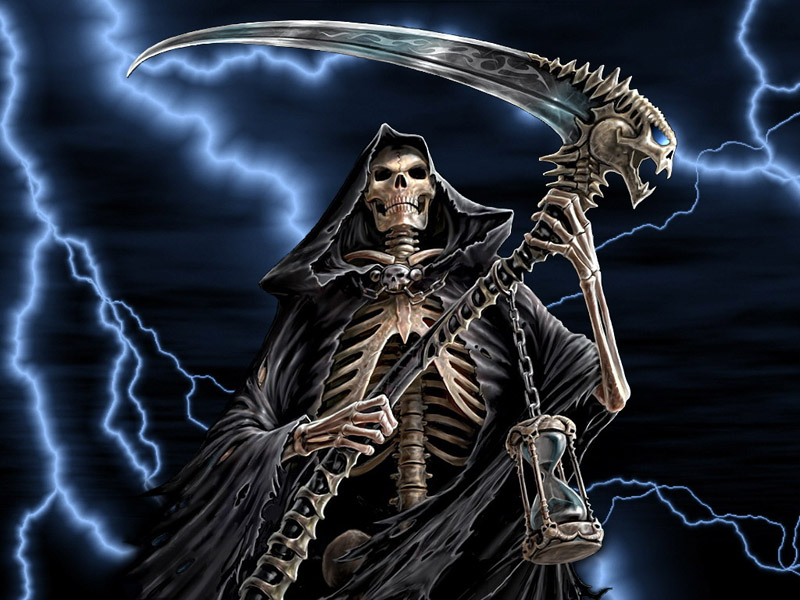
The story about a guy who took extreme advantage of a local restaurant’s “all-you-can-eat” offer, is priceless. It turns out that Bill Wisth has been giving Chuck’s Place a hard time for many years! Life is too short but maybe that’s the way it goes in Thiensville, Wisconsin. So, pardon me, but I couldn’t help but look up the restaurant’s website. Everything looked good and tasty until I entered the photo gallery! I’m just not so sure The Grim Reaper has any place in a restaurant. But maybe this restaurant has bigger fish to fry with keeping Bill Wisth at bay.

Leave a comment

Filed under pop culture

SQUIDS from The Game Bakers

We’re always up for a new game, aren’t we? And we like our games to have style, don’t we? Here is news about “Squids,” something that should fit the bill from the Paris studio of The Game Bakers.

Press release follows:

Continue reading

Leave a comment

Filed under Games

Irving Penn’s “After Dinner Games”

Ah, the vanitas, a favorite theme for artists, where you have a still life with a strong connection to the ephemeral quality of life. Well, all still lifes carry that theme but some have it more than others–and Irving Penn had a master’s touch for such things.

For those of you who can afford it, here is an opportunity to own a rare early print of Penn’s work, “After Dinner Games, New York (1947).” It is quite satisfying, isn’t it? There are a number of games going on here and the end appears to be bittersweet.

From the press release:

I thought you might like to know that an extremely rare early print by Irving Penn is currently available on artnet Auctions. Rarely seen at auction, After Dinner Games, New York (1947) is only available until Tuesday, May 22, at 10:45 a.m. (EST).

This color photograph—one of an edition limited to 13 dye transfer prints of the  image made between 1959 and 1960—employs all the stylistic and formal devices that characterize Penn’s work. As is typical of his still lifes, the scene is composed of carefully, yet casually arranged food and found objects, which tell their own story through their physical and metaphorical autonomy. Like a Baroque vanitas, this work is laden with symbols that remind us of the transience of life; it says that we are all players in the game of life, an unpredictable game of risk and chance.

4 Comments

Filed under Art, Irving Penn

THE RUSSIAN TIANANMEN SQUARE: AND THEN IT BECAME NEWS

On May 7, 2012, Russians protested Vladimir Putin’s inauguration as president in Moscow. Vladimir Putin has been in power since 1999. There was that stretch of time with Dmitry Medvedev as “president” while Putin was “prime minister” and now we’re back to Putin, all Putin. What’s sad is that his coronation, or whatever you want to call it, would not have caught the world’s attention, in quite the same way, had it not been for Julia Ioffe’s photo taken with her iPhone of a little kid appearing to confront a Russian anti-riot squad.

Leave a comment

Filed under Current Events, Media, news