Tag Archives: New York City

Peter Kuper interview: On Comics and INSECTOPOLIS

Peter Kuper is a regular contributor to The New Yorker, The New York Times, The Nation and MAD magazine where he has written and illustrated SPY vs. SPY every issue since 1997. Kuper is also the co-founder and editor of World War 3 Illustrated, a political graphics magazine that has given a forum to political artists for over 40 years. Well, that gives you some sense of his impressive career, one that finds his latest graphic narrative a most notable addition. Insectopolis, published by W.W. Norton, is about the insect world and how it interacts with us humans and is truly one of those great all-ages works that will equally appeal to kids and adults. Insectopolis makes you all the more aware of your existence and how it is shared with a multitude of other beings, some with wings, antennae or multiple eyes and legs.

Insectopolis is published by W.W. Norton. The publication date is May 13, 2025 and is available for pre-order. Visit W.W. Norton here.

All great works of graphic narrative always involve a process with numerous factors in play: the research, the timing, the pacing, the work environment, and so on. It was an amazing and fascinating conversation I had with Peter Kuper. In terms of getting a window into the creative process, Kuper shares a multitude of observations on how his new book was created, and under some very unusual circumstances. As he explained, it all began when he was awarded a fellowship with The New York Public Library. Oh, it did just so happen to coincide with the Covid pandemic. This perfect storm or, let’s say, most unusual set of circumstances provided Kuper with quite a unique vantage point. Suddenly, here he was working on his new book with a world-class library practically all to himself.

“Roses?”

The Rose Room!

Suddenly, the famous Rose Room, a favorite of library visitors and usually filled with hushed activity, was empty and there for Kuper, and Kuper alone, to draw inspiration from. Well, he must have been in heaven, a heaven filled with butterflies, beetles, and even cockroaches! All insects are welcome here!

Under the library!

So, Kuper set about making the most of this situation he was in, where time had seemed to stand still. He was able to linger longer than ever before and explore places that normally would have gone unnoticed, like the library’s vast underground corridor. And, bit by bit, a book being created during a pandemic led to a book set in a post-apocalyptic future, post-human, where insects must assess the relationship between humans and insects. Fortunately for us, we can read the results. Without a doubt, this is a book that is a must-read for any human seeking a better connection with the vast array of potential insect friends.

A paperback talisman.

A little over ten years ago, Kuper published a wonderful graphic novel, Ruins, which follows two parallel stories: one of a troubled relationship between a husband and wife; and the other, the struggles of migration for a Monarch butterfly. Well, there are plenty of Monarch butterflies in Kuper’s latest book. Is there a connection? Oh, sure, but the deepest one goes back to a four-year-old Peter Kuper. As he states, it was picking up a paperback on insects at such an early stage that sparked a lifelong interest in insects. Peter even held up a copy of that very same beloved paperback. He keeps it handy, as a friendly reminder.

And then a gnat flew by.

I must say, there was something in the air on the day of our interview. This has never ever happened before to me but, just as I was reciting my introductory remarks, a gnat emerged out of nowhere and darted across the screen. You can see it for yourself. Was that a sign? Yes, of it was! That little gnat needed to be known!

Ants as Horror Movie Monsters.

As you will see in the video, our conversation is easygoing as well as at a steady pace. There are a lot of dots to connect. I did my best to imagine, beforehand, what it must have been like for Peter to find himself gathering one compelling set of facts after another and seeing how this element might fit in with another. For example, there is a good bit of unpacking on how insects have been demonized by humans. Dragonflies were once deemed spawned from hell itself. And ants get grilled over the coals and become monsters for Hollywood’s answer to the atomic bomb and the threat of nuclear war. But it’s humans who ultimately cause the most destruction to insects, the planet and to themselves.

One favorite moment for me is when Peter and I discuss what a cicada and a tree might chat about over the course of many years. That happened after we had discussed the various shifts in tone and style found in the book. The cicada sequence proves to be a refreshing shift from the previous sequence of pages–and a great example of how Kuper deftly balances the pace of things.

I greatly encourage you to view the video and, while you’re at it, give it a Comment and Like. I’m often good at getting people to stop by for a brief view and now I’m doing what I can to have more and more folks take it a step further and engage with my YouTube channel. Your engagement helps to secure more videos in the future and we all want to see me continue to do that, don’t we? Ah, well, that’s my pitch.

That said, by all means, seek this book out and, if you’re in New York City, be sure to catch a show of original art from the book at the Society of Illustrators. Details on the show follow:

Society of Illustrators Presents Insectopolis: A Natural History

Insectopolis: A Natural History will be on view at the Society of Illustrators from May 14 – September 20, 2025 in the second floor gallery. It will feature original artworks by Peter Kuper.

Exhibit Details:

On display in the 2nd Floor Gallery.

Join us on Thursday, May 22, from 5–9pm for a Museum Mixer celebrating the opening of Insectopolis: A Natural History.

The evening will kick off with a special pre-tour at 4pm & 4:30pm, led by artist Peter Kuper, with guest entomologist Louis Sorkin — who will be bringing live insects for visitors to observe and interact with up close! Space for the pre-tour is limited, so be sure to RSVP.

2 Comments

Filed under Book Reviews, Comics, Interviews

Paul Auster’s The New York Trilogy comics review

Paul Auster’s The New York Trilogy: The Graphic Adaptation. By Paul Karasik. Lorenzo Mattotti. David Mazzucchelli. 400 pp. New York: Pantheon.  2025. $35.

From City of Glass.

In the case of world-renown writer Paul Auster (1947-2024), one preternatural talent deserves another. That is what happened when his post-modern noir novella, City of Glass was adapted into a graphic novel and published in 1994. The original prose novel is part of a series, The New York Trilogy: published sequentially as City of Glass (1985), Ghosts (1986) and The Locked Room (1986).

Neon Lit edition, 1994.

When the graphic novel of City of Glass came out in 1994, by Avon imprint, Neon Lit, the comics adaptation by Paul Karasik and David Mazzucchelli became a word-of-mouth sensation. It was many years in the making with many years leading up to it. A lot of the leading-up-work involved comics artist Art Spiegelman (Maus, 1986) and his attempts to get out in front of the emerging “graphic novel” market. Surely there was a way for serious prose novelists to be involved with serious graphic novels. As series designer for Neon Lit, Spiegelman fought the good fight. Fast forward to 2025, we are collectively more than ready for “serious graphic novels,” and now we have a new book that includes the original City of Glass comics adaptation and completes the trilogy with new adaptations of the other two books. That is quite an undertaking to say the least and the results are impressive.

Excerpt from City of Glass.

Any really great comics adaptation will not attempt to directly compete with the source material but bring in something new, something that only the comics medium can offer. What’s fascinating in this case is that Paul Karasik, the mastermind behind this work, not only found a distinctive comics path from the Auster source material back when he was art director and David Mazzucchelli was the comics artist. But then, decades later, Karasik would have to strike a chord, but not be overwhelmed by his previous accomplishment, the comics adaptation of City of Glass, such an iconic landmark work. Is that even possible? Yes, absolutely. Paul Karasik did it again as art director to Lorenzo Mattotti’s comics artist; and, ultimately, when in charge of his  own adaptation of the final story.

From City of Glass.

You can enjoy a comics adaptation on its own. However, keep in mind, that if you read the original work, you get that much more out of the experience. At least, you should know a few things. We’re dealing here with a funhouse of ideas about storytelling: narrators and unreliable narrators; the role of a story; the very nature of words. These comics are adapting the work of Paul Auster, a masterful writer with a keen talent and temperament for Magical Realism and Post-Modern experimentation. Let’s first take a look back at the City of Glass comics adaptation and how it tapped into this peculiar and surreal terrain.

Post-Modern Paul Auster: The author inside his own novel.

City of Glass, the comics version, jumps right out of the gate. There are so many ideas bubbling around and perhaps the most compelling is the existential quandary of having to be inside one’s head, needing and desiring to be there, while also wishing to run as far away from one’s self as possible. And how does one fully express this most bizarre, contradictory and human condition? Visual metaphors will get us part of the way but then it’s up to the comics artist to take it further which certainly happens in all three of these stories. Just keep in mind that all of this is an exercise in subverting the classic detective story. These are mysteries that go well beyond mysteries, asking more questions than ever providing answers.

Page from City of Glass.

There’s a scene in City of Glass that you can argue is quintessential to the story’s concerns: it is in the second chapter and is condensed into a set of pages in the comics version that evoke the struggle to tell any story, to form any thought. The character is a young man who has been abused and can barely articulate anything. The tails to the word balloons he emits are jabbed down his throat, powerfully evoking his struggles. Those same word balloon tails navigate their way through human history and humanity’s collective struggle to communicate.

From Ghosts.

That same energy, with a distinctive twist, can be found in the next story, Ghosts. Lorenzo Mattotti leans towards his strengths as an illustrator and painter of full-throated dramatic images. So, the rhythm tends to be one of powerful image balanced with powerful prose, back and forth, at an intoxicating pace. So, yeah, it works. I mean, where does one go after David Mazzucchelli? Karasik goes with Mattotti to tap into all the dark urban angst in a thoroughly different way.

From The Locked Room.

And, finally, we come to the last story, The Locked Room. Paul Karasik has placed himself in the very best company and he delivers. Known for his light pencil work (The New Yorker, The New York Times), Karasik’s more subdued approach can still cut to the quick in depicting any given character’s foibles. One particularly poignant moment has the main character feeling rather smothered by his flirtatious hostess and finds himself surrounded by all the word balloons she creates from her excessive chatter. It’s enough for him to nearly float away on all the hot air packed away.

Post-Modern Diner: as gritty as a Modern Diner.

The New York Trilogy is many things, none the least of which is a highly stimulating look at who we are and/or who we claim to be. This new comics adaptation of all three stories is definitely the big treat of the year for anyone who loves great fiction and great comics. Comics scholar Bill Kartalopoulos once said at a symposium many years ago: “City of Glass more than most of the graphic novels that have been published over the last dozen years or so is a book that makes all the right choices.” Well, that can certainly be said of this remarkable collection.

2 Comments

Filed under Comics, Graphic Novel Reviews

This Beautiful Ridiculous City by Kay Sohini book review

This Beautiful Ridiculous City. Kay Sohini. Ten Speed Press. 2025. 128pp. $24.99.

If you are a creative person, you have most likely fallen in love with New York City and perhaps that feeling has stayed with you. In a city with an endless amount of stories to tell, it seems that everyone who dares to dream of an artistic life, and has the means or sheer will to do so, has taken a bite out of the Big Apple. Kay Sohini, a talented artist-writer, presents her take on her own love affair with NYC in her debut graphic memoir, This Beautiful Ridiculous City. The title says it all. This is the city that never sleeps , an amazing amalgam of high and low culture along with manic highs and lows. Everyone has their story to tell about this quintessential metropolis and Sohini provides quite a distinctive visual narrative.

Sohini has a way of inviting the reader into her world that is sincere and authentic. I felt quite at home as Sohini leads the way, setting the tone by sharing about her love for New York: the sights and sounds; the artists and writers; the euphoric feeling of being there. This introduction dovetails into a look back at Sohini’s childhood and upbringing in the suburbs of Calcutta: a slower pace; a smaller scene. I think therein lies the conflict: a need by Sohini to seek greener pastures while also coming to terms with and honoring her family back home once she does leave for New York. It won’t be a spoiler to say that Sohini does ultimately find a balance. What transpires within this delightful book is an utterly genuine coming-of-age story with all the insights and epiphanies any reader could want.

This book is filled with page after page of essential information for anyone interested in visiting New York, or just curious about what makes a great city tick. This is also a compelling story about one young person’s journey of self-discovery. And there are wonderful extended moments when it all seems to coalesce. One such scene is a two-page spread that well represents the soul of the book: a mother and daughter conversation about food. Sohini explains that she was kept out of the kitchen as a child. Now, as an adult, she hungers for every recipe detail she can get from her mother.

Another two-page spread provides a delightful insider guide to the best kept secrets on where to find amazing Indian food but you’ll have to leave Manhattan to find it. In the end, life in the big city is made up of a vast array of struggles, failures and sublime victories. Who is to say just how great a victory a favorite restaurant can provide on any given day? Sohini will help you appreciate New York City with her crisp and thoughtful writing and drawing. This graphic memoir is truly a victory.

3 Comments

Filed under Comics, Comics Reviews, Graphic Memoir

Eric Drooker: NAKED CITY interview

Eric Drooker is that consummate artist, the ideal artist that young people generally aspire to be. Take a look at the short film below to gain some perspective on Mr. Drooker. This is a short film he did in New York in 1981, a tumultuous time with undeniable relevance to today; a timeless film. We will always need to remind ourselves we have nothing to fear but fear itself. I had the honor of putting together this studio visit with the artist. We discuss his latest graphic novel, Naked City, published by Dark Horse Comics. In it, we find a set of characters, representative of all humanity, who are basically reminding themselves that they have nothing to fear but fear itself.

Born and raised on Manhattan Island, Eric Drooker began to paste his art on the streets at night as a teenager. Since then, his drawings and posters have become a familiar sight in the global street art movement, and his paintings appear frequently on covers of the New Yorker.

Eric Drooker in his studio.

His first book, Flood, won the American Book Award, followed by Blood Song (soon to be a feature film). Naked City is the third volume in Drooker’s City Trilogy. His graphic novels have been translated into numerous languages in Europe, Latin America, and Asia. After designing the animation for the film Howl, he was hired for a project at DreamWorks Animation.

The City Trilogy: Flood (1992), Blood Song (2002), Naked City (2024).

Drooker’s art is in the permanent collection of the Whitney Museum, the Museum of Modern Art, the Brooklyn Museum, and the Library of Congress. He is available for speaking engagements and frequently gives slide lectures at colleges and universities. Mr. Drooker’s art is available for sale at his website.

At heart, Eric Drooker is a street artist with all the energy that comes with it: everything from his zest for creating work to his zeal for talking about his art. Just give the floor over to him and he’ll work his magic, maybe even play the harmonica if necessary.

The New Yorker, October 28, 2024, The Money Issue. “Crushing Wealth” by Eric Drooker.

“Troubadour” by Eric Drooker.

The New Yorker, March 6, 1995, “Under Bridges” by Eric Drooker.

“Tomorrow” by Eric Drooker.

While I was in his studio, he picked up a copy of The New Yorker magazine, with his art gracing the cover, an issue published just the prior week, and launched into a talk about how the magazine cover functions as a form of street art. While the magazine has a healthy readership, it also reaches a vast number of people who regularly consume just the art on the cover as they come across the magazine on display in various locales whether in a bookstore or in the dentist’s office.

The New Yorker, November 9, 2009, “Autumn in Central Park” by Eric Drooker.

The New Yorker, August 6, 2007, oil on canvas, 20″x16″, “Urban Jungle” by Eric Drooker.

Naked City got on my radar earlier this year and I’m so grateful that I got an advance copy. My friend, and colleague in the comics world, Paul Buhle, wrote the review for us here at Comics Grinder. Without a doubt, Naked City is a significant graphic novel with the added distinction of being part of a trilogy, part of a great artistic process. We, as artists, can and must do some planning ahead on projects while, at the same time, allow the art process to do its thing. Such is the case with Naked City. It is as much a graphic novel about being an artist as it is simply about being human and being true to yourself.

“The Argument” by Eric Drooker.

4 Comments

Filed under Comics, Eric Drooker, Interviews

Stan Mack’s Real Life Funnies book review

Stan Mack—wotta guy!

Stan Mack’s Real Life Funnies. The Collected Conceits, Delusions, and Hijinks of New Yorkers from 1974 to 1995.  Foreword by Jake Tapper. Afterword by Jeannette Walls. Seattle: Fantagraphics, 330pp, $50. (On sale date: June 11, 2024).

Guest review by Paul Buhle

Sometime in the last decades of the late nineteenth century, urban journalists sitting or strolling among the middle class masses coined the term “flaneur.” The relaxed, curious style of looking, almost randomly, at such things as which department store windows would be designed in ever more intense sales efforts or which open-air cafes flourished, would be taken up by American writers, painters and even monument-makers, by the 1910s.

Lots of interesting art epitomized by Ashcan styles (but not exhausted by them) found its origins here. Perhaps because the art schools began to flourish and young radicals (in every sense) began to see a life for themselves within the emerging culture.

How this art became more public than museums or art shows poses difficult and interesting questions. The illustrated Left-leaning or outright left-wing magazine or newspaper had appeared, a genre originally carrying only cartoons but gradually enabled by changing technology to offer decent half-toned prints. The Masses magazine (1911-17) hugely popularized the work of the Ashcan artists and of cartoonists as well—until it was suppressed for opposing US entry into the First World War. The Liberator and New Masses carried on with interesting art, intermittently, as did Der Hommer, in Yiddish, into the 1930s. Even when the art quality of the Left papers trailed off due to limited page space and to a vernacular Socialist Realism strangely similar to WPA post office fare, much of value remained.

Stan Mack. “Call it human ashcan art.”

The return of the sketch, an art form inherently given to popular use, offered artists yet another and very popular mode. Not that sketches in magazines had ever vanished, but they seemed to grow closer to life in the better and more interesting publications, including those leaning toward left-wing causes.

Jules Feiffer, drawing for the Village Voice starting in the middle 1950s, offered something as new as the Voice itself, at once bohemian, literate and truly popular. Feiffer looked at New Yorkers, especially but not only self-styled bohemians, with a jaundiced eye. He saw through their pretenses. But not without fondness. They were, in a sense, the Voice itself, the idealized reader. They wanted to live in a different way if not in a different society (it was as easy then as now to give up on reform causes). And they were silly.

Panel excerpt.

Stan Mack might object to being described as a successor to Feiffer, but a family resemblance cannot quite be missed. Mack took on the task of cinema verite plus more than a little sly humor, within the Voice of the middle 1970s and continued until the editor dropped the strip in 1995. It happens that this reviewer appeared in the same pages, or rather my book reviews did, during the 1980s mostly, and this personal detail kept me looking with special, probably egotisical, interest at the paper and at Mack’s entertaining strips. Like many future readers of this book, I have unknowingly kept memories of particular strips in my head. I liked them a lot.

Real Life Funnies deserves a full biographical essay and I wish I had written it (but the artist might possibly object). Here is a shorter version, which is not easy. Raised in Providence, RI, son of shoe store owners whose nearby Jewish relatives included a bookie or two, Stan attended the Rhode Island School of Design. He spent time in the Army, was mustered out, and became an art director at the New York Herald Tribune in the early 1960s. When the paper closed, he moved over to the New York Times. Perhaps most notably, at least for him, the task was to discover illustrators for the “new journalism” of the 1960s.  Here may well have been born the kernel of an idea.

He knew that he wanted to do something different. He went to well known designer/illustrator/editor Milton Glaser, then working for the Voice, and pitched an idea based on his newspaper background. Glaser liked that, and encouraged him. Here Mack found his voice, so to speak. He became an oral historian without degree or evident training. He roamed the city, listening to New Yorkers, adventuring to places outside his comfort zone. He would take notes, go back to his studio, and draw furiously, seeking to capture their sensibility.

Panel excerpt.

The result is like nothing else in popular or for that matter, scholarly (as in oral history-scholarly) literature. It is miles away from what Feiffer had done, although old-time Voice readers will surely see a kind of relation. Mack is more than adequate as an artist, but he does not rely upon the motions of the protagonists to tell the story. Far from it. This is, properly understood, illustrated oral history.

What he has in mind (this reviewer admits to having been a much-traveled oral history fieldworker, archivist and prof-coach) is the intimacy of the personal revelation. Not the kind of revelation that could be considered scandalous (these happen, if rarely) but the more-or-less unconscious bursting out of personality.

That is, the inescapably unique personalities, however anonymous, of New Yorkers during the 1970s-1980s and early 1990s. He offers them up for the reader, showing himself to be variously ironic, open-minded, detached and empathetic or perhaps not so empathetic.The psychic crises of the materially comfortable middle classes wishing for more satisfying or less stressful experiences prompt mostly now-forgotten cures, like “Rolfing,” or some sexual version of psychic restoration. By the 1980s, as the gaps between social classes grew wider, the squatters are more often seen more in evidence along with druggies, new immigrants, nonwhites and….yuppies.

Many of Mack’s subjects happen to think of themselves somehow as artists, would-be movie makers with hand-held camera, seeking street personalities or a convenient woodsy park where a porn scene can be managed. This is not unnatural: New York is a creative center in every sense, with more successful (and mostly unsuccessful) artists, actors, directors and every other category imaginable, per square mile, than anywhere else including Los Angeles. For a lot of these working people, at any level of fame, obscurity, high life or low life, “entertainment” is a job. Mack offers us more varied glimpses than any novelist has provided. Call it human ashcan art.

I am inordinately fond of seeing the craven businessmen, who Mack delightfully skewers for their arrogance and blatant criminality. But equally hard to miss are  the try-anything avante-gardists, the fashion-craving and silly-looking people of every variety, the sex workers, the gender-benders and the simply confused.

The variety is so great in these pages that further description fails. Sometimes, Stan, who drew himself as diminutive and with a brush-like mustache (most readers thought he actually looked like that), makes an appearance. His chapter introductions provide some overviews of how things change and yet remain remarkably almost the same, with all the passage of decades and fashions.

Panel excerpt.

It is definitely not a love letter to New York. And yet, somehow, it is. Stan Mack’s Real Life Funnies calls to memory those 1920s-40s hits, from Broadway or not, that made Manhattan a unique place, a centralizing place for shared experiences. A thousand films and some memorable television dramas of the 1950s, before TV moved to Los Angeles, carried the same sense.

No, no, I am making things sound “nice,” when Stan Mack does not mean that at all. There’s so much human potential on hand, but people who should know better go around ruining it with their insecurities, their egos and their cravings.

And I realize that I want to say something more about Stan’s art work. It pushes out of the page toward the reader. His characters are in the reader’s collective face, and the reader has chosen Stan’s strip by choice. Accept it! His friend Harvey Kurtzman, founder of Mad, described himself not as a humorist but a truth-teller.  That’s Stan, too.

Paul Buhle

Leave a comment

Filed under Comics, New York City, The Village Voice

Leela Corman: On Comics and VICTORY PARADE

Leela Corman is a painter, comics maker, and educator. She teaches at the Rhode Island School of Design and the Sequential Artist Workshop. She is the creator of numerous works of autobiographical and fictional comics, including Victory Parade (Schocken-Pantheon, 2024), You Are Not A Guest (Fieldmouse Press, 2023), Unterzakhn (Schocken-Pantheon, 2012) and We All Wish For Deadly Force (Retrofit/Big Planet, 2016).

It is a distinct honor to get to chat with Leela Corman. I admire her work and respect her uncompromising vision. If you want to focus on one contemporary artist-cartoonist, then Leela Corman is a primary choice. Keep in mind that this is the category of comics that concerns itself with creating works of art, serious works within the comics medium.

Continue reading

Leave a comment

Filed under Comics, graphic novels, Holocaust, Interviews, Leela Corman

Cynthia von Buhler Interview: Comics, History, Mystery and More

Join us for a chat with award-winning writer/artist/performer/playwright/comics creator Cynthia von Buhler! The main focus is Cynthia’s Minky Woodcock graphic novel series, published by Titan Comics. And we connect the dots on related subjects too. Cynthia von Buhler is such a versatile creative person with one of the most impressive portfolios of work. Our conversation covers the last three graphic novels: the two recent Minky Woodcock books (read my reviews here and here) and a special treat, The Illuminati Ball, which is also an immersive stage experience.

The Illuminati Ball, immersive stage experience.

As you’ll find, all three of these titles share a lot in common: a fun and pulpy sensuous vibe; a love of quirky and uncanny history; and a relentless passion to solve a mystery.

The ever-expanding universe of Minky Woodcock.

One key factor about Cynthia’s art is its distinctive point of view. I get the feeling that I’m right there with the characters in their various activities. I can feel the rooms and environments; their bodies and sensuality. And there’s good reason for it. As we discuss during our chat, Cynthia goes to great lengths to be authentic whether it requires creating miniatures; having real life models, draped or nude; even living in the actual spaces once inhabited by her subjects. All of this adds up to a lived-in immersive experience, whether on the stage, in paintings or in graphic novels. We discuss this at length regarding Cynthia’s stay in the same room that Nikola Tesla lived in at The New Yorker Hotel for a decade. There’s a distinctive sense of place that is captured here.

Cynthia von Buhler graphic novels

An auteur cartoonist, someone who both writes and draws a work of graphic narrative, especially one with a fair amount of historical data, is going to need to be passionate about their work if they want to succeed. Cynthia von Buhler most certainly succeeds. As a graphic novelist creating work that weaves facts into her fiction, von Buhler revels in bringing to light all sorts of examples of truth being stranger than fiction. We chat about this in all three books we discuss. One perfect example comes from The Illuminati Ball with its history of the actual Illuminati, formed in 1776 by Adam Weishaupt. The goal of this “secret society” of scholars was simply to help “illuminate” common sense and stamp out superstition. This is a far cry from the urban myth that developed around The Illuminati which is steeped in superstition.

America’s Stonehedge no more.

Once a conversation ensues, it’s easy to lose track and, before you know it, you can be left with a few recipes for cocktails and not much else. I do my best to set the bar high. There were certain things I wanted to make sure to include during our talk. I am always struck by how much one can uncover if you’re willing to dig deep. There’s that 3-book rule: once you read three books on any given subject, you can call yourself an expert. Well, only relatively speaking since few people are willing to dig. I find Cynthia to be a kindred spirit when it comes to storytelling: covering the whimsical and the sensual; as well as the intellectual. You will definitely learn a number of things while reading one of her graphic novels, like the story of the Georgia Guidelines, nicknamed “America’s Stonehedge,” found in The Illuminati Ball. These monumental slabs of granite provided a road map to help society but succumbed to a bombing a few years ago and are now no more. At least it survives in Cynthia’s work.

Damsel in search of a gurney.

Lastly, this is a bit of bonus material. When I stumbled upon the fact that Cynthia had appeared on an episode of Oddities, the reality TV show on Discovery, I knew I’d found something worth a closer look. In this episode, circa 2012, Cynthia is putting together a stage show about her investigating the mysterious death of her grandfather.

Evan and Ryan on the search for grandpa’s gurney.

I found the episode, “A Gurney for Grandpa,” (S3 E16), after my interview so I wasn’t able to bring it up to her. That said, it added to my appreciation of her art. Cynthia grew up with the legend, and the trauma, of this death in the family. Her grandfather was a bootlegger in the 1930s in the Bronx, New York. Ironically, it was after Prohibition that he was shot by someone on a Manhattan street. But this tale takes a evener odder twist. Cynthia’s grandmother was pregnant with her mother at the time, and upon hearing the news of the murder she went into labor. Von Buhler’s grandfather’s body was laid out in one room of their small Bronx apartment while her mother was born in the room next to it. This family mystery would ultimately lead to one of Cynthia’s crowning achievements, Speakeasy Dollhouse, a series of immersive plays based on her investigations of mysterious deaths in site-specific historic locations. This project began as a series of dioramas, a favorite subject of mine, thus the name of the stage performance.

A dollhouse can help solve a mystery.

And so that’s why Cynthia appears on that episode of Oddities since, at the time, she was looking for a gurney prop for her show. It’s a perfect behind-the-scenes look at an artist’s lifelong quest to make sense of her world. Video podcast is just below. Your views, comments and Likes are always welcome.

2 Comments

Filed under Comics, Interviews

SO BUTTONS (#13) by Jonathan Baylis Kickstarter

Jonathan Baylis (Kickstarter alert) has been brewing a special blend collection of comics for over 10 years now. These are stories about himself drawn by other cartoonists, in the spirit of what Harvey Pekar famously did with R. Crumb and other leading cartoonists. Anyone could follow this model. It’s just a matter of having the will and determination to pursue it.

So Buttons, the ongoing anthology led by Baylis, has got its mojo going at full steam and is a beloved fixture of the indie comics community. If you are new to it, then this is the perfect time to jump aboard! In the latest issue, Number 13, Baylis focuses on a film theme and employs some of his favorite cartoonists along with some of the old crew of cartoonists who worked for the grand ole man himself, Harvey Pekar. It’s a lot of very geeky fun. Support the Kickstarter campaign (ends Nov 16)  to help to make Issue 13 available for everyone to enjoy.

I encourage you to check out the Kickstarter campaign and let Jonathan provide the final pitch to you! I find Jonathan to be a very bright and enthusiastic person who, no doubt, has lived a full life with many, many years still ahead of insight and adventure. Once you get a peek or two, you are likely to be hooked.

This is from the Kickstarter promo:

This issue is subtitled: Film School with Pekar’s Pals and Mine

If you don’t know, Harvey Pekar was a guy who wrote auto-bio comics and hired different artists to interpret his stories. I follow that model.

So… the inspiration for that subtitle is this.  Last year, I met Joe Zabel, a longtime collaborator of Harvey Pekar’s. I showed him my work and he agreed to do a story with me. And then he introduced me to Gary Dumm, and even longer collabber with Pekar. HE agreed to do a story. And then he introduced me to other co-conspirators Michael T. Gilbert and Brian Bram (not seen since American Splendor #2, 1977)!

So… Wrung art by Brian Bram

So this issue is a split between Harvey’s pals and my pals, and probably because of all the staying inside at home I did during the pandemic, it is a HEAVILY film-referenced issue. Before I wanted to call this series “So…”, I wanted to call it “Film School” and this is the closest this book has been executed to that initial idea.

My Collaborators include:

· Karl Christian Krumpholz on the cover

· Tony Wolf doing some Swampy magic

· Joe Zabel on a Sundance premiere

· Bernie Mireault on 28 Days Later

3 Comments

Filed under Comics, Kickstarter

Bill Griffith Interview: Talking About Nancy and THREE ROCKS

Three Rocks: The Story of Ernie Bushmiller, The Man Who Created Nancy. Bill Griffith. Abrams. New York. 272 pp. $24.99

❗Bill Griffith Talks About Nancy Comics: THREE ROCKS Help Explain it All❗

It goes without saying that Ernie Bushmiller’s Nancy is a highly influential comic strip. It is beyond iconic. That is the starting point. Bill Griffith, known for his own legendary comic strip, Zippy the Pinhead, runs with one of comics scholars favorite subjects and reaches great heights with his new graphic novel, Three Rocks: The Story of Ernie Bushmiller, The Man Who Created Nancy (Abrams, available as of 29 August 2023). Mr. Griffith doesn’t have to come out and say he was “influenced” by Nancy. I can see how Nancy makes it way into Zippy in subtle and uncanny ways. One thing to keep in mind about Bill Griffith is that he came into cartooning through the back door of fine art painting and is more ready to speak about artistic influence via painting masters like Reginald Marsh and Edward Hopper. However, at the end of the day, it’s Bill Griffith who is uniquely qualified to talk about the often misunderstood Nancy phenomenon.

The curious case of Aunt Fritzi.

Griffith chatted with me about how his Zippy character is a surreal entity operating in the real world. If Zippy were frolicking in his own surreal world, that would be too much of a good thing. “The two would cancel each other out!” Griffith is quick to point out. But I’ll come back to that. The point is that Bill Griffith knows his stuff and he was compelled to set the record straight on one of the most celebrated, and enigmatic, cartoonists to grace the page.

Bill Griffith and me.

I was in New York and arranged to meet with Bill Griffith to discuss his new book. I took a train to Connecticut, reading an advance copy of Bill’s new book, and then, just as a ferocious summer rain had struck, I was picked up from the station by the master cartoonist himself. Conversation was easy and relaxed. Something led to talk about life in downtown New York. I mentioned the concrete steps to an Airbnb that were more painful to climb that one might expect. Bill readily agreed and it reminded him of concrete steps he had to confront himself. At one point, Bill talked about his wife, the cartoonist Diane Noomin, who passed away about one year ago. Bill created a comic book in her honor, The Buildings Are Barking. I was there to focus on the Bushmiller book. After what seemed like endless winding roads, with torrential rain casting foreboding shadows, we reached the studio which looked to me like a idyllic cottage out of Lord of the Rings.

The paper airplane incident.

From my hotel window back in Manhattan, I had a glorious view of the Empire State Building with the Chrysler Building in the background. I couldn’t help but think of the many vivid scenes in Three Rocks that depict moments in Ernie Bushmiller’s career, like the time he rented office space in the Chrysler Building with some other cartoonists. The guys were throwing paper airplanes out the window and one of them actually managed to hit a police officer, over a thousand feet below, who promptly unfolded the plane to discover the owner of the stationary. What could have been an awkward situation was quickly resolved after the cartoonists created cartoons for the awestruck officer. It is these moments that are the book’s lifeblood: cartoonists as superstars strutting about and giving the public what they want.

“Life is a messy affair. Very little of it is under our control. But not for Ernie Bushmiller. All he needed was a fence, a tree, a sidewalk . . . and three rocks.”

— from the Preface to Three Rocks by Bill Griffith

The origins of THREE ROCKS.

Ernie Bushmiller not only gave the public what they wanted but, like George Herriman and Winsor McCay, elevated the medium, taking it in new directions. Did Bushmiller always know where he was going as he blazed new trails? Maybe and maybe not: at least, it is certain, Bushmiller knew he was onto something. It was during our interview that Bill laid out in one observation much of what is going on in this book. It was during a visit to a Bushmiller comic art show at the Cartoon Art Museum in Rye Brook, New York, in 1990. This was a museum run by Beetle Bailey cartoonist Mort Walker. “It was in Rye Brook that I saw a sculptural display of the Three Rocks, perfectly hemispherical, and made out of fiberglass looking like they just came out of a Nancy strip. They were plopped onto a perfect square of Astro Turf, and all under glass. I lusted after them. The idea that the Three Rocks had this totemic power never left me. Following this visit, I did many Zippy strips in which Zippy encounters and speaks with the Three Rocks. So, I’d say this experience planted the idea of a book devoted to Ernie Bushmiller in my fevered brain, to await further inspiration a few decades later.”

A Zippy the Pinhead comic strip on The Three Rocks.

Griffith goes on to share that, like many kids, he was devoted to comics. “I did read the Sunday newspaper Nancy page as a 5-year-old growing up in Brooklyn, not so much for the characters or the gags, but because the lettering was so easy to read–and didn’t contain any punctuation. You could say Nancy helped me to learn how to read.” And here we go deeper. Nancy was all about “reading.” Once it fully blossomed, it was not just a comic strip. Ultimately, Nancy is a comic strip about comic strips. If that concept seems too contemporary for something dating back to 1922, this graphic novel clears all of that up. The notion that something is “meta” is not exactly new; nor is something being “surreal” a new idea. At the time, what Bushmiller developed with Nancy was revolutionary and, as fans will tell you, at its best, it is timeless and golden. Nancy was, and still is, the gold standard in comics.

Pursuit of perfection, of pure comics.

Griffith takes the reader on a magical mystery tour, beautifully juggling the need to entertain with the need to explain. Essentially, Griffith’s book is a work of comics about another work of comics that is about comics. A seemingly perfect cerebral cul-de-sac worthy of the best rants from Zippy the Pinhead. Ah, but there is plenty of method to this madness–that’s the whole point. This is the story of an exceptionally ambitious cartoonist who kept paring down and refining to the point where he basically reached the essence of comics. In later years, this pursuit of perfection would drive his assistants to the brink. That’s what is going on here. Nancy became the perfect model for what can be done in the comics medium. And all that follows refers back to Nancy.

Nancy collides with the real world.

Nancy comic strip, early 1960s.

Griffith begins with a process to demystify, to reveal the nuts and bolts of the cartoonist’s trade, and the never-ending challenge to connect with the reader. “When someone goes to a museum to see a Picasso and they don’t understand it, they don’t blame the painter. But when they don’t understand a comic strip, they do blame the cartoonist because people feel it’s the job of the cartoonist to make it an easy delivery. Zippy never did that. I always asked my readers to meet me halfway. Bushmiller is a great example of someone whose career follows the whole phenomena of comics in America. When he took over the Fritzi comic strip in 1925, he was 19 years-old. There had been 25 years of comics before that. But the cartoonists that were in the bullpen, acting as Ernie’s mentors at The New York World, they went back to the early 1900s.

Young Ernie learns his trade at the New York World, circa 1919.

There’s a scene in my book with Ernie, circa 1919, who is a copy boy and is eager to learn. One cartoonist befriends him and gives him the task of erasing his pencil marks. It’s a symbolic moment that I depict. He quickly picked up his skills. Very quickly, he began to take on more responsibilities like blacking in areas and even lettering. He learned by doing. Once he got past the gatekeeper at the newspaper, he started to advance. The ideas for the comic strips, that had to come from within him. All I can figure out is that, and I see it in my own students, is that some people speak the language of comics and some don’t. The ones that do speak the language, that’s because they like reading and like looking at comics from an early age. They become fluent in it, even if they can’t quite yet articulate a complex version of it–but they have the vocabulary and the structure because they’ve absorbed it from reading a lot of comics.”

Ernie Bushmiller and Reginald Marsh.

Ultimately, Griffith returns to the process to remystify, such is the power of art and of comics at its best. Imagine three artists lined up for comparison: Reginald Marsh, Edward Hopper, and Ernie Bushmiller. Griffith makes the case for including Bushmiller along with two of America’s greatest painters. The connection is the New York art world, the circles involved with learning how to draw and such things. Bushmiller went to the same art school attended by Hopper and so he absorbed similar sensibilities. In fact, Bushmiller and Marsh shared some time together as they both drew from life at burlesque shows. Griffith points out that the Sunday full pages devoted to Nancy had some extra space at the top, just in case the newspaper needed it, and it was here that Bushmiller would include pure art, little vignettes of Nancy, and it held that same charge of stillness that Griffith enjoyed in Hopper paintings.

The stillness of Hopper.

Griffith’s Zippy the Pinhead, as a surrealist entity, is plenty of wacky fun. However, as Art Spiegelman pointed out to Griffith early in the development of Zippy, the idea of being in an elevator with Zippy was disturbing at best let alone for any longer duration. Zippy‘s zany humor needed a foil, which led to Griffith bringing in a new character, Griffy, an alter ego, who could act as a straight man and corral all the chaos. Zippy and Griffy would become a team, like the comedy act of Abbot and Costello. It is these sort of artistic choices that ultimately led to the world of Zippy just as a similar process of artistic choices ultimately led to the world of Nancy. It is all these choices, involving paring down elements and refining text, that leads to the best work. If for no other reason, Three Rocks is a must-read as a fun textbook on the art of comics. Lucky for readers, it is that and more: a rollicking behind-the-scenes journey into the creative spirit; and a way to get some answers to the meaning of life.

My interview with Bill Griffith is now one of my most cherished experiences coming from my comics journalism. It was delightful and magical. We chatted and then I began to record and finally I did some video. So, this video is brief but brings home a lot of what led to this very special book. In the end, any creative work worth its salt comes back to the creator. Griffith found a way, or discovered a process, that invited him to have Nancy refer back to everything.

3 Comments

Filed under Bill Griffith, Comics, Ernie Bushmiller, Graphic Novel Reviews, Interviews

MoCCA Arts Festival 2023: Notes & Observations

Busy and hectic inside and out.

MoCCA Arts Festival returned to the Metropolitan Pavilion in New York City earlier this month and I have some notes and observations to share with you.

Nonstop activity in a place to see and be seen.

MoCCA took place over a weekend, April 1-2, of which I was able to make it for Sunday. I’m not a New Yorker, at least not a resident but a lifelong fond visitor. As luck would have it, I sort of stumbled upon the event this year–although I have plans to participate next year. With that in mind, I was eager to make the most of my visit as well as share whatever insight I’ve collected over the years with a new friend thru comics, Zebadiah Keneally. Between my partner, the cartoonist and writer Jennifer Daydreamer, and myself, we enjoyed the event all the more with his company. We introduced Zeb to friends and colleagues as we came upon them. First off, we were charmed by two wonderful career cartoonists, Dean Haspiel and Gabrielle Bell. Dean chatted with us in an easygoing manner. He’s excited these days about his new comic, COVID COP, which looks fantastic. Gabrielle is doing great and was there to promote her work with Uncivilized Books.

RisoLab at MoCCA.

The last time I’d been to MoCCA was actually twenty years ago, and it was in full swing, riding an intense wave of interest in alt-comics, held at the grand ole Puck Building in SoHo. It was a huge show with a Who’s Who cavalcade of talent, a truly festive circus-like environment and completely free. I was rudely awakened to find that I needed to pay $25 admission for the day. And I literally had to beg for a program since they were nearly out. By comparison, Metropolitan Pavilion is a smaller venue. That said, I quickly got into the groove of things. There was much to see and, no wonder they were almost out of programs. It was nonstop activity.

Ellen Lindner is one of our great cartoonists. She is devoted to whatever project she takes on, like The Strumpet, which is one of the best comics anthologies I’ve had the pleasure to read. And I also know that lately she’s been devoted to a comics project about baseball. Part One and Two to Lost Diamonds are available now. It was fun to chat with her and introduce her to Jennifer and Zeb. Ellen made a wonderfully insightful comment having to do with the creation of comics and the navigating of a comics career: “Do what you want. Pace yourself. Making comics is hard!” Well, perhaps it was a little more nuanced than that but that’s the gist of it–and I must say that I agree. Comics are hard to make, at least the kind that are worth a hoot.

Joe Sikoryak and When We Were Trekkies.

Joe Sikoryak is a filmmaker who decided to follow his brother, R. Sikoryak, into the world of comics. Joe says that is was during the pandemic that he got the idea of a comics series based upon his early years of fandom. When We Were Trekkies follows the adventures of a group of teenagers back in the ’70s who witness, and take part in, the advent of comics fandom as we know it today, going back to the development of interest in reruns of the original Star Trek television series (1966–69) which would evolve into a pop culture phenomenon. The series will be collected into a graphic novel.

Artist Pan Terzis

Panayiotis (Pan) Terzis is an artist, printer and publisher based in New York. Terzis is the founder of the risograph publishing platform Mega Press. In 2015, Terzis co-founded the RisoLAB, a risograph studio based at the School of Visual Arts. The RisoLAB presence at MoCCA was certainly a hit. It was a pleasure to chat with Pan and to purchase one of his prints.

Nikkos Saviolis, a student at Syracuse University College of Visual and Performing Arts.

I got into a conversation with this young student from Syracuse University and lost his card. And then found it later after I had time to decompress. Your comics look great, Nikkos! I briefly got to speak with Frank Cammuso, the professor of Illustration, and was delighted to learn about the university’s comics courses.

Alex Segura

Alex Segura is a writer you may be familiar with, especially if you keep up with comics. Segura is the author of Star Wars Poe Dameron: Free Fall and the acclaimed Pete Fernandez Miami Mystery series, as well as a number of comics. He was at MoCCA in support of his new novel, Secret Identity, published by Flatiron Books.

MoCCA Arts Festival has survived the pandemic and looks to be on steady ground. I could see only happy and content customers in every direction. This festival began in 2002. I was there for its second year and fondly recall the excitement. Indie comics had crossed a significant threshold in the general public’s recognition and anything seemed possible. There was a giddy feeling crossing generations and everyone was there celebrating: Danny Hellman was there. Sophie Crumb was there. Denis Kitchen was there. Kramers Ergot was arguably at its height and flying high. It was fun. People were excited.

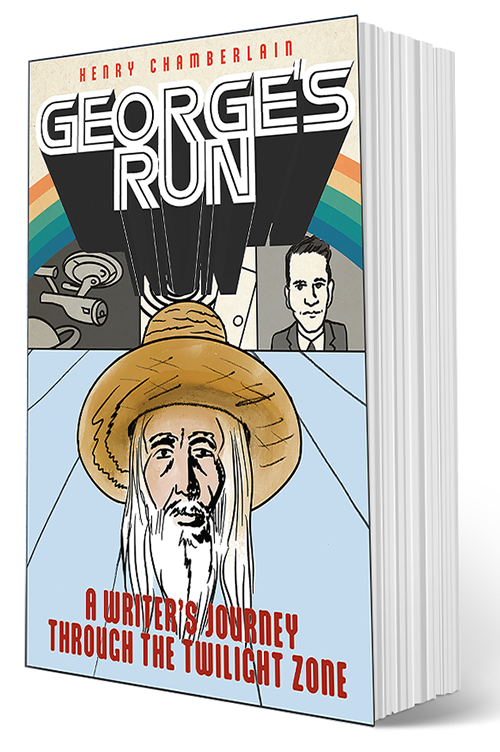
Now, a generation has had time to mature and reflect. Covid has robbed us all of that same innocent euphoria. If it’s there, it’s just not the same. It’s tempered. It’s battle-weary. I’m battle-weary but, as Ellen Lindner pointed out, you’ve got to pace yourself! So, I keep reminding myself that I’m an artist and I’m a cartoonist, even though I don’t really need to remind myself. And, before I made my exit, I stopped by and paid my respects to the Fantagraphics table and kissed the ring of Gary Groth. Well, I say that in jest. It was a pleasure to see him. I handed him a postcard of my new book, George’s Run, and tried my best to give him a fast pitch about it, just for the sake of conversation. You can consider this postcard a preview for my being at MoCCA next year. Anyway, it was a nice thing to do. And I couldn’t help but recalling doing a different pitch for a different book to him at MoCCA all those years ago. I was full of hope then and I’m full of hope now. That spirit is still around. It had better me. It never really left. It’s here. I know it is.

MoCCA Arts Festival returns next year, the weekend of March 16-17, 2024.

2 Comments

Filed under Comic Arts Festivals, Comics, MoCCA Arts Festival