Category Archives: Books

LOGAN’S RUN Book Review: A Lost Science Fiction Classic

Logans Run original novel

“Logan’s Run,” the original 1967 novel, written by William F. Nolan and George Clayton Johnson, from which the 1976 major motion picture is loosely based upon, is a lost gem in science fiction. It’s been out of print since 1976 and deserves a return to the spotlight and easy accessibility. You have to seek out a used copy and those are all collectibles with prices to match. Wouldn’t it seem rather fitting to have this as an e-book too? It is an odd, poetic, and unique work.

OLYMPUS DIGITAL CAMERA

“Logan’s Run,” the original novel, was featured in a promotional item from Crown Publishers in 2012. The promotion was a poster entitled, “The Dystopian Universe,” that featured “a collection of the most memorable apocalyptic futures and digital wastelands ever put to print. Each represents a uniquely disastrous vision of a society fantastic and familiar enough to keep you exploring every corner of this literary galaxy for years to come.” This promotion included a new tilte, “Ready Player One,” among a pantheon of classics old and new: “The Hunger Games,” “Blade Runner,” “Logan’s Run,” “The Stand,” “Neuromancer,” “World War Z,” “The Giver,” “I am Legend,” and “Snow Crash.” There must be something to the original “Logan’s Run.”

OLYMPUS DIGITAL CAMERA

“Logan’s Run” is included in this promotion, as well it should, and yet “Logan’s Run” has been out of print for almost 40 years and not easily accessible. There is an appealing shaggy dog quality to this adventure story akin to a pulp detective novel that rewards thoughtful reading. Hollywood had to step in and chop the plot up to bits to fit into a vehicle for Micahel York, who plays Logan, and Jenny Agutter, who plays Jessica. The movie is famously known for being primarily filmed inside a Dallas shopping mall. The novel, on the other hand, is very wide in scope. People can shuttle all over the globe. It doesn’t take much consideration to sit in a tram and be bolted thousands of miles at one go. Now, compare the excitement of a shopping mall to crisscrossing the globe, and you can see how other aspects of the movie fall short of the original novel.

The movie version, as limited as it was, lost much, if not all, ground once “Star Wars” hit theaters the very next year, in 1977. If it had stayed true to the novel, it would have had much more to show for itself. Instead, key elements were streamlined and glossed over. In the movie, there is a controlled society where every citizen must die at age 30. In the book, the age limit is 21 which gives the story an intriguing edge. You have a society run by people who are just beginning to know themselves. The powers that be have set up a society of voluntary euthanasia at age 21 since it was a youth revolt that took over the world. Growing older is what led to the corruption in the first place so no more old age. Wisdom has been forgotten. Only the vitality of youth can be trusted.

Youth have destroyed the elders. Machines think for humans. The whole natural order of things has been disrupted to its very core. The government’s hub of activity is housed in a supercomputer, humanity’s brain. It resides within Crazy Horse Mountain. And things are so screwed up that the brain thinks it’s Crazy Horse. An important part of keeping the order belongs to the government agents, the “Sandmen,” who are entrusted with capturing any citizens who rebel against dying at 21 and try to run for it. But the system is threatened when one of the agents, Logan, begins to think for himself and, along with a runner, Jessica, seeks out the legendary Sanctuary, a rebel alliance led by a man who has lived beyond his legal age, Ballard.

This is another example of how the movie diverges from the book. In the novel, Ballard has figured out a way to turn off his palm flower. It never went black to alert authorities that he’d reached his expiration date. Ballard is a heroic rebel that has grown into a legend, and is a real threat to the government. The movie gives us Peter Ustinov as Ballard. It is a wonderful performance but this Ballard is senile and as menacing as a pussycat.
Logans Run artwork

The book also provides us with a number of interludes not found in the movie that lift the narrative with greater energy, nuance, and irony. What William F. Nolan and George Clayton Johnson do is revel in the power of youth. They show us its unbounded energy and raw power. They make a case for its right to be taken seriously while also depicting its intoxicating allure. But, as is the case in any dystopian novel, you can always end up with too much of a good thing.

And there is simply more action in the book, intricate detailed action. There’s a whole scene where Logan and Jess attempt to allude their captors by blending in with an American Civil War re-enactment run by robots. It’s hilarious on one level and wonderful commentary. The book also makes much use of “devilsticks.” They are only hinted at in the movie as a band of rebels hold them like staffs. In the original novel, they are both weapon and transportation, like a witch’s broom. Imagine the visuals. It’s not like the movie had a meager budget. They could have had devilsticks do more than just stand there if they had wanted to.

I keep saying “original novel” because it’s such an important distinction. There have been countless “Logan’s Run” spin-offs. There was a TV show. And more comic books than you can imagine with more on the way. All of them have spawned from the movie as if it guaranteed success. This has left the original novel in something of a pristine state.

Let’s consider a passage from the book and you’ll get a sense of its urgency and sutblety. Here’s a depiction of one of the harsh terrains that Logan and Jessica encounter:

The firey wheel of the moon sun blistered its slow way across the Dakota sky, crowding the thin air with waves of shimmering heat. Deadwood was dust and ghost town stillness. The squat, wind-worked buildings along the main street had long since been scoured of paint, and their weathered boards reared up crookedly from the red earth.

“Logan’s Run” is an adventure story, a fable, and social commentary. The characters are bit players in a cosmic tale. Nolan and Johnson don’t concern themselves so much with fleshing out these characters and that is purposefully done. You know only what you need to know. They speak in a rather clipped fashion but not in an amateurish stilted manner. And they are thrown into numerous situations but they’re not an awkward jumble. It’s more like a grand opera or monumental painting. It’s good to keep in mind that Nolan and Johnson have been around the block a few times. These men are part of science fiction legend dating back to the Southern California Writer’s Group. They go back to a tradition of working together on projects, projects that included, among other things, scripts for “The Twilight Zone.”

Seek out “Logan’s Run.” Maybe you’ll find an old beat up copy in a used bookstore or on eBay. Ask, even demand, that it be reprinted and made available for e-books. And discover its unique quality. The movie missed the boat on this one. But it’s not too late to read the book. Any way you look at it, we are well overdue for a new edition.

5 Comments

Filed under Book Reviews, Books, George Clayton Johnson, science fiction, William F. Nolan

Nicole Georges (Calling Dr. Laura) at Atomic Books, Feb 21

Nicole Georges Cassie Sneider tour 2013

If you’re in Baltimore, Maryland, on February 21, you must go to Atomic Books and see Nicole Georges and Cassie Sneider on their raucous tour, along with Monica Gallagher and Sally Madden.

Calling Dr. Laura 2013

“Calling Dr. Laura” is the story about how Nicole Georges came to grips with finding out her dead father was really alive. It sounds like a really good story already, doesn’t it? And to hear Nicole tell it, you’ll want to get this book. Nicole matter-of-factly states that she first got the idea that her real father was still alive after a palm reading. That is confirmed by her family. This leads Nicole to seek advice from conservative talk show maven, “Dr. Laura.” This book is one of those idiosyncratic works that will get under your skin. Watch this video of Nicole explaining how it all went down here.

More details follow:

Continue reading →

Leave a comment

Filed under Alternative Comics, Books, Comics

Mark Z. Danielewski at Town Hall, Seattle

It was a treat to see Mark Z. Danielewski directing a performance of his marvelous work, “The Fifty Year Sword” here in Seattle at Town Hall this last Sunday, October 28. Much to celebrate as “The Fifty Year Sword” has just become available as an ebook and, get this, as an ibook. And, yes, that’s me with the author himself as he was kind enough to pose for pics during his book signing.

Leave a comment

Filed under Books, Literature, Mark Z. Danielewski

9/11 Review: BEST OF ENEMIES

As we mark another anniversary of the tragic events of 9/11, there is a new book out that helps to provide perspective on relations between the U.S. and the Middle East. It is a graphic novel that goes a long way in helping to explain how the pieces fit in the puzzle of geopolitics.

“From the halls of Montezuma to the shores of Tripoli…” The words to the United States Marine Corps hymn may sound obscure until you dig deeper. For our purposes, let’s consider the shores of Tripoli. This refers to the United States at war with the Barbary pirates. This is also the point of departure to an engaging and informative book on the relationship between America and the Middle East, the graphic novel, “Best of Enemies: A History of U.S. and Middle East Relations.” Take a look at the curious cover: FDR and the king of Saudi Arabia, Abdul-Aziz Ibn Saud, perched amid a tangle of oil pipeline. The ironic and determined tone is set and maintained throughout by two masters: historian Jean-Pierre Filiu and cartoonist David B. Many readers will be surprised, even shocked, by what they find here.

But before our history lesson on the pirates, we are treated to the mystical tale of Gilgamesh and his war with the gods. This dovetails into a big leap forward of 4,600 years with a quote from Donald Rumsfeld, circa 2003, straight out of a fairy tale but sadly part of the war in Iraq: “During a war, the kind of ‘evidence’ people are looking for usually doesn’t exist.”

With that in mind, we proceed to the first fumbling steps into another eerily similar war. A newly formed United States of America must confront the terrorists of its day. This would lead to America’s first military encounter on Muslim soil. It would take the new country on a wild ride, from paying tribute to full-on military engagement. The die had been cast. Way before there were any neo-cons, the idea was already alive that the power that ruled in the Middle East, would rule the world. It was in 1902 that American officer Alfred Mahan, a theorist of the projection of power, coined the term, “Middle East” and fostered the mindset that would come back to haunt us all.

It would not be until World War II that the ties that bind would become so apparent: oil. It would be a match made in heaven, so to speak, when the leader of the free world, President Franklin Roosevelt, no stranger to riches and splendor, was able to win over the Saudi family and its oil drenched country. Unfortunately, the thirst for oil is insatiable and not even the Saudis could satisfy it alone.

One of the big hits at the San Diego Comic-Con this year was an interactive digital graphic novel based on Operation Ajax, the covert operations conducted by the U.S. and the U.K. to topple the leader of Iran in 1953, all for the sake of oil. While this is not top secret news today, it can still shock. In this book, the coup of Mohammed Mossadegh, the legitimate leader of Iran, simply to secure oil rights, is handled thoroughly as part of a bigger picture. The machinations of intalling a most unlikely leader, the Shah of Iran, are fascinating. Here is someone Peter Sellars would have had a field day with portraying all his cowardice and ineptitude. But even stranger is the fact that FDR’s cousin, Kermit Roosevelt, is Ajax’s Operations Chief, and proves to be a most diabolical villain. Peter Sellars could have handled him quite nicely too.

The approach of the book is refreshing in how the U.S. is placed among all the other players of geopolitics. There is no shining beacon on a hill, per se, and that goes for everyone. There aren’t any real heroes here, except for Gilgamesh and Mossadegh. David B.’s drawings flow with the narrative, literally bending and twisting as needed. This style owes something to 18th and 19th century cartoonists, with their ornate and fluid line and word balloons that floated along like clouds of custard. David B. takes that style and makes it his own giving characters bendy knees, necks and torsos along with all manner of uninhibited ways to fill the panels. It’s a wonderful mix of political cartoonist sensibilities and fine artist sensibilities.

“Best of Enemies” is a two-volume work so we have even more sensitive material up ahead. What we seem to always forget is that misguided policies have very real consequences. Countries can misguide themselves and they can then misguide the public. One bit of misinformation breeds another and so on. We hopefully still have a chance if we’re armed with the facts.

“Best of Enemies” is part of Abrams ComicArts, a Self Made Hero imprint. This 120-page hardcover  is 24.95 U.S. Visit Abrams ComicArts.

Leave a comment

Filed under Book Reviews, Books, David B., graphic novels, History

INTERVIEW: FRANK M. YOUNG AND “THE CARTER FAMILY: DON’T FORGET THIS SONG”

Frank M. Young is the coauthor, with David Lasky, of the graphic novel, “The Carter Family: Don’t Forget This Song.” The book is an in-depth look at one of the leading families of country/folk music. Their story spans the 20th Century and is as much a history of American popular music as it is the story of a family with its leading characters, the patriarch, A.P. Carter, and the matriarch, Sara Dougherty Carter. That these two were not exactly going to have an easy time of it is pretty clear from the start. But, despite their innocence and stubbornness, they would conjure up mesmerizing music to grace the newfound radio airwaves.

In this interview, Mr. Young’s enthusiasm for his subject is contagious. He is quite intrigued by the relationship of A.P. Carter and Sara Carter, two unlikely stars of popular music. But it was A.P. Carter’s ability to recognize a compelling tune and Sara Carter’s haunting voice that could not go unnoticed. Anyone looking for an authentic American grassroots sound would do well to discover The Carter Family. Their story in this book follows their rise, the conflicts and challenges, and the aftermath of an amazing journey into early American show business.

“The Carter Family: Don’t Forget This Song” is published by Abrams ComicArts. This is a 192-page hardcover book in full color with a CD of Carter Family songs. Visit the Abrams ComicArts site.

3 Comments

Filed under Art, Art books, Books, Comics, Country Music, David Lasky, Frank M. Young, graphic novels, Music, The Carter Family

THE FIFTY YEAR SWORD Review

“The Fifty Year Sword,” the novella by Mark Z. Danielewski, seems to be the stuff of urban legend. The book was first published on Halloween 2005, in the Netherlands, with only 1,000 copies printed in English. The following year, another 1,000 copies in English were printed and that was it. Sccores of fans have only heard of it but have not been able to easily get to read it. That changes with the wide release on October 16, 2012. For those familiar with Mr. Danielewski’s work, particularly his “House of Leaves,” they know to expect intriguing play with narrative, words and graphics. And that is exactly what they get with this novella.

Mr. Danielewski is definitely not a writer who just holds with tradition. We can also see that he deeply respects the art of visual storytelling. The elements he incorporates have a sacred quality to them. You’ll be swept up by the ethereal embroidery artwork that intermingles with the text. You’ll also be caught up by the spontaneity: words seem to bubble up and spit out at just the right moment. As a ghost story for adults, this novella feels like Edgar Alan Poe at a poetry slam, just to give you an idea.

The story begins with the adults gathering to do their duty and attend the fiftieth birthday party for cantankerous Belinda Kite, someone they don’t particularly care for. We then shift our focus to the children who will be in attendance, a spooky set of five orphans who are chaperoned by befuddled Chintana and someone only known as, The Social Worker. Finally, we turn our attention to the truly spooky character at the center of it all, The Storyteller, who is inextricably linked to the eponymous sword and to the fate of each partygoer.

Part of the magic here is the word play, from creative spelling down to how the words are presented on the page. The same spirit of “House of Leaves” is here where typography will literary follow what transpires within the story. For those new to Mr. Danielewski, there will be that satisfying “shock of the new.” Some enjoyable new words you’ll find are Chinata’s choices: indacitation, torpididor and annahiliation. Characters here don’t just speak, they “sputstuttersob” or have a “rumbidilling” voice. They don’t simply creep around. They “diminishide.” Here is an example of what can happens to words in this world:

“‘the w  orld there w  as

                                           “‘con  st  antly

“‘sev   er  ed.

This is how it looks on its actual page:

This passage is describing The Forest of Falling Notes which is part of The Storyteller’s journey that he is retelling to the five orphans as they sit in a cramp little parlor. It is dimly lit by five candles that reveal a most curious box with five latches. What is or is not significant about The Storyteller and his story will remain unclear in this absorbing ghost tale that becomes more mysterious, and haunting, to the very end.

“The Fifty Year Sword” is published by Random House. Visit Random House and learn about the special limited edition of “The Fifty Year Sword.”

Leave a comment

Filed under Book Reviews, Books, Fiction, Literature, Mark Z. Danielewski, writing

COMIC-CON 2012: MARK Z. DANIELEWSKI INTERVIEW

Mark Z. Danielewski is known for his cult novel, “House of Leaves,” (2000). MZD’s work, while vastly experimental, also provides a rich narrative. As he puts it, his works require courage from the reader. That courage, his readers would say, is greatly rewarded. In this interview, we discuss the art of fiction, the writer’s struggle, the forthcoming ebook editions of “House of Leaves” and “Only Revolutions,” the October release of “The Fifty Year Sword,” as well as what lies ahead with MZD’s 27-volume, “The Familiar.”

From the start of this interview, MZD’s mind is playfully, poetically, constructing.

I hold up a party hat promotion for “The Fifty Year Sword” and make it sound like that’s the actual book. He, of course, runs with it! He looks over the party hat, reads the brief text and declares, “We’ve just read the whole book together!” We talk about “House of Leaves,” “The Fifty Year Sword” and the art of fiction. I ask what he thinks the great experimental writer, Donald Barthelme, would make of current trends and that sparks a wonderful reminiscence. The whole interview I found to be quite magical and I hope you will too.

Everyone is waiting for their copy of “The Fifty Year Sword.” It will be available in the states on October 16, 2012.

3 Comments

Filed under Books, Comic-Con 2012, Fiction, Literature, Mark Z. Danielewski

HUCKLEBERRY FINN Reeks Of The Past In A Most Glorious Way

“Adventures of Huckleberry Finn” reeks of the past. It reeked of the past when it was first published in America in 1885. And it sure as hell reeks of the past today — but in a most glorious way. Mark Twain knew what we he was doing. He was fully engaged in the American scene, warts, bruises, gunshots and all. As I carry around an eReader with me, I am reading more of the books I’ve been meaning to read. This one has been high on my list. Today, being Memorial Day, seems a particularly appropriate time to consider this classic, although any day of the week will do as well.

Upon my reading, I come away with the conclusion that, despite the controversy, Mark Twain’s novel is indeed a landmark work of American fiction and, I’ll go one better, is essential. At this point, it’s hard to imagine it fading into obscurity and yet there are those who continue to try to see that happen. The arguement is that we, as a nation, have moved beyond such issues of race. But that’s really nothing more than an attempt to sweep things under the rug and isn’t the American rug already pretty lumpy from being swept under?

The biggest problem of all for “Huckleberry Finn” is the fact that it is a work of art. You see, a true work of art will always confound the literal-minded. As in life, and as in art, there are no neatly tied up resolutions. No, instead, ambiguity presides. The main character, Huck Finn, does not behave in a systematically heroic fashion. What he does is behave like a boy with a mind, heart and soul of his own. He makes numerous choices, not always the right ones. And, arguably, the other main character, Jim, the runaway slave who Huck has embarked upon a journey with, is not perfect either. Both are products of their time, America circa 1840, and both are individuals in search of freedom as they know it. Twain, the keen social observer, set up the perfect vehicle from which to comment on American life. He knew as well as anyone that the end of the American Civil War had not led to the freedom that African Americans had been promised. What it had led to was the dark era of Jim Crow, nearly a century of systematic racial discrimination from 1876 to 1965.

Mark Twain

Twain maintains an impressive balancing act throughout the novel. The story is told by a thirteen-year-old and yet manages to bring about older insights. It is a story very much of its time, using language of its time, while still transcending it. And he adroitly shifts from broad humor to more poetic passages. There are three main parts to the story. There is the most poignant first part where we find Huck at the hands of his abusive father and his subsequent dreamlike escape on a raft with Jim. Then, after a number of mishaps, we settle into a long burlesque section where Jim and Huck are at the mercy of two con artists. And, finally, the last part finds Huck reunited with Tom Sawyer in a surreal episode where they appear to make an utter mockery of Jim’s plight as a runaway slave complete with torturing him with rats, spiders, snakes and a series of humiliations. This is the part that makes Hemingway have to add a disclaimer to his decree that all American fiction begins with “Huck Finn.” He concludes that the last twelve chapters are not worth a damn — which is rather meaningless. The fact is, taken as a whole, the novel does a fine job of revealing a nation struggling with its own dysfunction.

If anyone was expecting Tom Sawyer and Huckleberry Finn to have a perfect epiphany and, without hesitation or distraction, welcome Jim to his rightful place among humanity, Twain is there to say the reader has another thing coming. If a nation can hardly come to grips with what it has wrought, don’t expect two boys to figure it out. What they will do is mirror their own environment. And, with any luck, maybe they will rise above it because they should before too long. That is Twain’s hope for the characters, for his country, and for his readers. In time, with any luck, maybe we will all rise above what has been wrought because we should before too long.

The fact is that the building of a nation is, and always will be, a wild and wooly affair. There are things that can never be lived down and yet we must carry on. We must carry on because we have no choice but to do so. But to forget, no, that is taking things too far. Just as Twain will not let the reader off the hook when it comes to how two boys will behave, he is not going to make it comfortable regarding how a nation behaves. It should be as clear as day that Huck’s beloved friend, Jim, is not a “nigger,” in any sense of that word and yet Twain uses the term repeatedly as the characters in the book refer to him and to any African American. The word is used by the high and the low, from the most ignorant yokel to the country doctor. Huck uses it matter-of-factly without giving it a second thought. And that’s a huge point in the book. The word stings, it hurts and humiliates. But, if all the grown-ups are using it, then why should Huck question it, right? But, despite the predominant feelings of the time, Huck does question Jim’s state as a slave.

The controversy rages on about whether or not to teach this book in high school. To that problem, I suggest another way of looking at it. What if no one had been around to capture on video the beating of Rodney King? Or any number of acts that have occurred since then? We should think of “Huckleberry Finn,” in one sense, as a master recording of those sort of things, the things we wish would just go away or had just never happened. Instead of attempting to ban Mr. Twain’s book, we should be praising Mr. Twain. For those who think we’re better off with easy answers and forgetting the past, “Huckleberry Finn” is just the sort of book you should consider. As much as this classic is speaking to the past, like any excellent work of art, it clearly speaks to the present and the future.

Leave a comment

Filed under Books, Fiction, Huckleberry Finn, Literature, Mark Twain, Reviews

Finding An Authentic Voice for 9/11

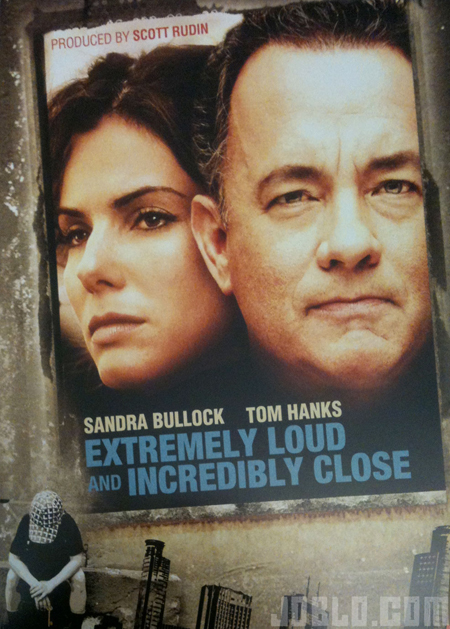
It is a necessary thing to aim the bar high when attempting to present the most remarkable expressions about 9/11. But we shouldn’t get so intimidated by the subject matter that we end up falling into stilted language and a stilted vision. I was reading The New York Times and was surprised by what I read in a think piece entitled, “Outdone by Reality,” by Michiko Kakutani. The writer couldn’t think of any novel that truly captured the raw feeling of 9/11. The one that comes to mind for me is “Extremely Loud and Incredibly Close” by Jonathan Safran Foer. Kakutani does mention it but dismisses it within the portion of his article he entitles, “Reduce, Reuse, Recycle.” The problem with that novel, for him, is that it resembles the structure of Gunter Grass’s “The Tin Drum,” which also has as its protagonist, a boy named Oskar. I would simply say that is part of the art of the novel. But no, for Kakutani finding the words is oh such a struggle. I don’t think so at all. In fact, Foer’s book does a remarkable job of not being on a high horse, shrugging one’s shoulders and weeping because the words aren’t there.

The words are there! You just need to organize your thoughts. The character of Oskar, a very precocious 9-year-old, speaks for the turmoil felt by so many after the 9/11 tragedy. In this case, Oskar lost his father that day. It’s a very symbolic and effective construct. Oskar is a mess. He finds a key among his father’s belongings. For most of the story, he is seeking the lock to that key. We seek our own answers too. Are they all at the same level of intensity? Of course not. You could be someone living on the Upper West Side or in Kansas City and not have lost anyone in 9/11. The connection to the event, for most of us, is what we consume from the media.  Are we all traumatized by the event, rendered mute? No, that would be nutty in the extreme and highly prententious at the least. Anyway, I am veering off the topic. I just think Mr. Kakutani had a job to do: write a think piece for The New York Times. And it reads as such. Take from it what you will. It’s just human nature. You can live in close proximity to where a major event occurred and still have a, say, provincial view of it. For Mr. Kakutani, it was the installation in 2005 of Christo’s “The Gates,” a series of saffron draped gates that dotted Central Park, that he acknowledged as a successful work of art that addressed 9/11, albeit indirectly. Well, that is Kakutani’s neighborhood. He let down his guard and enjoyed the art. Now if he could just go back and give Mr. Foer’s book another chance, assuming he ever read it in the first place. Well, he can always see the movie starring Tom Hanks and Sandra Bullock and complain about how off the mark that movie was to healing our collective wound. It’s a major motion picture. It probably will miss the mark but it could spark a better understanding for many who have not even heard of the book yet, much less its paying tribute to “The Tin Drum,” both an excellent novel and film.

Leave a comment

Filed under Art, Books, Culture, moives, pop culture