Category Archives: Books

Review: ‘The Best American Comics 2013,’ Editor, Jeff Smith; Series Editors, Matt Madden and Jessica Abel

best-american-comics-jeff-smith-2013

“The Best American Comics 2013” pops out at you with we-mean-business cover art by Kate Beaton and zips right to it. I interviewed this year’s editor, Jeff Smith (read here). As he explained, he was looking for singular talent, whether new or established, “A story someone really needs to tell.” He took care with placement so that elements from one work flow into the next and compliment each other.

Smith starts with Alison Bechdel’s “Mirror,” an autobiographical piece about mother/daughter dynamics; and he ends with Paul Pope’s “1969,” a quirky inside look at the first human landing on the moon. These two works by cartoonist heavyweights anchor the top and bottom. In between, other top contenders lend a hand, like an excerpt from Craig Thompson’s “Habibi.”

Sophie Goldstein's "The Good Wife"

Sophie Goldstein’s “The Good Wife”

There are many new rising stars that get to sparkle amid the well know cartoonists. One such talent is Sophie Goldstein. Her work is placed right before Craig Thompson’s. The connection between the two is the focus on the female main character. In Goldstein’s “The Good Wife,” we view a woman who denies herself well beyond her limits in order to please her husband. That story gives way to Thompson’s “70 Nights of Pleasure,” an excerpt from “Habibi.”

Craig Thompson's "70 Nights of Pleasure," excerpt from "Habibi"

Craig Thompson’s “70 Nights of Pleasure,” excerpt from “Habibi”

Again, we have a woman pushing her limits to satisfy one man. The artwork, and the narrative structure, for each of these pieces is quite different. Goldstein’s style is basic. Thompson’s style is ornate. However, both present confident, mature work. That’s saying a lot since Thompson is a seasoned veteran and Goldstein is a recent graduate from the Center for Cartoon Studies.

If you’re looking for a cut-to-the-chase short list on the best comics in America, then this 400-page trade paperback is your book. There are 30 works featured here and they are all gems. This book is in full color. “The Best American Comics 2013” is published by Houghton Mifflin Harcourt and is available here.

1 Comment

Filed under Anthologies, Best American Comics, Book Reviews, Books, Cartooning, Cartoonists, Comics, Comics Anthologies, Comics Reviews

Review: SUPERHEROES! by Laurence Maslon and Michael Kantor, published by Crown Archetype; in connection with ‘Superheroes: A Never-Ending Battle’ on PBS

Superheroes-Maslon-Kantor-2013

“Superheroes! Capes, Cowls, and the Creation of Comic Book Culture” is a 304 page full color hardcover, published by Crown Archetype, with a lot to say about comic books. As has always been my experience, a companion book to a PBS series is worth getting. This book is attached to the upcoming feature-length documentary on PBS, “Superheroes: A Never-Ending Battle,” originally slated to air on three separate nights, now scheduled to air all on October 15, 2013. It’s a smart choice since viewers, much like readers, appreciate it when they can dive into a subject all in one go.

The story of the comic book superhero industry lends itself well to being observed in an uninterrupted panorama. At 75-years-old, this is still a young industry and what is happening today can’t help but remain a story in flux. You might think that, after 75 years, things have settled down. But you would be wrong. That is a relatively short blip of time, ask any historian. Furthermore, this is an industry inextricably linked to far more than commerce, far more than it ever bargained for.

Spider-Man-Steve-Ditko-Superheroes-2013

But say what you will, superhero comics remain embedded in the culture. And there are artists within the industry who continue to push the superhero comic forward. Along the way, we get work that is transcendent and rises to the level of art. Just considering all the examples can make your head spin. There is a reason your head might spin. Superhero comics have tapped into something as deep as any literature or art and resonate on a primal level. So, who truly owns today’s superheroes? People from all walks of life will lay claim to that. Cobbled together from the old salty pulp magazines and Sunday funnies, superhero comics have always run into conflict with their varied audiences. Kids and comics are a natural combination. But so are adults and comics.

What you will find in this book is a treasure trove beyond any extras on your DVD or Blu-ray. With the book, there is an even greater opportunity to fill in the gaps and extend discourse in well-thought-out words. For instance, while few would quibble on the quality and significance of “Watchmen” and “The Dark Night Returns,” two landmark works in superhero comics, it is fascinating to get this quote in the book by Len Wein, co-creator of DC Comics’ Swamp Thing and Marvel Comics’ Wolverine:

‘Watchmen’ and ‘The Dark Night Returns’ were both very violent books. They were meant to be exceptions to the rule. They weren’t intended to be a blueprint for the industry to follow, they were intended to be something to show you here’s what could have happened–let’s not go do that. But they were hugely successful and so everybody started to do those books.

If anyone knows what he’s talking about, it would be Len Wein. What he is saying is that those two works had a purpose and served a purpose. If a marketing plan just calls for more of the same, it is already dead in the water. It may sell but readers will sniff it out and may not come back for yet more of the same product now four, five, ten times removed from the original.

What Laurence Maslon, a co-writer on the PBS documentary, and Michael Kantor, the filmmmaker, keep coming back to in both the film and in this book, is that superhero comics, by their very nature, will always be engaged in a never-ending battle in more ways than one: a battle to refine their purpose and remain relevant. And, in one way or another, even if the customer/fan may not fully realize it, they will have the final say, maybe not now but someday.

Readers will find this book to be exceptionally comprehensive and quite relevant. While the book was created prior to the uproar over the DC Comics decision not to allow Batwoman/Kate Kane to marry her girlfriend, Maggie Sawyer, the writers for this book were clearly sensitive to the significance of such a storyline and provide a fresh example of the never-ending battle.

Superheroes-Maslon-Kantor-PBS-Batwoman-Marriage

“Superheroes! Capes, Cowls, and the Creation of Comic Book Culture” is available as of October 1, 2013, and is published by Crown Archetype, a division of Random House, which you can visit here. And don’t miss this very special PBS documentary, “Superheroes: A Never-Ending Battle,” and you can learn more about that here.

2 Comments

Filed under Book Reviews, Books, Comics, DC Comics, Marvel Comics, PBS, Superheroes

Creative Living: Meredith Clark

Meredith-Clark-Residence

From Meredith Clark’s “Residence,” a collection of poems:

Leeds

The Inside pocket of his jacket.
Wool. The wind picked round
the owling boats. Found on the
wharf: a sheaf of black and white
landscapes, hand-tinted; flung in a
public place

Meredith Clark enjoys working with small spaces, merging image to words, finding deeper meaning. In the above excerpt, we have an ambiguous image attached to a locale and to a poem. It is part of a collection of such arrangements on postcards creating a mysterious travelogue.

If you live in Seattle, you may have seen Meredith Clark at one of her street performances where she dutifully sits with a typewriter awaiting requests for a poem. That is one aspect of what she does and she finds these actions fascinating. She is always pleased to learn what the poem means to the recipient. She recounts one instance where the person had quite a palpable experience to the poem she wrote for him. It reminded him of something that was not literally in the poem but had managed to be drawn out nonetheless.

What resides between the said and the unsaid it what poetry can excavate.

Portrait of Meredith Clark during our conversation.

Portrait of Meredith Clark during our conversation.

I met Meredith as a local coffee shop and we took the time to focus on the subject of creativity. What does it take to be creative? How can we all be creative? It was just a conversation with no expectations to find solutions.

For Meredith, creativity is a selective process, a matter of what to leave in and what to leave out. It was the study of photography that opened up the possibilities of writing. She had always seen herself as a writer but it wasn’t until graduate work that she truly saw how framing a subject for a photograph was analogous to the editing process in writing as well as finding a subject to write about in the first place. It is these considerations that have served her well ever since.

Conversation in a Café

Conversation in a Café

So, you want to write but what do you write about? That’s where that photography analogy is so helpful. You concentrate on what is in the frame. You write about that. Well, not literally. But that’s what you can play off of. It frees you up. You are no longer attempting to write some stereotypical version of the Great American Novel. Instead, you’re getting to write in a deeper way. We chat about experimental writers that have helped pave the way to free up writers, going back to Donald Barthelme and his integrating words and images to the more recent trailblazing by Mark Z. Danielewski. Meredith recalls with delight a recent visit to Seattle by Danielewski. One member of the audience gleefully said that, since reading him, she feels she can now write anything!

Not everyone feels compelled to express themselves. Then you consider that we are not a nation, let alone a planet, of readers. Literacy rates are abysmal. The reading public is a relatively select group compared with everyone else. It’s a formidable minority with massive purchasing power but a minority all the same. Is it any surprise that most people are not in touch with their creative side? It is seen as a luxury, as something you shed away with childhood. It doesn’t have to be that way. In some respects, people like Meredith are role models even if she doesn’t seek that out.

We talk about how the internet has changed everything. That reminds Meredith of being a substitute teacher for a high school English class. She appreciated that the students were preparing for exams and suggested to them that they write out on paper an outline to help organize their thoughts. The class stared at her blankly. One student said that no one writes with a pen and paper anymore. What else do students not do anymore? Meredith believes that no one bothers to edit themselves anymore. “The internet,” she says, “takes away the ability to be deeply impressed by anything.”

You simply cannot appreciate one subject, while you have numerous others on a screen, in the same meaningful way when your attention isn’t compromised. And an image on a screen, of course, is never going to replace the real thing.

Those of us who are creative people are most sensitive to the pitfalls, distractions, and unforeseen factors that can derail a creative life. Meredith recalls an English professor relating his story of early success, being published in The Paris Review at age 18. It took him a decade to get over it, to recover his bearings and be able to write again. Just think of it, suddenly that aspiring writer has landed a major book deal, and he has no need for his day job. However, once he’s abruptly untethered himself from his routine, he finds he can’t write. No one said life would be easy, even when it seems to have done just that.

Meredith is at work on a memoir. You can find Meredith Clark’s “Residence” collection here. And you also read Meredith’s poem, “Land,” here.

Leave a comment

Filed under Art, Books, Creative Living, Creativity, Meredith Clark, Poetry

KICKSTARTER: A RETWEET FROM HUGH HOWEY

Hugh-Howey-Retweet-5-May-2013

This campaign is on fire! There’s been a flurry of activity and things just keep heating up!

Within only a small span of time, I have ten new backers to welcome. Everyone who has backed the project will, of course, get a special mention in the book.

And, earlier today, I got a ReTweet from author Hugh Howey! I cherish those ReTweets even if some people might think they don’t actually bring about interest in pledging to a Kickstarter project. You just never know.

Nope, it wasn’t a ReTweet that inspired my recent support. It was just me and my project. Which is how it should be, right? Absolutely! However, ReTweets are still nice. You gotta love ’em. A Kickstarter campaign is made up of many, many components so you’re best to go with the flow, make your own opportunities, and be very grateful. Always be grateful!

Perhaps a ReTweet from Hugh Howey will lead to more people considering my project. You can’t beat that, right? Well, sure, I keep it perspective, no doubt. As they say, those who have ridden the mighty Kickstarter wave, it’s all about the project. At the end of the day, people are interested in whatever the project is, whether film, book, what have you. Ah, but the campaign is just as much about connecting with your prospective backers and getting them to consider your project in the first place. It’s truly fascinating. If Hugh Howey chooses to lend a hand, yes, I’m very grateful.

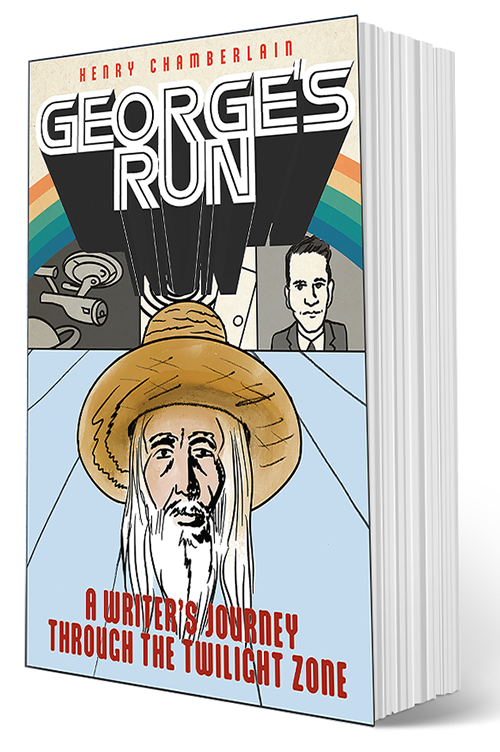
That said, I welcome you to consider my project, a quirky collection of comics in the spirit of the original television series, “The Twilight Zone,” to put it in a nutshell description. Check it out HERE.

1 Comment

Filed under Alice in New York, Art, Books, Comics, Crowdfunding, Hugh Howey, Kickstarter, Marketing, Media, Publishing, Social Media, Twitter

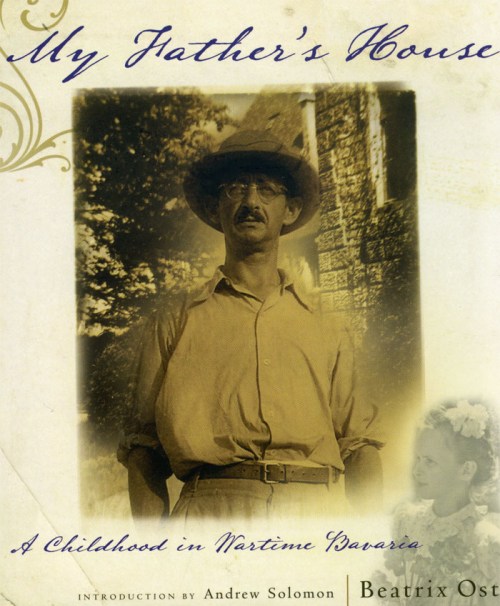
Book Review: MY FATHER’S HOUSE By Beatrix Ost

My-Fathers-House-Beatrix-Ost

“My Father’s House” is unusual in many ways. It is an honest and loving portrait of the author’s father, beautifully written, that provides a unique window into Nazi Germany. The book is made up of numerous vivid details such as this passage:

Once, my parents had lived a truly magical life. In the early years of their marriage, between the wars, they lived with their friend Baron Wilhelm Farnbühler at his castle near Stuttgart. The Baron had his own wing; my parents, with Uli and Anita, had theirs. In the great hall, in a cage, there dwelt an owl, who preferred to eat living things: rabbits and mice. His lame wing folded into a crutch, he shrieked into the night and rattled the bars.

I simply happened upon the life and work of Beatrix Ost while in the process of exploring. It began while I was doing some research for a book review of, “Jerusalem,” a graphic novel that relates to the creation of the State of Israel. I had also just written a movie review of a documentary, “The Flat,” about the unusual relationship between a Jewish couple, who had emigrated to Palestine during World War II, and maintained a friendship, after the war, with a high ranking Nazi official. Life is complicated. Things are never quite as they seem. In the case of Beatrix Ost, this is an enormously talented person: writer, artist, desginer, actor, and theatrical producer. She is what she appears to be and so much more.

Beatrix Ost comes from a world of the rich, those F. Scott Fitzgerald has noted as “different from you and me.” Ost is not here to deny the world she was born into. She was born in 1940, in the castle from the above passage. However, given this difference or distinction, Ost finds a way for you to join in. It is, in fact, a world not so different from you and me. It is far more earthy and raw than you may imagine.

This may sound trite, but many readers may relate to the stories presented here if they think of the landmark musical, “The Sound of Music.” As jarring as it is to juxtapose Nazis with Bavarian folklife, general audiences understand, in the context of the musical, how two Germanys could coexist: one run by Hitler and another very different one. It takes a strength and boldness to be able to bring out a multitude of memories that are innocent and sweet amid a backdrop of war. Ost engages the reader on a Proustian level, never missing a beat of recovered memory and dipping deep into a well of language that consistently produces gems.

Think of this book as a collection of passages that, as a whole, bring out a greater truth. Each passage is like a little story of its own. Consider this passage from “The Gleaners,” describing people during World War II coming to the Ost family farm in search of food. They would come in search of even the smallest potato. Dieter, a member of the household staff would be dispatched to fetch a bunch of the teenaged girls from the girls school to help themselves to potatoes. They arrived in what they could muster up for the latest fashion, all hardened by the war but joyful:

The girls trudged along behind the plow, collecting potatoes in sacks. When the sacks were full, they were tipped into a cart. It started to rain. The girls sought shelter under the one available roof: the potato wagon. But the rain got through between the narrow planks, and after a short while, they were drenched. Their cheap dresses rode up above their knees, clinging to their thin bodies. Little rivulets of color ran down their legs.

It is Ost’s father, Fritz, who looms larger than life over this landscape of memory. He did his military service in Africa and subsequently retired, including his membership in the Nazi party. He had only belonged to the party to help his friends, particularly his Jewish friends, secure safe passage out of the country. He was a proud man that seemed to only want to be left alone to rule over his estate, Goldachhof, a rural paradise of manor, farm and stables, about twenty miles out of Munich. If there were Nazis amidst the circles he travelled in, he didn’t want to know. What he, and his wife, Adi, did know was to help those in need and Goldachhof proved a haven for refuges many times over. It is this backdrop that little Beatrix grew up in and learned the ways of the world, from getting by on rations to celebrating the dawn of a new world ushered in by the Americans.

This excerpt gives you a taste of the exuberance of youth faced with big change. The Americans, all brash and exciting, had finally arrived. But they make a few missteps. A couple of homesick Texans decide to ride a couple of the carriage horses, who were not meant for riding. Then some soldiers got the nutty idea of going fishing with hand grenades. This was far too much for Herr Ost and he finally managed to restore order by bringing in a high ranking American officer to have a talk with his men. But change had arrived and there was no turning back:

Now we children played Yank all winter long as we sledded down the granary path on our Jeeps. We still had our “Judenstrick,” ersatz cigarettes made from the winter-dried marrow of elderberry twigs, but we were infatuated with everything the Americans brought into our little world. They had landed among us with the exciting utensils of their exotic culture. Chewing gum. Nescafe. Powdered milk. Hershey’s chocolate. Blue jeans. Johnson’s lotion. Marlboros. Things useful and also symbols of hope, the end of terror. Our blue days were gone–love live The Blues.

Beatrix-Ost-My-Fathers-House

How such a book came into being is remarkable. “My Father’s House” is an inspiring and enlightening work. It can be appreciated on many levels, not the least of which is in the classroom. You can purchase it here.
2 Comments

Filed under Autobiography, Book Reviews, Books, History, Memoir, Nazi Germany, Nazis

KICKSTARTER: A NIGHT AT THE SORRENTO at 30 Percent Support

A night at Sorrento Hotel Henry Chamberlain 2013

A NIGHT AT THE SORRENTO AND OTHER STORIES is a quirky batch of comics that is steadily gaining ground as the subject of a fundraising campaign at Kickstarter. It launched on April 3 and has reached the 30 percent mark in pledges. The campaign runs through May 6. You can view it HERE.

Now, here’s the thing about this one, it has a raw honesty to it that it shares with other Generation X artists. That’s where this artist, Henry Chamberlain, dates back to. That sort of blunt honesty has been refined over the years although an outsider’s view still remains. Think of Charles Burns, for example: acerbic, alienated, yet very heartfelt and authentic. You can find that in this collection of comics. That’s important to bring out here because this book includes the graphic novel, ALICE IN NEW YORK, which is an older work and very much aligned to that spirit. The other part of the book collects recent work, done in the last three years, that originated with 24-Hour Comics challenges. Altogether, you get one artist’s vision over a span of many years.

So, let’s focus in with a few more words about the graphic novel, “Alice in New York” that is part of this collection. What makes it share a Gen X sensibility has to do with the main character’s feeling of being at a loss. For many of a creative and intellectual bent, it just felt like we were in for a long stretch of lowered expectations. Sure, that’s pretty shortsighted. But, growing up in the ’80s, with Reagan and Thatcher running the show, with the Baby Boomers having hogged the spotlight for so long, with a perpetual rehash of pop culture, it didn’t look so good. Of course, we all knew things would change one way or another but it fostered a healthy sense of cynicism and self-deprecation.

You have the main character, Henry, a young man on his first visit to New York City still holding on to dreams of previous generations, from the myth of the Great American Novel to the lure of fifteen minutes of fame. Is it any wonder the boy is a wreck? But, he stumbles upon just the right circumstances and meets the right people to help him out. Is he too lucky? Well, sometimes you make the most of what you get, create your own luck. Add to that a little magic from Alice in Wonderland, and you have a story that transcends any generation which is what you want to do in the end!

Generation X’s way of life is not for everyone. You basically had to be there. Just saying that is so Gen X. If you’re looking for something to read that is a voice of a generation, while stubbornly refusing to be labeled, and ending up being so much more, then check out this work at Kickstarter HERE.

Leave a comment

Filed under Art, Books, Comics, Comix, Culture, Generation X, Kickstarter, New York City, pop culture

Interview: Charles “Zan” Christensen and Looking Beyond Gay and Straight

A draft for the cover to ANYTHING THAT LOVES

A draft for the cover to ANYTHING THAT LOVES

Gay is a powerful term, particularly in its use in a political movement. However, as Charles “Zan” Christensen points out, it is not as useful when describing the complexities of an individual. The categories of “gay” and “straight” just aren’t enough. What about everything in between? Christensen, publisher of Northwest Press, which specializes in comics with LGBT themes, is preparing to launch a new comics anthology that explores these issues of sexuality. “Anything That Loves,” brings together a roster of excellent cartoonists creating works that explore their unique observations on the sexual spectrum.

It was a pleasure to get a chance to interview Zan. He’s very passionate and articulate about what he believes in, as is evident in our conversation.

“Anything That Loves” has achieved phenomenal success as a Kickstarter project. And the party isn’t over yet. This campaign runs through April 28. It has already reached over twice its funding goal. Additional funds mean more money reaching the creators of the anthology. You can view the campaign here. Since I have launched my own Kickstarter project, which you can view here, I have come to more fully appreciate the work and dedication behind such projects.

From the Northwest Press website:

The Northwest Press anthology Anything That Loves will be released this July, just in time for Comic-Con in San Diego, and features a variety of wonderful artists exploring the seldom-seen world between “gay” and “straight”. The anthology features work from artists Erika Moen, Ellen Forney, Randall Kirby, Jason Thompson, Kate Leth, Leia Weathington, MariNaomi and lots more, and is currently the subject of a Kickstarter fundraising drive.

Visit Northwest Press here.

2 Comments

Filed under Anthologies, Books, Charles Zan Christensen, comic books, Comic-Con, Comics, graphic novels, LGBT, Northwest Press, Publishing, Sex, Sexual Studies

Interview: PHIL YEH and the Joy of Reading

Phil Yeh and Friends

Phil Yeh and Friends

Based on various studies, it is estimated that over a third of Americans cannot read this sentence. Yes, at least 60 million Americans are illiterate. Consider these reports here and here. Not being able to read and comprehend the written word robs people of the ability to control their lives in very significant ways. This burden is preventable. Ask Phil Yeh. He knows. As a cartoonist and an activist, he has worked hard throughout his life to inspire and help others to learn the joy of reading. Phil Yeh has painted more than 1800 murals in 49 states and 15 countries promoting literacy and the arts with his Cartoonists Across America & the World Tours.

Phil Yeh. You know the name. He’s the guy in the comics history books as a pioneer in the creation of the graphic novel. He’s the guy who promotes literacy with all those murals around the world. Yeah, that Phil Yeh. Are there others? Well, we sure could use more Phil Yehs in the world.

Patrick-Rabbit-Phi-Yeh-Route-66

Phil Yeh is always busy. He can be working on his latest book. He can be working on his most recent mural for Cartoonists Across America and the World. At this particular time, for this interview, we find Phil continuing to work on a very special mural that highlights the achievements, the personalities, and the great history of the City of San Bernardino, California.

Sandy Fischer Cvar created the portraits on the San Bernardino mural

Sandy Fischer Cvar created the portraits on the San Bernardino mural

About a year and a half ago, Phil suffered a stroke. It slowed him down but, as Phil observes, it has led to the best work of his life. In April of 2012, after having started to pick up a paint brush again, he embarked upon one of his greatest murals. It is on the historic site of the world’s first McDonald’s restaurant in San Bernardino, California, on Route 66. This mural is just the sort of spark that sure helps in the process of San Bernardino’s revival.

Ribbon Cutting Ceremony with Mayor Pat Morris, May 1, 2012

Ribbon Cutting Ceremony with Mayor Pat Morris, May 1, 2012

The main topic of discussion for this interview is the City of San Bernardino. It has fallen on hard times and every effort to set things back on track is essential. The Great Recession has taken its toll but hope prevails. Phil’s mural is a bright light on the way to recovery. In this interview, he goes into detail about the inspiring people from San Bernardino who have made history and major contributions to the betterment of everyone. And, if there was only one person to focus on, it would be Chester Carlson. He came from poverty, even having lived in an abandoned chicken coop as a teen, and rose to create Xerox.

A book on Chester Carlson that Phil highly recommends is “Copies in Seconds,” published in 2004, by David Owens. You can find it here. He would like to see it in every library and school. But there is always another inspiring story. Phil speaks with great feeling and ready with another story such as that of San Bernardino favorite son, Garner Holt. Starting at age 16, Holt began his work on animatronics. He’d been inspired by the animatronics he’d seen on a trip to Disneyland. He went on to create a major animatronics firm that developed, among other projects, the animatronics for the Chuck E.Cheese restaurant chain. And, like Carlson, Holt never forgot San Bernardino and gave back significantly.

Phil’s enthusiasm is truly boundless. Get him to talk about today’s youth and he’s adamant about valuing one’s time. “If you spend four hours a day on social media, hey, that’s four hours wasted. That’s four hours you could have been doing something creative.”

Phil loves to share his first experience at San Diego Comic-Con in 1970. He talks about how he went there as a timid teenager and was set on his life’s path with two conversations. He talked to Ray Bradbury about his passion for writing but his fear that he couldn’t pursue it because he couldn’t type. Ray Bradbury reassured him and revealed to him that he didn’t know how to type. He told him to just write. Phil then sought advice from Jack Kirby. He talked to Jack Kirby about his passion for drawing but his concern that he should go to art school. Kirby had the best advice: Just draw! Phil took both men’s advice to heart, started his own publishing company and never looked back.

Phil looks forward to a number of book projects including one with a steampunk theme. And he’s looking forward to press coverage on the San Bernardino mural that will reach full completion this by this summer. “We’re getting China’s CCTV to cover us. That’s the biggest televison network in the world with a 1 billion 400 million viewership. We’re thinking that with German TV, French TV, and Brazilian TV coverage on board, that this will ultimately lead to local Los Angeles TV coverage. They’re tough to reach!”

Sometimes good news is a hard sell. But Phil Yeh knows how to reach people. He’s been doing that all his life.

Right below is the full podcast interview with Phil Yeh:

Phil-Yeh-March-2013

And one more a bit of news on the San Bernardino mural: Here is an update as of today from Phil Yeh:

Phil Yeh and the San Bernardino mural

Phil Yeh and the San Bernardino mural

We are painting the entire Route 66 in California ending up in Santa Monica! Brendan Moore is capturing some of Hollywood’s landmarks & the Queen Mary in Long Beach while Beth Winokur brings her own creativity to the boxcars. Every one of these boxcars will feature a town in San Bernardino County as a fruit label! I am working on my favorite manmade landmark in the world, Simon Rodia’s Watts Towers in Los Angeles not far from my boyhood home where I grew up in the 1960s. We should be finished in the summer of 2013.

Visit Phil Yeh here.

1 Comment

Filed under Art, Books, Comic-Con, Comics, Education, Libraries, Literacy, Phil Yeh, pop culture, Ray Bradbury, Reading, Schools

VIZ MEDIA: NEW AND RECENT RELEASES, APRIL 2013

Here is a quick look at some assorted new an recent VIZ Media releases: Naoki Urasawa’s 21ST CENTURY BOYS; Mizuki Sakakibara’s TIGER & BUNNY; Toh Enjoe’s SELF-REFERENCE ENGINE; Sakyo Komatsu’s VIRUS; Takehiko Inoue’s INOUE MEETS GAUDI.

VIZ Media has got you covered in more ways than you might think: manga, anime, books, video, all faithfully translated into English. You will find something for everyone: from a study on Japan today and its future to the latest Naruto. Check it out at VIZ Media here.

Leave a comment

Filed under animation, Anime, Art, Art books, Books, comic books, Comics, graphic novels, Japan, Manga, pop culture, Sci-Fi, science fiction, VIZ Media

Toh EnJoe’s SELF-REFERENCE ENGINE Makes U.S. Debut

Toh-Enjoe-Self-Reference-Engine-2013.jpg

You can’t go wrong with a love triangle involving time travel and assorted bits of absurd humor. Toh EnJoe’s “Self-Reference Engine” is now available in the US.

VIZ Media’s literary imprint Haikasoru has announced today’s North American debut of author Toh EnJoe’s SELF-REFERENCE ENGINE, a work of hard science fiction where vignette, story, and philosophy combine to create a novel designed like a concept album. In Japan, EnJoe’s prize-winning fiction is well known for blending hardcore science fiction with bizarre surrealism.

Full press release follows:

Continue reading →

Leave a comment

Filed under Books, Japan, Time Travel, VIZ Media