Tag Archives: comic books

L.A. Zine Fest 2020: A Few Observations and Updates


L.A. Zine Fest took place this year as a virtual series of events in May, an exciting alternative to connect zinesters, attendees, and other people who usually go to the fest. Let this serve as a friendly and helpful model for similar events that might still be grappling with what to do in 2020 and beyond. COVID-19 isn’t going to just disappear but we can remain vigilant and creative. From the comfort of my home in Seattle, I got to check out L.A. Zine Fest and I have some items to share with you from my connecting remotely with LAZF.

CDMX by Chynna Monforte

Here is a zine by Chynna Monforte which shares with the reader a recent visit to Mexico City. Chynna put on an excellent workshop as part of the schedule of events during LAZF this year. During her workshop, Chynna shared her techniques for putting together a zine which included a look at her own vast collection as well as some tips on laying out your zine in inDesign. Be sure to visit Chynna for all your design needs, particularly with print and web design.

Pages from CDMX

The robust colors just blow my mind. With her zine, CDMX, Chynna Monoforte demonstrates that there are no limits to what you can do with a zine. You can really put together a zine that is just as vibrant and professional as anything you’d find in a mainstream magazine.

Zines by Stainperfect

And here is a zine from Haruka Tanabe, an artist that goes by the name, Stainperfect, based in Tokyo and Osaka. This is an amazing artist and I am curious to learn more. Her work is very much in the autobio tradition of indie comics and it appears that autobio work comes naturally to her. For a long time, she had misgivings about her art but she finally took the plunge after finally gaining just the right support from a friend. Her earliest effort was the little zine, It’s Okay, which is an affirmation she makes to herself and shares with the reader. This led to deeper exploration, as in Midnight Drumbeat, a poetic look at a trip to Mozambique where she was a volunteer. More recent work includes, Loving More Freely: Exploring Polyamory, which explores relationships within polyamory and provides essential insight.

Page from Loving More Freely: Exploring Polyamory

L.A. Zine Fest curated readings, workshops, and discussion panels via Zoom that connected zinesters, creators, comix artists, and illustrators with each other and the general public. Workshops and panels  included everything from how to draw people who are different than you are to an exercise in making comics and “stream-of-consciousness sketching” in quarantine times.

L.A. Zine Fest 2019

LAZF teamed up with some of its 2020 exhibitors to create a select number of digital events and fun stuff for 2020. I look forward to what LAZF does for 2021, whether in person or virtual. Let’s all keep doing great work supporting the arts through the pandemic. Keep in touch with LAZF!

Leave a comment

Filed under Comic Arts Festivals, Comics, Comics News, COVID-19

Review: ‘The Phantom Zone and Other Stories: Comics and Prose by José Alaniz’

The Phantom Zone and Other Stories: Comics and Prose by José Alaniz

The Phantom Zone and Other Stories: Comics and Prose by José Alaniz. By José Alaniz. San Diego: Amatl Comix, an SDSU Press imprint, 2020. 128 pp. $18.99.

The college newspaper has a long tradition as an incubator of exciting talent. The Daily Texan, at the University of Texas, is a prime example, home to such notable alumni as Berkeley Breathed, Chris Ware, and Shannon Wheeler. Jose Alaniz’s The Phantom Zone first appeared as a comic strip in UT’s Daily Texan in 1992-1993. Now, imagine a book that not only collects some of the best work Alaniz did at UT but also provides a look at later work, including comics and scholarship. That is what you’ll find in The Phantom Zone and Other Stories: Comics and Prose by José Alaniz.

The Phantom Zone, circa 1992

This book is a very special treat on many levels. For those of you interested in the process of creating comics, and storytelling in general, this book is invaluable. As for me, I’m compelled to share this with you for a number of reasons. First, I feel a great connection to Alaniz simply for the fact that we’re both Mexican-American. We’re also of the same vintage but, more than just being part of the Gen X crowd, I had my own comic strip, Danny, running in The Daily Cougar, at the University of Houston in the late-80s. In my case, one of my characters was ripped off by another cartoonist and appeared in The Houston Post for a while. And then life moved on. I’d always been heavy into liberal arts, ever mindful of an uncertain future, but always faithful to my art. I made the big move to Seattle in the early-90s seeking a receptive creative home base. And so did Alaniz! Fast forward all these many years, and Alaniz found himself befriended by many of the same cartoonists in the community I was a part of. Small world! I have to say all this because Alaniz speaks to these similar building blocks. It’s also a big world too because I’ve never met Alaniz. Now, I hope that can be corrected. This book has proven to be such an awesome introduction!

The Phantom Zone, circa 1998

If José Alaniz had never kept up with creating comics, he would still have much to be proud of and satisfied with. Today, Alaniz is a professor of Comparative Literature at the University of Washington. Mr. Alaniz is the author of  Komiks: Comic Art in Russia as well as Death, Disability, and the Superhero: The Silver Age and Beyond. Both titles break new ground in comics scholarship from two very distinct approaches. Alaniz spent a good bit of time in Moscow and concluded that the Russian culture did not have much of any connection to comics so he investigated. Alaniz also found it intriguing how mainstream superhero comics explore issues of disability, death and dying and that led to him writing on that. Along the way, Alaniz probably missed creating comics on an ongoing basis. Once you’ve experienced the constant pace of creating a daily comic strip, at a significant level, it never leaves your system entirely. You have this compulsion to express yourself on a regular basis. The act of regularly creating comics gets under your skin. It is very intimate and intense. And it can metamorphosize into all sorts of other forms of self-expression: prose writing, including fiction and journalism, and engaging with other media as well. You are an exhibitionist, liable to walk around naked down the street if given half a chance. But the comics medium is a very specific thing and it has a way of calling back those who have participated at deep level just like a certain mistress may hold sway over a past lover.

Old Edinburg, Dead and Gone!

The Phantom Zone is an intriguing title for a comic strip. It seems to harken back to a good 0ld-fashioned adventure comic strips by such greats as Milton Caniff. Add to it the fact that Alaniz is playing with issues of youth, identity and culture, and it’s easy to try to draw some comparisons to the, by then, well established alternative comics scene of the time. Love and Rockets, the comic book series, and leading alt-comics title, by the Hernandez brothers: Gilbert, Jaime, and Mario, would undoubtedly have been known by Alaniz. It is asking a lot of any young person to try to live up to such giants as Milton Caniff and the Hernandez brothers but many an aspiring cartoonist is compelled to give it a go. Once you’re in the thick of doing a regular comic strip, all bets are off. An overriding worldview kicks in and guides the cartoonist. Comics can be a great equalizer since it cuts deep, ignores any fuzzy boundaries between high and low culture. Suddenly, Archie Comics and Popeye must be given their due, honored and respected. Academics traditionally would thumb their nose at the likes of Jughead and Brutus and dismiss these clowns as “drivel.” And, of course, they’d use such an arcane term to add to the sting. But a true cartoonist, someone actually writing and drawing in pursuit of something artful, they know the true value of such legendary characters. And so Alaniz bravely entered the fray. Soon, he had something brewing, riding upon the shoulders of too many other cartoonists to mention. It is fascinating to read the early college efforts and then compare that to later work revisiting the same characters.

Plastic People

From that experience, it was onward to further exploration in creating comics. Pivotal in this process, as Alaniz shares, is his taking part in monthly informal get-togethers with various cartoonists at a local Seattle cafe. Prior to the pandemic, each gathering was an opportunity for cartoonists to draw up comics that were then collected and printed into an ongoing anthology known as, Dune. I’ve often been invited but I never attended, mostly because it conflicted with my job. But I’ve had countless interactions with most of these cartoonists. As many of them can attest, I’ve been at the forefront of many comics events which they happily participated in. Some of the most notable cartoonists from this scene include: Max Clotfelter, Marc J. Palm, David Lasky, Greg Stump, Seth Goodkind, Jim Woodring, Eroyn Franklin and Megan Kelso. Again, I can’t stress enough how valuable this book can be to anyone interested in the comics medium. It all began for Alaniz with a youthful creative impulse and just look where it took him. Overall, The Phantom Zone comic strip does a decent job with carving out something in the auto-bio tradition. What is truly most compelling is the life that José Alaniz carved out for himself.

The Phantom Zone comic strip

Amatl Comix is an ongoing series that compiles the best in Latinx comics presented by San Diego State University Press.

Leave a comment

Filed under Comics, Comics Journalism, Comics Reviews, Comics Scholarship

Comics Picks: BRAVE NEW WORLDS in Philadelphia

BRAVE NEW WORLDS, your local comics shop in Philadelphia, has reopened, following all COVID-19 protocols, as of June 5th. At Comics Grinder, we salute all of the amazing local comics shops keeping it real. Henry Chamberlain, your host and fearless leader, has taken it upon himself to ask this basic question: “What do you recommend these days, especially with Covid in mind?” Of course, folks can get creative and take the opportunity to answer that however they choose. It’s understood that it can depend upon who you ask and when you ask. Here is what BRAVE NEW WORLDS has to say:

Once & Future by Keiron Gillen and Dan Mora

Recently we’ve been really enjoying “Once & Future” by Keiron Gillen and Dan Mora, “Something is Killing the Children” by James TynionIV and Werther Dell’Edera “Wonder Woman Dead Earth” by Daniel Warren Johnson Jeff Lemire and Kevin Walta’s “Sentient” from TKO “Strange Adventures” by Tom King, Mitch Gerads, and Evan Shaner,….

Low, Low, Woods by Carmen Maria Machadoand Dani

Low, Low, Woods by Carmen Maria Machadoand Dani, Thor by Donny Cates and Nic Klein,…

Silver Surfer Black by Donny Cates and Tradd Moore

Silver Surfer Black by Donny Cates and Tradd Moore, Doomsday Clock vols 1 & 2 by Geoff Johns and Gary Frank,…

House Of X/Powers Of X (Hardcover)

House of X/Powers of X by Jonathan Hickman, Pepe Larraz, and R. B. Silva,  Hellboy Omnibus by Mike Mignola et al, Box Brown’s titles. Anything Junji Ito.
BRAVE NEW WORLDS carry a wide variety of comics, game cards, graphic novels, children’s books, Gundam model kits, action figures, Hot Toys figures, Sideshow statues, back issues, t-shirts, posters, board/card games, and many collecting supplies. BRAVD NEW WORLDS have been selling comics, games and toys in the Philadelphia area (Philly and Willow Grove) for over 30 years!

Brave New Worlds, Philadelphia

Leave a comment

Filed under Comics, Comics Picks, COVID-19

Review: Jack the Radio: Creatures Anthology

Jack the Radio: Creatures

Jack The Radio: Creatures is a comic that you’ll definitely want to take to heart during these challenging times. It’s coming to you by George Hage, his band, Jack the Radio, and songs that have inspired comics and pinups from 30 of the top illustrators and colorists from around the world. The book is published by A Wave Blue World and is based on the band Jack The Radio‘s new album Creatures. It was written by singer/guitarist, George Hage and features cover art from Matthew Allison and interior art from Tommy Lee Edwards, Khoi Pham, Aaron Conley, Jorge Corona, Alexis Ziritt, Núria Tamarit and many more. Among the many notable things you’ll find in this comic is something that you may not notice. Our main character could literally be anyone. Basically, Jack (or Jackie?) the Radio is a skeleton, with no overt reference to race, gender, creed, color, or anything else. So, yeah, let’s embrace this uncanny character, just trying to survive, much like you or me.

“Getting Good,” artwork by Rich Tommaso

This is a fun and upbeat work. One fine example is “Trouble,” based on a song about perseverance. Hage’s script is complimented by art by Jorge Corona and color by Jean-Brancois Beaulieu. One of my favorites is a story about the down and out, “Getting Good,” artwork by the legendary Rich Tommaso. Each story has a quirky vibe and it all adds up to an impressive showcase of talent and a unique mashup of music and comics. There is much to enjoy and be inspired about here. If I did feel compelled to align our main character with a background, my own Mexican heritage is telling me, literally screaming at me, that Jack the Radio is part of Dio de los Muertos–but we can discuss that some other time. In fact, I’d be honored to draw up such a comic for Hage anytime. All in all, this is fun stuff.  This is a perfect all-ages comes and a welcome addition to your current comics reading.

Jack The Radio: Creatures is available as of June 24th and is also available on the band’s website, www.jacktheradio.com/store so do check it out!

2 Comments

Filed under Comics, Comics Reviews

Review: ‘American Daredevil: Comics, Communism and the Battles of Lev Gleason’ by Brett Dakin

American Daredevil: Comics, Communism and the Battles of Lev Gleason

Guest Review by Paul Buhle

American Daredevil: Comics, Communism and the Battles of Lev Gleason. By Brett Dakin. Toronto: Chapterhouse, 2020. 242pp, $24.99.

Lev Gleason is a storied figure, a part of the history of comics production and comic art that had yet, until this fascinating volume, to be told in any detail. A personal saga, a business history, and a detective story by a great-nephew pursuing a disappearing world: we have here a tasty package. For those interested in the popular culture angles of the American left, this makes an especially intriguing addition. A minor baron of the pulp world, Gleason supported left causes of all kinds by determined fundraising, meanwhile publishing a left-of-center imitation of the Readers Digest and even consulting the Daily Worker on how to win more readers.

During Gleason’s prime years of comics, the end of the 1930s through the middle 1950s, comics themselves were outselling any other periodical except the newspaper, and doing so with a market mostly (if by no means entirely) under 20 years of age. Gleason helped create this market through keen salesmanship and an eye to design. His very own comics, for reasons other than politics,  would lead in part to the….suppression of comics, a genre denounced and hated by the elite. His best-selling Crime Does Not Pay series (1942-55) could not be described as the most garish or violent of comics, but the outright sadism of the criminals, the “headlights” looks of the dames, this and more was unmistakably—popular! If never as popular as war and its perpetual American glorification in and out of comics.

But let’s start at the beginning. The author, a contributor to distinguished journals like Foreign Affairs and The Guardian, had to learn about his great-uncle second hand. Lev died before Dakin was born. He learned  only by his own research that Lev was the grandson of a prominent supporter of abolitionism in the border states of Kentucky and Ohio—not a small or even very safe thing to be. In family lore, Lev himself was the left-leaning financial dynamo who made a fortune and lost it. Also not a small thing.

A Bostonian mustered out of the Army in 1919, Lev wanted to make money (he had at least one ex-wife to support) and went into the magazine business as an advertising manager for a kids’ publication. He took his experience to New York in 1932, and became an advertising manager at Eastern Color Printing, an auspicious spot. Eastern actually did the printing of most of the Funny Pages of the big East Coast papers. Gleason has at least a solid claim, if not the only existing claim,  to have invented the comic book format: 64 page booklets full of comics.

Far from over-the-counter, these were first sold to corporations as give-aways. But Lev and his friends convinced Eastern to let them try selling the pamphlets at newspaper outlets, starting in 1934. The dime comic was born or rather pre-born, because only a year later did a comic appear with all original material rather than reprints from the newspaper comic pages.

As the earliest editor of Tip Top Comics, Gleason made his first and most spectacular blunder: passing on the strip by a couple of young Jewish guys from Cleveland, called Super-Man. You could say this error cost him millions. In charge of Superman, he might have avoided the dreadful cheating of the artist and scriptwriter by the comics corporations.

Gleason pressed onward and Silver Streak Comics appeared just in time for the comics’ Golden Age, helping to make it possible. The soon-to-be-famous artist Jack Cole came up with a dreaded character, The Claw, and action scenes hinted at one of Gleason’s favorite motifs in the years to come: the scantily clad maiden, obviously in trouble but also somehow tempting (psychoanalytic critics would describe comic books  as faintly masturbatory).

Daredevil, Comic House, August 1941

Daredevil, of this book’s title, was for years Gleason’s meal ticket. A handsome agent of derring do, he could punch Hitler in the face (even if no one was doing so in real life) without raising a sweat. But to make the comic work big, Gleason had to buy a “few million pages of pulp” on a promise of turning the comic around in a couple weeks in 1941. With several more of the artists and letterers destined to become famous in the business, especially Charles Biro, they did it. Daredevil was a smash hit.

But this was only one side of Gleason’s inclinations. The Popular Front oriented Theater Arts Committee (TAC) had made a name during the 1930s, bringing elements of progressive theater to ordinary audiences, but it re-blossomed along with other such entities in the antifascist war years. Gleason raised thousands of dollars for the TAC as he did for the Joint Anti-Fascist Rescue Committee, and a large handful of others, most of them destined to be placed upon the Attorney General’s list of “subversives,” despite most having actually ceased operation or even existence during the years shortly after the War.

Gleason had also published Friday, a popular magazine that set out in 1940 to gain part of the booming magazine audience, but did not have the advertisers to survive a single year. More important, he published Reader’s Scope (1945-49), a  lively, pocket-sized, leftish version and would-be rival to the ubiquitous Readers’ Digest, with condensed versions of articles from the liberal press. Salute (1946-48) aimed at the returning GI, was no success. There were still other unsuccessful magazines, proving that he had ideas, probably not quite the right time for them or the financial backing, but he pushed the antifascist, reform and anti-racist message forward.

Amidst all this, Gleason lived rather palatially in suburban Chappaqua,  New York, until the middle 1950s. Publishing a liberal daily  (New Castle News) to combat the local conservatives, entertaining guests of all kinds, he traveled regularly to the city with or without his family for what one could properly call anti-fascist popular culture. He was a personality of his place and time, as anyone could see. And then it fell apart.

Pursued by the FBI, Gleason also bravely fought the threatened repression of comics that was coming in the wake of the Red Scare. Indeed, the charges made against the Reds and comics were surprisingly similar, out of the mouths of rightwingers:  Jews were corrupting Christian youths. You could say that William Gaines, publisher of EC Comics, faced the same enemies, but of course, Bill Gaines was an honest (Jewish) liberal without the dangerous political connections. Gaines turned the generalized collapse of the comic industry into the vast triumph of Mad Magazine. Gleason had no such backstop, at least not in publishing.

A real estate salesman in Upstate New York, living with his family in a small house, he was cut off from a sparkling social life. These had been shut down by McCarthyism anyway. Gleason survived for a while. He died in 1971. A year earlier, in a message to fellow Harvard graduates, he embraced the civil rights and antiwar movements that respectables shunned, evidently celebrating the renewal of the American Left.

Author Brett Dakin purses this part of his great-uncle’s life by driving around, talking to old people, and by checking FBI documents. It’s a change of pace for the book, but welcome in its highly personal tone. Dakin is a family member looking for roots, like so many others. He found the most interesting great uncle that almost anyone could find. I wish I had someone like that in the family tree.

Paul Buhle is the rare leftwing scholar of comics. He is coeditor of the Paul Robeson comic, to be published in October, and drawn by Sharon Rudahl.

Leave a comment

Filed under Comics, Guest Column, Paul Buhle

Indiegogo: THE EIGHTH, a New Adventure Comic

THE EIGHTH

The Eighth is a very impressive new comic book (now on Indiegogo) by Adam Lawson (writer/director of the YouTube Original series Escape The Night, and the gaming shows Tabletop and Spellslingers) and Lawson’s longtime collaborator, Jorin Evers. First, this is the premise: an epic adventure featuring two teenagers, David Wells and Emma Adachi, who unlock a piece of ancient Sumerian armor, but mismanage its power and end up committing murder. Before they know it, they find themselves on a terrifying journey to change or destroy the world with no going back. Now, the goal of the current Indiegogo campaign is to collect all the issues of the comic book into a glorious 200-page glossy trade paperback. As Adam Lawson puts it:

For almost two years, Jorin and I have slaved away on the pages completing five of the eight issues and given away all of our free time. With your contributions, we can take this across the finish and deliver into your hands, in stunning glossy print, the 200-page story of David, the 8th and his misfit friends.

David & Emma

Taking a close look at the first issue in this series, I see a well-paced story that got my attention right from the start. Writer/creator Adam Lawson and artist Jorin Evers deliver a gritty story playing with teenage wasteland tropes that ring very true. David is the math whiz who is being raised by his mother and aunt. Emma is a teen who ran away from her foster family and lives in the same house with David. Things look pretty dire and bleak. But there’s something about both David and Emma that leaves the reader wondering. There’s that touch of strange that means everything. Infused with just the right doses of horror, science fiction, and dark fantasy, this all adds up to a most unique and compelling story.

Out to save the world.

It will be up to David to see if he can rise to the challenge. As they say in scientific circles, the cat in the box is both alive and dead up until the box is opened. David makes the choice to open the box and find out. All along the way, the reader gets deeper into the action and more involved with the characters in unexpected ways. For instance, aloof and quiet Emma has got quite a steamy crush on David. The art by Jorin Evers brings it all to life with vivid energy. Lawson and Evers nicely set it up and then, bang, the reader is rewarded with a new twist on the superhero mythos. That twist is definitely there with just the right set of circumstances. Like any good thriller, it all comes down to being careful for what you wish for. But what’s the fun in being so careful, right? That’s the devil’s bargain that David and Emma will have to deal with. The promo material already alludes to a cosmic connection with Sumerian antiquity. Well, without spoiling anything, Lawson and Evers bring you a superhero story for a new generation, full of ugly truth and full of righteous fury. The Eighth truly feels like something new, a fresh take on superheroes, and that’s saying a lot.

Heroes Emerge!

THE EIGHTH has got just what you’re looking for in a story that’s not afraid to blast through the page. Check out the Indiegogo campaign right here. And you really need to check out the animated book trailer, only available by visiting the Indiegogo campaign.

5 Comments

Filed under Comics, Comics Reviews, Crowdfunding, Indiegogo

Review: NOT MY SMALL DIARY #20

Not My Small Diary #20

A worthwhile comics anthology requires a lot of focus and dedication. One comics anthology series that has set a high standard is Not My Small Diary, edited by Delaine Derry Green. For Issue 20, Green chose the theme of music and the affect it has on our lives. This is a theme that is tailor-made for indie cartoonists since they already spend quite a lot of time creating auto-bio comics while listening to music. I should know. I am one of them and I salute the efforts of my fellow cartoonists included in this collection. If there is one thing we all seem to have an opinion on, and cuts deep, it’s music. We all operate under this illusion that we somehow own our all-time favorite bands, since they seem to speak directly to us. Nothing could be further from the truth but the power of music is unmistakable. With that in mind, let’s take a closer look at Issue 20.

David Lasky

In Delaine Derry Green’s introduction she states that this edition includes 54 artists and writers. But one cartoonist, who had submitted work to every issue since the very start in 1996 was now gone. “We lost Mark Campos in 2018,” states Green, “and I know he would have loved the theme of this issue. This issue is dedicated to him!” Two cartoonists in this issue grapple with the loss. David Lasky presents an exploration of his feelings as he mourns the death of his friend and connects it to a better appreciation of the work of an older and wiser George Harrison. Noel Franklin presents a behind-the-scenes look at her relationship with Campos and their mutual admiration for the dark beauty in the work of Kristin Hersh. Each tribute approaches the subject from very different and idiosyncratic perspectives. In Noel Franklin’s piece, there’s a moment when Lasky introduces her to Campos.  Reading these two comics back-to-back, a reader can get a sense of the peculiar and the perennial within the creative mist and fog.

Noel Franklin

A good work of auto-bio comics must make efficient use of its allotted space, even if it’s only one page. When a cartoonist lacks discipline, one page can feel too long. But, if a cartoonist is mindful of their content, then a series of pages can leave the reader wanting more. Three or four pages is typically as long as one can expect for an extended piece. M. Jacob Alvarez brings the reader in with his honest and concise observations of growing up with music for his 3-page work entitled, Record Player. Peter Conrad makes good use of four pages with Hacklebarney, which also features coming-of-age musings over music. Both Alvarez and Conrad don’t claim any cosmic connection to music. On the contrary, it was always something in the background for them until further notice. It’s a refreshing take to have indie cartoonists downplay a situation as opposed to the traditional life-changing narrative.

M. Jacob Alvarez

Not My Small Diary #20 includes the work of Colleen Frakes, Joe Decie, Andrew Goldfarb, Androo Robinson, Aaron Brassea, John Porcellino, Rob Kirby, MariNaomi, Julia Wertz, Jenny Zervakis, Jonathan Baylis, T.J. Kirsch, Simon Mackie, David Lasky, Noel Franklin, Misun Oh, Danny Noble, Fafá Jaepelt, Billy McKay, Chad Woody, Max Clotfelter, J.T. Yost, Ben Snakepit, J.M. Hunter, Jason Marcy, Steve Wallet, Jesse Reklaw, Ken Bausert/Steven Anderson, Michael Kraiger, George Erling, Joseph Cotsirilos, Aimee Hagerty Johnson, Jason Martin, Kevin Van Hyning, Pete Wentzell, Josh Medsker, Roberta Gregory, James Burns, Brad W. Foster, M. Jacob Alvarez, Tom Scarecrow, David St. Albans, Peter Conrad, Maddie Fix, Joel Orff, Dave Kiersh, Donna Barr, Sally-Anne Hickman, Missy Kulik, Jim Siergey, J Gonzalez-Blitz, Jennifer Hayden, and Carrie McNinch. Cover Artist is Ben Snakepit.

Peter Conrad

Not My Small Diary #20 is a 136-page book well worth the $6.50 price point. I really appreciate the guitar pick included with every copy. But I appreciate even more the index at the back of the book that references all the bands mentioned! Considered one of the best showcase zines around, this is the book to explore some of the best in indie comics. Visit Not Small Diary right here.

Leave a comment

Filed under Comics, Comics Reviews, Music

Review: BLOOD AND DRUGS by Lance Ward

It’s basically come down to blood and drugs.

Blood and Drugs, by Lance Ward. Published by Birdcage Bottom Books, New York, 2019, 168 pages. $15.00

Memoir and closely related alter egos are at the core of indie comics. A fine example of the auto-bio genre is Blood and Drugs by Lance Ward. It’s about people on the fringes of society and it’s gritty–but it’s also about triumph over adversity. So much to unpack, as they say on all the talking head shows. We never used to unpack anything but a suitcase. It’s one of those handful of clever buzzwords that irritates more than helps. Anyway, Lance Ward keeps it real with an authentic down-to-earth tone. There’s an energy here that crackles and evokes all the desperation, wild mood swings, and force of will that plays out on the mean streets.

Down and out.

Making a deliberate choice to be an artist, and follow the process and all the steps it takes to actually succeed, is an act of courage. It’s one thing to have some beers and draw a few doodles among friends. It’s quite another thing to give an art form the serious respect required to make anything that can be acknowledged as a significant contribution. Everyone is an artist, sure. That is definitely an accomplishment in itself for anyone to admit to have an innate ability to be creative. But then comes all the steps involved in refining and specifying your vision. It’s all about following steps. So, it makes sense of many levels that Ward has structured his graphic novel around the theme of steps. Ward’s main character is Buster, a cartoonist on the skids struggling with addiction. We follow the narrative in sections that follow the famous 12-step Serenity Prayer by Reinhold Niebuhr.

Triumph over adversity.

Buster is nothing if not persistent. Well, he has his ups and downs but he retains a sense of purpose. No matter what, whether his drawing hand gets mangled or he gets pummeled down to a bloody stump, he still knows that he will ultimately find a way out. While there is plenty of violence and despair to be found in Buster’s story, there is still undeniable insight to be gleaned, even humor. No doubt, Lance Ward speaks from his own experience. In fact, his own drawing hand was seriously damaged. But he didn’t let that stop him. He powered through with a bold and energetic style. He found a way out.

Blood and Drugs is published by Birdcage Bottom Books.

Leave a comment

Filed under Comics, Graphic Novel Reviews

Comics Review: MeSseD

MeSseD

Comics Grinder continues to seek out and support the best in indie comics like this gem coming out of Cincinnati entitled, MeSseD, which is the nickname for the Metropolitan Sewer District! And, yes, if you sense a theme emerging here, you are correct. The main character is sewer worker Lilliput, a sort of tour guide to the weird, wild and wet world beneath our feet. Who exactly is Lilliput and what kind of misadventures does she get into? Let’s find out.

Issues of MeSseD

What wows me about this comic series is that creator/writer Jay B. Kalagayan, and lead artist Dylan Speeg, are not afraid to play with sci-fi tropes and just have some fun. Our main character, Lilliput, has one main responsibility and that’s to keep the effluent (sewage) flowing freely. But what fun is that? Well, it’s not exactly meant to be fun, is it? But it’s essential, right? You don’t want a day with the effluent NOT flowing, am I right? And it takes a lot to keep that flow going. There are all sorts of monsters out there, like the Clew worms, that need to be confronted and taken down. That’s where Lilliput comes in. Of course, she’s not perfect. For instance, she goes against regulations and keeps a pet rat. There’s much to love here.

Keep up with MeSseD by visiting the website right here.

4 Comments

Filed under Comics, Comics Reviews

Comic Arts Festivals & Covid-19: Small Press Expo Still Has Plans for 2020

Small Press Expo executive director Warren Bernard

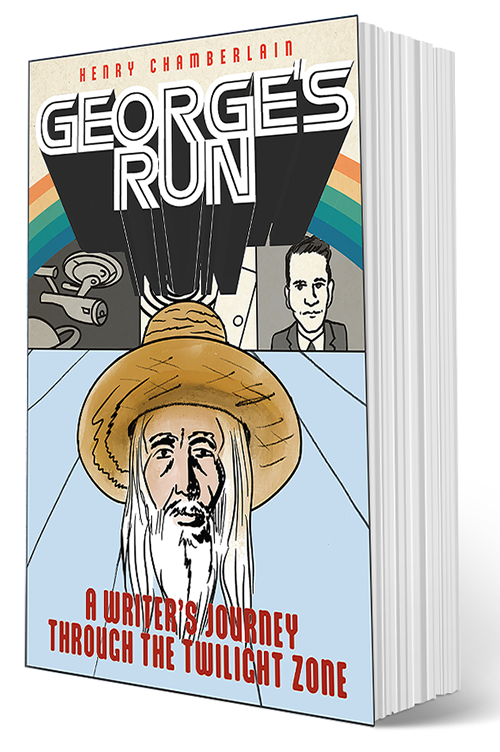
I wear many hats, including graphic novel artist, or “cartoonist-auteur.” This year is significant for me since my plans are to attend Small Press Expo and debut my new graphic novel, George’s Run. At least, that remains the plan as we all monitor the Covid-19 crisis. Here, in its entirety, is an interview with Small Press Expo executive director Warren Bernard with The Comics Journal. This interview will be of interest not only to those in the comics community but also provides insight into the response to the current crisis as it relates to landmark events and business in general. Each day, in every way, we are integrating more and more into a virtual and digital world. On so many levels, life will never be quite the same again.

Warren Bernard is the executive director of the Small Press Expo, one of the largest festivals focused on comics art and the indie-comics scene in the U.S. Each year, SPX gathers together creators, retailers, and fans of alternative comics and illustration in the suburbs of Washington, D.C. SPX2020 is currently scheduled for Sept. 12-13 at the Bethesda North Marriott Hotel & Conference Center in Bethesda, Maryland.

Warren is also a comics fan and historian, who’s amassed a significant collection of artwork, publications and memorabilia extending back over a century to the early days of graphic storytelling. He’s also the co-author of Drawing Power and has written extensively about the 1950s juvenile delinquency/Senate Comic Book Hearings.

Recently, TCJ writer Michael O’Connell interviewed Warren about the status of SPX2020, in light of the current coronavirus pandemic. In the interest of safety and maintaining proper social distancing, this interview was conducted via Skype.

MICHAEL O’CONNELL: How has the coronavirus impacted SPX 2020 at this point?

WARREN BERNARD: There are a couple of things that it’s impacted. Let’s take them one at a time. The first one is the impact on the exhibitors room. Normally, we send out, we’ll call it an invite list. That’s like all the publishers that normally come. And then there’s a selection of people from the indie comics community on an individual creator basis that we also invite. That is put together with input from everybody in the executive committee. So that normally goes out and then we also start the lottery. We pushed things back to see what was going on. And one of the decisions we made was that normally by this time, by April, we’re collecting money from people.

Because we pushed everything back, we’re not going to have all the tables’ stuff done before most probably May. Normally, that’s like by March or April, all that stuff is done so we can push everything out to everybody saying, ‘OK, look, you’ve got a table, send us money.’ We’re not even going to think about collecting money from anybody until late May, early June. There were a couple of reasons for that. In the indie comics community, there are a lot of people out there that have lost their day jobs. They’ve lost any kind of gigs that they’ve got in terms of artwork, freelance gigs. So we don’t want to go ahead and have to force people to cough up money that they may not have right now.

The second reason is that there’s all this uncertainty out there. And by the way, there’s a semi-selfish reason. We didn’t want to have to go through the hassle of refunding people’s money if we had to go ahead and cancel. We also were going under the assumption that people who did need unemployment would be able to get onto unemployment by the time we asked for money, because we do need money to go ahead and run the show. We’re not going to make any decision about holding SPX until most probably somewhere in June.

The second thing we had to do is we had to change the Ignatz Awards. The problem there was all of the boxes go to Dan Stafford’s house. We didn’t want to run into the circumstance where someone sends a box, God only knows who packed it. Dan or someone may not get sick, but they’re a carrier and all of a sudden there’s a problem. Also, by not doing that, we’re saving people a lot of money because normally people would have to send six copies. There’s the price of the books. There’s the price of the postage. And so we decided to take that out of the equation. So we’re going digital. And we’ve already set up a process of how we’re doing that. We sent the email out and we’ve already got close to 200 submissions for the Ignatz Awards to the digital platform.

Is there an entry fee that goes with that?

No, there was no entry fee that ever goes with that.

So that saves them the money of copies and the saves them the money of shipping. That’s a plus.

Assuming SPX gets held, we are going to ask on an optional basis for people to send in one copy of their submission so that it can go into the SPX collection at the Library of Congress. All the submissions that get sent in, whether they’re nominated or not, the Library of Congress gets first crack at all of those books. So if they don’t have them in their holdings, they are donated. And on most years, that’s literally 98 percent of the stuff that’s sent in for submissions that the Library of Congress does not have.

It’s nice that you’re able to have that continuity and you’ve been able to adapt to it, doing what everybody else is doing, virtual stuff. And probably that June date is a good date. My day job, I’m an editor for Patch and one of the beats I cover is D.C, and I know they’re looking at a peak for coronavirus cases at the end of June.

Things may be going back to normal, but are they going to allow 4,000-5,000 people here in Montgomery County to get together? We don’t have a clue.

Things may start to ramp-up, but the people that you talked about who may have lost their jobs or lost hours and gigs, they may not be in a position to travel or do anything.

There are so many different variables right now that anyone who says they think they know what’s going to happen is a liar. Like I said, there’s this whole safety thing. For all I know, they may want to go ahead and reopen stores and stuff like that, but large congregations of people, they may put the kibosh on that for a while. We don’t know. No one knows. So all we’re going to do is take these incremental steps.

Do you have a drop dead date? Is there a point of no return where if you don’t do certain things by like July 15, then that’s it?

I haven’t thought about that yet because in all honesty, I want to get to the first road mark, which is May-June. Every big show has a contract with the hotel for a certain number of room nights. And if you don’t book those room nights, you get penalized. The next step is going to be once we see the lay of the land on a practical basis. Is Amtrak running to bring people down from New York and Philadelphia? Are the planes flying? There are all these other variables that are going to come in besides whether or not SPX can physically hold it here in Montgomery County.

Is there a way to do a smaller show for 2020?

The problem with the smaller show is that we’ve already got a contract with guarantees in it. There are penalty clauses and all kinds of other stuff like that. I don’t want to get into the legal aspects of it. But, the bottom line is, if Montgomery County or the state of Maryland doesn’t want groups of 250 or more, 500 or more or 2,000 or more to get together, it’s not going to make much sense for us to even do a reduced show. Because then you have the whole problem of, in this reduced show, let’s say I do cut it back. We have about 280 tables in the room. Let’s say I cut it back to a quarter of that. We’ll use a quarter of the ballrooms, that’s 70 tables, who do I choose? So there’s this other operational thing that says, ‘OK, if we’re going to reduce the show, who are we going to have? What special guests are we going to have?’ There’s this other thing that says if I do cut it down, what do I cut it down to? And then how do you make those decisions? And I don’t have an answer for that at all.

Let’s talk about the show as if it were going to happen. What is it you’re hoping to do this year?

Because of the coronavirus situation, I’m not going to get into names that can be special guests, but one of the things that we’re doing is we’re going to bring in political cartoonists and people who do graphic journalism, because of the importance of the 2020 election. We started this back in 2008 for Obama’s first term and, so we brought down Tom Tomorrow, Jen Sorensen came, Ken Fisher/Ruben Bolling came, a bunch of people from the alt-weekly world came down, back when they were alt-weekly newspapers. We’re going to do a similar thing as that for this year. In 2012, the AAEC (American Association of Editorial Cartoonists) actually came in at the same time as SPX and had their convention here.

Not to name names and possibly people coming, who do you think is doing good political cartooning right now?

I’ve been a subscriber to Matt Bors’ The Nib since day one. And I think that they’re doing, between people like, Ben Passmore and Matt and Jen (Sorensen) and everybody like that, I think that’s the place to go for both graphic journalism and political cartoons these days. I have been actually somewhat surprised, do you know this political cartoon newsfeed called Counterpoint?

Yes, I do.

I subscribe to them also. As opposed to the understandable left-wing view of Matt Bors, Counterpoint, tries to present many more perspectives. Besides that, I subscribe to Jen. I get Tom Tomorrow’s work. I get Ken Fisher/Ruben Bolling. I’ve been an Inner Hive Patreon member for all those. Keith Knight is another one that I pay attention to.

You’re a collector of comic art and know much about comics history. Is there a political artist that is one of your favorites?

Warren: (Laughs).

Pick one. You can only pick one.

I can only pick one, fuck.

You can pick two.

David Lowe would be one of them, the British cartoonist. He saw the Nazis coming early on and actually was on the list of people to be killed if the Germans took over Britain. There was a hit list. He was on the hit list. In terms of American political cartoonists, I’ll show my bias. I was a big Herblock fan. I worked on his book. He’s another one for the 20th century. The third one, you have to go ahead and say Thomas Nast. There’s a bunch of other guys in there, like Robert Minor. I don’t know if you’re familiar with him or not. He was at one time the highest paid political cartoonist in the country and left it to become an avid member of the American Communist Party. Some of his cartoons were some of the best that came out in the teens and ’20s. Off the top of my head, those are probably my four faves.

OK, I’ll give you four. What do you think of the current state of the comics industry right now? I know there’s been a lot of worry, you mentioned the alternative press. I’ve seen a lot of people talking and being concerned about when Diamond announces it’s not going to distribute stuff and there are a lot of comic shops that are facing really tough times because of this. What are your thoughts about where we’re at right at this moment?

I think that all of this stuff that’s going on is really going to hit the retail comic shop industry pretty bad. There are going to be a number of bankruptcies. There are going to be a number of shops that aren’t going to come back.

I’m going to bifurcate this for a second.

On the superhero side, the Image, D.C., Marvel-type comics, I could see the day when those people just go digital only. Yeah. I think that someone took a poll that the average age of the person coming in to buy their comics in a comic shop, I think it’s in their late 40s. So, those are the people that have most of the boxes and stuff like that. I think there’s a sea change coming anyway, as it is with the whole retail business. This has just seriously accelerated that.

Now let me go to the other side, which is a smaller but nonetheless just as artistically important. That’s the indie comic side. … So when it comes to somebody like a Fantagraphics or Drawn & Quarterly or Top Shelf, their main issue is getting their product out and getting it distributed. Plus they also rely upon these festivals, whether it’s a book festival or an indie comics festival, Brooklyn Book Fair or SPX as two examples, to help promote their work, along with book signings. They’re going to see a certain amount of a hit also. And I’m going to be curious to see what that’s going to do because their stuff doesn’t go through Diamond.

Right. But the other thing about them is that they’re also dealing with a specialized audience. There are people who are paying for reprints of, you know, Little Orphan Annie. They’re in big bookstores, but they’re not necessarily reaching a wide audience or they’re not targeting as wide an audience.

Right. But it’s still going to impact them, whether it’s D&Q or for Fantagraphics, I think that they’re going to have a tough time because these festivals aren’t going to be around. That because San Diego isn’t there, because SPX may not be there, or Brooklyn Book Fest, most of them sell lots of books at these festivals. So, yeah, on the reprint side, let’s say IDW, their reprint side, someone like me, if I want something, I’ll go out to their website and just buy it. But the other ones where they’ll bring in people to an SPX, I think that they are going to see cash crunches also. It’s going to be a different manifestation than the superheroes side and a different impact because the business model is different.

As scary as the coronavirus is, I think the economic recovery is going to be pretty scary as well.

Oh, yes.

In times when people don’t have a lot of money, they cut out things, the frills. And for a lot of people the frills are books, comic books, movies, things like that. So even though right now they’re taking a big hit, during the recovery, who knows how long this downturn is going to go on?

On exactly that point, floating back to SPX and this coronavirus thing, without getting into internal details, we have gone ahead and taken a look at our expenses and have cut a whole bunch of stuff. And by cutting a whole bunch of stuff, we are anticipating a 20-25 percent drop in attendance. Assuming we do hold it, we’re going to try, as we get further into the year and if it becomes viable, we’re going to have to see about cutting more stuff. Because, we have no idea who’s going to be able to come through the front door. Even if we do get all these people in as special guests and we can do all the programming that we want to do. So we’re even doing things that, like I said, there’s a whole bunch of different areas that we’re cutting that then impacts people who were depending on us to go ahead and whatever little revenue we were going to throw them, we’re now not going to throw it to anybody.

There’s so many different levels that you’ve got to look at this. You’ve got to look at your own business side of can we afford these contracts that we have to maintain? Are we going to be able to get the people that are going to draw audiences in? And then is the audience even going to be financially able to come?

Not just financially able. I don’t know how much you listen to business news. I read the Wall Street Journal. I watch a lot of business news, and one of the things that some people are beginning to talk about is, let’s say for sake of argument, July 1 you open up the restaurants, you open up the movie theaters. On a real basis, how many people are really going to go? Forget about money. Forget about the ability to afford it. But particularly people who have diabetes or have high blood pressure, have those extra things. The mortality rates for people with those kinds of things who may want to go to a show just make it really risky to go ahead and go out into large crowds. I think Baltimore Comic Con is going to have a similar problem. Let’s say everybody did have a job. Let’s say everything does open up. Are people really going want to go?

It’s going to take some time.

Oh yeah.

What would you say to the retailers, to the people who are going to want booths, and also the the people that may be coming to do panels and things? What would you say to them? And then also, what would you say to other people who want to attend?

I would say do what you feel safe doing. It’s the only thing that you can do. I’m not going to get up here and plead with people to come and ask them to go against their own self-health interest. By the way, if it comes down to that we have to cancel SPX because of strictly health reasons, then that’s something that we’re going to have to do.

So, to those people that are thinking about coming, everyone’s got to assess their own circumstance and everyone’s got to feel safe in terms of not only getting here, but staying here and then being in a room with however many people are going to be allowed in the room. For instance, what if they go ahead and they say, ‘Ok, you can hold it, but you have to maintain the six-foot distance.” How would that even work in an SPX situation? Here in Montgomery County, they’ve basically told all the stores, ‘Look, you have to enforce the six-foot rule. You have to have someone out front to control the number of people coming into your stores.’ So all of this gets back to everyone has to feel safe in what it is that they’re doing. That’s the message that I think everybody needs to have.
FILED UNDER: , , ,


Leave a comment

Filed under Comics, Comics News, Small Press Expo