Tag Archives: Culture

UNCLE JAM #103, Volume 40, Winter 2013

Uncle-Jam-Winged-Tiger-Phil-Yeh

UNCLE JAM is a magazine showcasing the visual and literary arts. It’s been around since 1973 and can always be relied upon to entertain and inform. Phil Yeh started up this magazine when he was still just a kid with a dream. He’s seen his magazine evolve into a sophisticated publication both in print and on the web. You can view it by visiting the Winged Tiger website here.

I am honored to do whatever I can to lend a hand in broadening UNCLE JAM’s reach in my area and beyond. As its Seattle Bureau Chief, I’ll oversee distribution and content related to the Pacific Northwest. UNCLE JAM, as always, remains a beautiful work-in-progress and I look forward to lending a hand in the years to come. I will see what I can do to give UNCLE JAM, a California-based magazine, a bit of that Seattle, and Portland, cool. It is, after all, already very cool! UNCLE JAM is a jewel among the many good works that Phil Yeh does to support the arts and literacy around the world. Learn more about Phil Yeh, and Cartoonists Across America and The World, here.

Leave a comment

Filed under Art, Books, Comics, Literacy, Magazines, Phil Yeh, Uncle Jam

SEATTLE INTERACTIVE CONFERENCE 2013: TIME magazine and The Future of Journalism

Jonathan Woods TIME.com Senior Editor, Photo & Interactive

Jonathan Woods TIME.com Senior Editor, Photo & Interactive

What will it take for TIME magazine, the landmark newsmagazine, to survive for another one hundred years and beyond? Well, no one can say that TIME is not synonymous with quality journalism because it certainly is. It has a long history that led it to that level. One of the factors, no doubt, was its vigorous, even legendary, competition with Newsweek magazine. But it’s a whole new game today. One thing is clear and that is that nothing is clear. TIME is in the midst of a revamp. Of all the Seattle Interactive Conference sessions this year, the session on TIME and its future provides the biggest glimpse into a brave new world we are all interacting with.

TIME.com‘s Photo and Interactive Senior Editor, Jonathan Woods, led a discussion about this brave new world. Instead of being overwhelmed by the shock of the new, TIME appears to be standing tall about its legacy and looking forward with confidence. Woods came across as a man very much in charge, even if he is entering uncharted waters. To help steer the mighty vessel, TIME is working with Big Human, known for its work with startups; and Blink, a web and mobile solution for finding and managing freelance media professionals worldwide. Media professionals upload their location data on the Blink mobile app to a website that media companies use to search for talent to work on their stories. Managing Director Steve Spurgat was there to speak for Big Human. He used to be CEO of the now defunct VYou, a social media platform once used by Oprah’s Book Club.

Founder/CEO Matt Craig was there to speak for Blink. Blink is online with many active users on the site. People who are interested in joining the beta site can sign up here. The Blink app is available on iTunes and Google Play. Craig worked on Page One of the Wall Street Journal for five years before founding Blink.

Steve Spurgat Big Human Managing Director

Steve Spurgat Big Human Managing Director

Big Human’s Steve Spurgat set the tone for the discussion by bringing up The New York Time’s “Snow Fall,” a feature story about avalanches that employs innovative use of photos and interactive. The title of the story became its nickname when referring to its storytelling features. Spurgat’s reference to Snow Fall was a way of hinting at what TIME might do differently. “A show of hands for those who have seen Snow Fall,” said Spurgat. A majority of hands went up. “Alright, now how many of you remember anything you saw?” said Spurgat with a decided sneer to test the attendees. There was some nervous laughter from the audience, probably unsure of how to respond. Instantly, just to balance things out, Blink’s Matt Craig offered: “But Snow Fall did scratch a certain itch.” So, where do you go from there?

Of course Snow Fall seems to be an easy target because of the controversy related to naysayers, particularly Medium.com’s attempt to undercut it. You can read a good recap on all the fuss here. Essentially, someone at a startup can deny that Snow Fall is much of a big deal since they believe they can offer something similar. And so a process of kicking the original around ensues. Someone at another relatively new site pokes at it and someone else comments on it and so on. Hey, give yourself some time and go read the original Snow Fall here. What you’re looking at is an excellent in-depth feature, something TIME really can’t quarrel with over quality. You are free to read, and skim over, whatever you want, just like you would any special feature that has ever been created.

Matt Craig Blink Founder/CEO

Matt Craig Blink Founder/CEO

It’s not like TIME doesn’t have some very cool features of its own. There is “Timelapse,” in partnership with Google, Landsat, and Carnegie Mellon University, that presents a 30-year look at global climate change through satellite images. View it here. Woods also cited a feature with an infographic by Jeffrey Kluger and Chris Wilson mapping out the best places to live in the U.S. according to your mood. Read it here. Woods was asked a number of questions that kept coming back to whether or not there was a formula to follow to maximize readership and to this, over and over again, Woods was clear that there was no formula. “I want the right amount for a story,” was Woods’s steadfast response. To this, Spurgat could only agree with, “A story is as long as it needs to be.”

Getting back to basics on compelling content, Woods pointed with pride to the newly launched Red Border Films at Time.com. This new documentary series debuted on August 15, 2013 with “One Dream,” to commemorate the 50th anniversary of the March on Washington and Dr. Martin Luther King, Jr.’s “I Have a Dream” speech. View it here. The first profile is of Bobby Henline, an injured Iraqi war veteran who is now a stand-up comedian, directed by Peter Van Agtmael. It will debut on Veteran’s Day, November 11, 2013.

Here are a couple of other interesting observations, considering that Big Human and Blink have TIME’s ear. Blink’s Craig referenced Vice.com as a leader in original web content. The VICE audience expects great video, photography and stories. At this point in the conversation the discussion had turned to long form vs. short form media and the issues surrounding user generated content. Craig believes UGC is useful in some instances but great brands will always need to produce high quality original content. VICE is a great example of a media outlet that does it well. Craig stated that he gets his news from a wide variety of sources with the most alternative source being Vice.com. And Big Human’s Spurgat wasn’t too keen on Medium.com’s tracking of how long it takes a reader to complete reading a post. “It’s documented that people don’t always read things to the very end,” said Spurgat. “News is very fragmented today,” he added. We do, however, come back to the fact that web content is free of the restrictions of print. Web content is free to be as long as it needs to be.

Snow Fall is both derided and admired in the same breathe but it is not the problem. As much as we want instant gratification, we appreciate a feature that provides thoughtful analysis and greater detail. Have we seen the last of Snow Fall? No, instead we’ll find our way out of a free fall. Journalists will continue to pursue a good story. Stories will continue to be told, short ones and long ones. And one thing is certain: we will continue to see more competitive, and excellent, journalism ahead, no matter what the medium.

Leave a comment

Filed under Internet, Journalism, Media, news, Newsweek, Seattle, Seattle Interactive Conference, TIME Magazine, Web, Web Content

Lady Gaga Supports Marina Abramovic Institute

Lady-Gaga-Marina-Abramovic-Institute

Lady Gaga is a significant artist so when she supports a cause, it’s worthy of attention. The press and hype we live with can often blur what is actually going on. In this recent news, Lady Gaga is supporting the creation of the Marina Abramovic Institute. Marina Abramovic is an artist who primarily works with the body. She has created some profound work over the years that has led to her current goal of a permanent space to explore her work and to support others with similar work.

The creation of the Marina Abramovic Institute is the subject of a fundraising campaign at Kickstarter (ends August 25) which you can learn about here.

Leave a comment

Filed under Art, Comics, Kickstarter, Lady Gaga, Marina Abramovic

Creative Living: Meredith Clark

Meredith-Clark-Residence

From Meredith Clark’s “Residence,” a collection of poems:

Leeds

The Inside pocket of his jacket.
Wool. The wind picked round
the owling boats. Found on the
wharf: a sheaf of black and white
landscapes, hand-tinted; flung in a
public place

Meredith Clark enjoys working with small spaces, merging image to words, finding deeper meaning. In the above excerpt, we have an ambiguous image attached to a locale and to a poem. It is part of a collection of such arrangements on postcards creating a mysterious travelogue.

If you live in Seattle, you may have seen Meredith Clark at one of her street performances where she dutifully sits with a typewriter awaiting requests for a poem. That is one aspect of what she does and she finds these actions fascinating. She is always pleased to learn what the poem means to the recipient. She recounts one instance where the person had quite a palpable experience to the poem she wrote for him. It reminded him of something that was not literally in the poem but had managed to be drawn out nonetheless.

What resides between the said and the unsaid it what poetry can excavate.

Portrait of Meredith Clark during our conversation.

Portrait of Meredith Clark during our conversation.

I met Meredith as a local coffee shop and we took the time to focus on the subject of creativity. What does it take to be creative? How can we all be creative? It was just a conversation with no expectations to find solutions.

For Meredith, creativity is a selective process, a matter of what to leave in and what to leave out. It was the study of photography that opened up the possibilities of writing. She had always seen herself as a writer but it wasn’t until graduate work that she truly saw how framing a subject for a photograph was analogous to the editing process in writing as well as finding a subject to write about in the first place. It is these considerations that have served her well ever since.

Conversation in a Café

Conversation in a Café

So, you want to write but what do you write about? That’s where that photography analogy is so helpful. You concentrate on what is in the frame. You write about that. Well, not literally. But that’s what you can play off of. It frees you up. You are no longer attempting to write some stereotypical version of the Great American Novel. Instead, you’re getting to write in a deeper way. We chat about experimental writers that have helped pave the way to free up writers, going back to Donald Barthelme and his integrating words and images to the more recent trailblazing by Mark Z. Danielewski. Meredith recalls with delight a recent visit to Seattle by Danielewski. One member of the audience gleefully said that, since reading him, she feels she can now write anything!

Not everyone feels compelled to express themselves. Then you consider that we are not a nation, let alone a planet, of readers. Literacy rates are abysmal. The reading public is a relatively select group compared with everyone else. It’s a formidable minority with massive purchasing power but a minority all the same. Is it any surprise that most people are not in touch with their creative side? It is seen as a luxury, as something you shed away with childhood. It doesn’t have to be that way. In some respects, people like Meredith are role models even if she doesn’t seek that out.

We talk about how the internet has changed everything. That reminds Meredith of being a substitute teacher for a high school English class. She appreciated that the students were preparing for exams and suggested to them that they write out on paper an outline to help organize their thoughts. The class stared at her blankly. One student said that no one writes with a pen and paper anymore. What else do students not do anymore? Meredith believes that no one bothers to edit themselves anymore. “The internet,” she says, “takes away the ability to be deeply impressed by anything.”

You simply cannot appreciate one subject, while you have numerous others on a screen, in the same meaningful way when your attention isn’t compromised. And an image on a screen, of course, is never going to replace the real thing.

Those of us who are creative people are most sensitive to the pitfalls, distractions, and unforeseen factors that can derail a creative life. Meredith recalls an English professor relating his story of early success, being published in The Paris Review at age 18. It took him a decade to get over it, to recover his bearings and be able to write again. Just think of it, suddenly that aspiring writer has landed a major book deal, and he has no need for his day job. However, once he’s abruptly untethered himself from his routine, he finds he can’t write. No one said life would be easy, even when it seems to have done just that.

Meredith is at work on a memoir. You can find Meredith Clark’s “Residence” collection here. And you also read Meredith’s poem, “Land,” here.

Leave a comment

Filed under Art, Books, Creative Living, Creativity, Meredith Clark, Poetry

Let’s raise the stakes

Our friend, Cristian, is very close to his goal. Time to go in there and help the guy out!

Leave a comment

Filed under Culture, Indiegogo

NEVSKY: A HERO OF THE PEOPLE Review

If I had one question to ask writer Ben McCool, I would ask him why he chose to write a graphic novel about the 13th Century Russian Hero-Prince Alexander Nevsky. But then I think I can come up with some good reasons why. One good reason is a somewhat similar venture: “300,” a successful 1998 graphic novel, also about a David versus Goliath type of battle, written and drawn by Frank Miller, inspired by the 1962 film, “The 300 Spartans.” Miller’s graphic novel went on to become, “300,” a successful movie in 2006.

In the case of “Nevsky: A Hero of the People,” McCool says his inspiration is the 1938 film, “Alexander Nevsky,” by the great Russian filmmaker, Sergei Eisenstein. And that’s all well and good but it is not a film that will ring bells with anyone. If you were to mention to staff at any comics shop, Eisenstein’s most well known scene in his body of work, the “Odessa steps” sequence in “Battleship Potemkin,” it would be met with blank stares. So, in that respect, it is a curious and hard sell. However, if you mention that the 1938 “Nevsky” film influenced George Lucas in some way, namely Darth Vader’s hat, then you’ve got sort of a viable hook.

Part of this is a waiting game. There is always the possibility that the relatively unknown  “Nevsky” graphic novel will indeed lead to a new “Nevsky” major motion picture. You can read all about those details at the L.A. Times’s Hero Complex site. And then it’s a whole other playing field.

Everyone loves an underdog. And an action story with a great battle. And a true story is a good thing too. Alexander Nevsky is one of the great heroes of Russian history as he was there to fend off the Mongol invaders to his territory of Mother Rus and then he went on to join a significant neighboring territory and, with a hope and a prayer, was able to lead a victory over the marauding Teutonic Knights. This is truly the stuff of legend. It was just the sort of legend that Stalin needed to associate himself with when he put Eisenstein to work. The end result, the 1938 film, “Alexander Nevsky,” satisfied Stalin’s ends but, as for artistic integrity, not so much. Like “Star Wars,” this film does well with the epic battle scenes, muddles through human interaction, and is blunt without a hint of subtlety.

The best thing about the original film is how Eisenstein was able to work with another legend, the composer Sergei Prokofiev. They achieved a magnificent synchronizing of action and musical score with the rushing into battle of the Teutonic Knights.

What McCool set out to do was work with the film company, Mosfilm, that owns the original film, and create a companion graphic novel. You can think of it as you would any other graphic novel that supplements a major motion picture. It is not at all a, frame by frame, tribute to the original film or really an interpretation of the film. It is a retelling of the basic script: Nevsky, against all odds, finds a way to defeat the German invaders in what was then a collective of states coming into their own as Russia, in the 13th century. In that regard, this graphic novel does an excellent job of providing a quick read of a significant period in Russian history. It would also serve to inspire readers to view the original film.

As a graphic novel on its own merits, the story is well paced. It is the art, and the role it plays in this story, that is really interesting. The artwork by Mario Guevara is a curious mix of mystery and understatement. I think that style worked really well in “Victorian Undead.” And it works in “Nevsky” too in an unconventional way. Whereas Frank Miller’s style is ballsy, Guevara’s is contemplative. You get a sense that all the characters, including the hero, are making it up as they go. They are not larger-than-life, none of them are. In fact, the characters rather blend into each other. So, in an odd way, it is leaning more toward realism and not evoking a hero’s tale. There are exquistely drawn scenes throughout to be sure. Overall, it’s the mood that is dialed down and that’s actually an improvement over the original film.

Given the desire to be flexible and experiment with having any and all subjects open to a graphic novel treatment, “Nevsky” is a welcome addition on the shelves. “Nevsky: A Hero of the People” is a 110-page graphic novel published by IDW. You can order your own copy through Amazon and you can check out the Nevsky site here.

Leave a comment

Filed under Ben McCool, Comics, Comics Reviews, graphic novels, IDW Publishing, Mario Guevara, movies, Russia, Sergei Eisenstein, Stalin

CULTURAL AMNESIA 101: THE MIDNIGHT SPECIAL

If the humanism that makes civilization civilized is to be preserved into the
new century, it will need advocates. These advocates will need a memory, and
part of that memory will need to be of an age in which they were not yet alive.

— Clive James, “Cultural Amnesia: Necessary Memories from History and the Arts.”

My friend, Roy, was telling me all about his favorite radio station, WFMT and its celebrated “The Midnight Special” program where folk and satire and oddball antics collide. It used to be more common to find eccentric shows on the radio dial. Thanks to YouTube, if you know where to go, you can still find a lot of treasures. And, of course, you can still tune in to WFMT and listen to “The Midnight Special”  archives whenever you want or check the “The Midnight Special” site for a station that carries the syndicated show.

Here are just three personalities from yesteryear that Roy mentioned to me in relation to his adventures in late night radio. There are plenty more but I thought it interesting to focus on these three as a set given that I did not find them through trial and error but from a real human being. These are entertainers you would have found on the radio in the ’50s to ’60s: Flanders & Swann, Anna Russell and Tom Lehrer. What do they share in common? Well, Roy loves them and that’s really a good place to start. Given what I know about Roy and my initial sampling, all three of these acts have a wry sense of humor and love of musical whimsy.

Flanders & Swann – “The Hippopotamus Song”  This is one of the songs that Flanders &  Swann are best known for. You can hear a theater crowd roaring with laughter. Very cool. Very vaudevillian.

Anna Russell – “The Ring of the Nibelungs”  If you like Victor Borge’s antics, then you’ll love Anna Russell. She’ll bring classical music down to Earth for you.

Tom Lehrer – “The Elements Song”  This may be your lucky day, or night, if you’re new to this song. It is a major hipster find that keeps being covered by new artists.

You start to think about it, these entertainers, perhaps more obscure for some audiences, will bring to mind other entertainers from that time period, Victor Borge, The Smothers Brothers, Woody Allen, and then other entertainers up to the present, They Might Be Giants, Flight of the Conchords, Sarah Silverman. It’s all just a matter of keeping an eye out for new talent, new to you. One of the most asked questions by casual observers is a very direct and honest question, “How do you find out about all this stuff?” It’s not a question to dismiss by any means! The answer, my friend, is blowing in the wind: Just ask, search around, pan for gold, if you will. Not so long ago, one of the most respected ways of stumbling upon something cool and new was to go look in the bins at your local record shop. You know, with the passion for vinyl unabated, specialty shops are still there for you to explore.

Remember the movie, “High Fidelty,” about a record shop owner, played winningly by John Cusack, and his staff who were walking encyclopedias of pop culture? All very pre-internet. You were sort of at the mercy of the hipster geeks who seemed to have hoarded all the information. A small price to pay in retrospect. Either they took pity on you, actually liked you, or cast you out as soon as they set eyes on you.

Remember Jack Black in that movie? He was the ultimate gatekeeper of cool. If he didn’t think you could handle it, or should handle it, out you went.

Pretend Jack Black decided you were okay and recommended to you Flanders & Swann, Anna Russell and Tom Lehrer.

This is all part of a grand continuum. It’s a particular mindset: folky, lefty, offbeat. A way of life. So many interconnections. Until next time, chin up, and don’t forget the patron saint of lowkey deadpan humor…

Mr. Bob Newhart. Don’t ever forget Bob.

2 Comments

Filed under Comedy, Culture, Entertainment, Humor, Jokes, pop culture, Radio, Vinyl Records

ART: Andrew Schoultz & Richard Colman at Cooper Cole

Cooper Cole has a show up that speaks to my heart. It’s in the spirit of the sort of work I strive to do. What struck me, right away, is the energetic movement created by the repetition of horses in some of Andrew Schoultz’s paintings. I’m not sure what it is saying since I don’t have the catalogue handy but I am eager to learn more. I am also intrigued with Richard Colman’s work, just as ambiguous as you’d expect but with a distinctive look about it. The show featuring the two artists is entitled, “Destroyers,” and seems to be a fairly apt description.

Press goodies follow:

Andrew Schoultz & Richard Colman
Destroyers
June 1, 2012 – June 23, 2012

Opening reception Friday June 1, 2012 / 6 – 10pm

For press and sales information please inquire with the gallery.

COOPER COLE is pleased to present a two person exhibition introducing american artists Andrew Schoultz and Richard Colman to their first showing in Canada.

Andrew Schoultz / Hand Repetition (Dark Horse Projection) / Acrylic, gouache, ink, and collage on paper / 30″ x 22″ / 2012

Andrew Schoultz’s mixed media work recalls a historical and political ephemerality that is faced with the inevitable fate of repeating itself. He explores themes such as power struggles, conflict, and sociopolitical hardships through detailed line work and vivid symbolism. While alluding to these scenes from the past, his frenzied yet whimsical work negotiates a familiarity with contemporary plights. Schoultz has exhibited globally in countries such as Denmark, England, Italy, the United States, and now Canada. His work can been seen in institutions and collections such as the Andy Warhol Museum, Torrance Art Museum, Hyde Park Arts Center, Laguna Art Museum, Progressive art Collection, and Frederick R. Weisman Foundation, amongst others. Most recently he exhibited at the San Francisco Museum of Modern Art, taking part in a two person exhibition in dialogue with the work of artist Paul Klee. Schoultz currently lives and works in San Francisco, California.

Richard Colman / Untitled, Figures Behind Pitchers / Acrylic and enamel on paper / 24″ x 20″ / 2012

Richard Colman’s work blends figurative imagery and bold geometry. Typically using symmetrical compositions, Colman explores themes of human sexuality, societal hierarchies, life and death. His work ranges from small to large scale painting, murals and installations. Colman has been working as a professional artist for over a decade and recently completed a commissioned mural for Gagosian Gallery in Los Angeles. He has exhibited internationally in countries such as Denmark, England, the United States, and now Canada. Colman currently lives and works in San Francisco, California.

Pairing these two artists and friends together creates an interesting dialogue highlighting their signature styles while exploring new territory through a variety of mediums including; painting, drawing, collage and installation.

Leave a comment

Filed under Art, Culture

HUCKLEBERRY FINN Reeks Of The Past In A Most Glorious Way

“Adventures of Huckleberry Finn” reeks of the past. It reeked of the past when it was first published in America in 1885. And it sure as hell reeks of the past today — but in a most glorious way. Mark Twain knew what we he was doing. He was fully engaged in the American scene, warts, bruises, gunshots and all. As I carry around an eReader with me, I am reading more of the books I’ve been meaning to read. This one has been high on my list. Today, being Memorial Day, seems a particularly appropriate time to consider this classic, although any day of the week will do as well.

Upon my reading, I come away with the conclusion that, despite the controversy, Mark Twain’s novel is indeed a landmark work of American fiction and, I’ll go one better, is essential. At this point, it’s hard to imagine it fading into obscurity and yet there are those who continue to try to see that happen. The arguement is that we, as a nation, have moved beyond such issues of race. But that’s really nothing more than an attempt to sweep things under the rug and isn’t the American rug already pretty lumpy from being swept under?

The biggest problem of all for “Huckleberry Finn” is the fact that it is a work of art. You see, a true work of art will always confound the literal-minded. As in life, and as in art, there are no neatly tied up resolutions. No, instead, ambiguity presides. The main character, Huck Finn, does not behave in a systematically heroic fashion. What he does is behave like a boy with a mind, heart and soul of his own. He makes numerous choices, not always the right ones. And, arguably, the other main character, Jim, the runaway slave who Huck has embarked upon a journey with, is not perfect either. Both are products of their time, America circa 1840, and both are individuals in search of freedom as they know it. Twain, the keen social observer, set up the perfect vehicle from which to comment on American life. He knew as well as anyone that the end of the American Civil War had not led to the freedom that African Americans had been promised. What it had led to was the dark era of Jim Crow, nearly a century of systematic racial discrimination from 1876 to 1965.

Mark Twain

Twain maintains an impressive balancing act throughout the novel. The story is told by a thirteen-year-old and yet manages to bring about older insights. It is a story very much of its time, using language of its time, while still transcending it. And he adroitly shifts from broad humor to more poetic passages. There are three main parts to the story. There is the most poignant first part where we find Huck at the hands of his abusive father and his subsequent dreamlike escape on a raft with Jim. Then, after a number of mishaps, we settle into a long burlesque section where Jim and Huck are at the mercy of two con artists. And, finally, the last part finds Huck reunited with Tom Sawyer in a surreal episode where they appear to make an utter mockery of Jim’s plight as a runaway slave complete with torturing him with rats, spiders, snakes and a series of humiliations. This is the part that makes Hemingway have to add a disclaimer to his decree that all American fiction begins with “Huck Finn.” He concludes that the last twelve chapters are not worth a damn — which is rather meaningless. The fact is, taken as a whole, the novel does a fine job of revealing a nation struggling with its own dysfunction.

If anyone was expecting Tom Sawyer and Huckleberry Finn to have a perfect epiphany and, without hesitation or distraction, welcome Jim to his rightful place among humanity, Twain is there to say the reader has another thing coming. If a nation can hardly come to grips with what it has wrought, don’t expect two boys to figure it out. What they will do is mirror their own environment. And, with any luck, maybe they will rise above it because they should before too long. That is Twain’s hope for the characters, for his country, and for his readers. In time, with any luck, maybe we will all rise above what has been wrought because we should before too long.

The fact is that the building of a nation is, and always will be, a wild and wooly affair. There are things that can never be lived down and yet we must carry on. We must carry on because we have no choice but to do so. But to forget, no, that is taking things too far. Just as Twain will not let the reader off the hook when it comes to how two boys will behave, he is not going to make it comfortable regarding how a nation behaves. It should be as clear as day that Huck’s beloved friend, Jim, is not a “nigger,” in any sense of that word and yet Twain uses the term repeatedly as the characters in the book refer to him and to any African American. The word is used by the high and the low, from the most ignorant yokel to the country doctor. Huck uses it matter-of-factly without giving it a second thought. And that’s a huge point in the book. The word stings, it hurts and humiliates. But, if all the grown-ups are using it, then why should Huck question it, right? But, despite the predominant feelings of the time, Huck does question Jim’s state as a slave.

The controversy rages on about whether or not to teach this book in high school. To that problem, I suggest another way of looking at it. What if no one had been around to capture on video the beating of Rodney King? Or any number of acts that have occurred since then? We should think of “Huckleberry Finn,” in one sense, as a master recording of those sort of things, the things we wish would just go away or had just never happened. Instead of attempting to ban Mr. Twain’s book, we should be praising Mr. Twain. For those who think we’re better off with easy answers and forgetting the past, “Huckleberry Finn” is just the sort of book you should consider. As much as this classic is speaking to the past, like any excellent work of art, it clearly speaks to the present and the future.

Leave a comment

Filed under Books, Fiction, Huckleberry Finn, Literature, Mark Twain, Reviews

Finding An Authentic Voice for 9/11

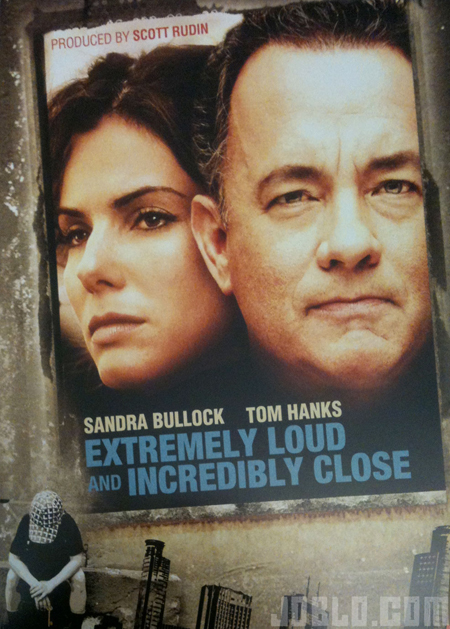
It is a necessary thing to aim the bar high when attempting to present the most remarkable expressions about 9/11. But we shouldn’t get so intimidated by the subject matter that we end up falling into stilted language and a stilted vision. I was reading The New York Times and was surprised by what I read in a think piece entitled, “Outdone by Reality,” by Michiko Kakutani. The writer couldn’t think of any novel that truly captured the raw feeling of 9/11. The one that comes to mind for me is “Extremely Loud and Incredibly Close” by Jonathan Safran Foer. Kakutani does mention it but dismisses it within the portion of his article he entitles, “Reduce, Reuse, Recycle.” The problem with that novel, for him, is that it resembles the structure of Gunter Grass’s “The Tin Drum,” which also has as its protagonist, a boy named Oskar. I would simply say that is part of the art of the novel. But no, for Kakutani finding the words is oh such a struggle. I don’t think so at all. In fact, Foer’s book does a remarkable job of not being on a high horse, shrugging one’s shoulders and weeping because the words aren’t there.

The words are there! You just need to organize your thoughts. The character of Oskar, a very precocious 9-year-old, speaks for the turmoil felt by so many after the 9/11 tragedy. In this case, Oskar lost his father that day. It’s a very symbolic and effective construct. Oskar is a mess. He finds a key among his father’s belongings. For most of the story, he is seeking the lock to that key. We seek our own answers too. Are they all at the same level of intensity? Of course not. You could be someone living on the Upper West Side or in Kansas City and not have lost anyone in 9/11. The connection to the event, for most of us, is what we consume from the media.  Are we all traumatized by the event, rendered mute? No, that would be nutty in the extreme and highly prententious at the least. Anyway, I am veering off the topic. I just think Mr. Kakutani had a job to do: write a think piece for The New York Times. And it reads as such. Take from it what you will. It’s just human nature. You can live in close proximity to where a major event occurred and still have a, say, provincial view of it. For Mr. Kakutani, it was the installation in 2005 of Christo’s “The Gates,” a series of saffron draped gates that dotted Central Park, that he acknowledged as a successful work of art that addressed 9/11, albeit indirectly. Well, that is Kakutani’s neighborhood. He let down his guard and enjoyed the art. Now if he could just go back and give Mr. Foer’s book another chance, assuming he ever read it in the first place. Well, he can always see the movie starring Tom Hanks and Sandra Bullock and complain about how off the mark that movie was to healing our collective wound. It’s a major motion picture. It probably will miss the mark but it could spark a better understanding for many who have not even heard of the book yet, much less its paying tribute to “The Tin Drum,” both an excellent novel and film.

Leave a comment

Filed under Art, Books, Culture, moives, pop culture