Category Archives: History

Graphic Novel Review: JFK: SECRET OPS by Craig Frank

JFK-assassination-graphic-novel-2013

There is something very wrong about following a vengeful JFK in pursuit of his killers but Craig Frank is willing to go there in his graphic novel, “JFK: SECRET OPS.” It is dark humor to be sure. What makes it work is Frank’s unabashed commitment to stay the course. Okay then, giddy up, pardner, cause we’re on a bumpy conspiracy theory-laden crazy ride. Where do I find these unusual works? Well, it ain’t easy but it’s fun.

Continue reading

Leave a comment

Filed under Comics, Craig Frank, Graphic Novel Reviews, graphic novels, History, JFK, Kennedy Assassination, Reviews, Satire

Review: MARCH: BOOK ONE by John Lewis, Andrew Aydin, and Nate Powell

March-Top-Shelf-Productions-2013

The 50th anniversary of the March on Washington is today, August 28, 2013. It is one of the most inspiring moments in American history and all of history. It will only grow in stature and significance as time continues its own march. The United States of America was desperately lagging behind in full self-awareness as a nation when it received an opportunity for collective clarity. It was a beautiful, gentle, and energetic plea for understanding. There were marches before and after this distinguished one. Progress would still take time. His words would still be dismissed by some. But, on that day, Martin Luther King Jr. spoke to a nation. He gave a speech. He spoke of a dream.

MLK-March-on-Washington-28-August-1963

We continue to remember that moment, and that movement, in new ways. One shining example is “March,” the new graphic novel, published by Top Shelf Productions, written by Rep. John Lewis and Andrew Aydin, and drawn by Nate Powell. “March: Book One,” the first part of a trilogy, has already gained critical and popular acclaim. It has made it to the number one spot on The New York Times bestsellers list for Graphic Books. The creation of this book is inspiring in itself. Congressman John Lewis is a perfect guide. He was an active participant in the civil rights movement right from the start. He is the last surviving dignitary who gave a speech during the March on Washington. And he’s a wealth of knowledge and goodwill. The “March” trilogy gives us a front row seat to the civil rights movement in America through the eyes of Mr. Lewis. The story is framed all in one day, January 20, 2009, the day of the inauguration of President Barack Obama. It’s an ambitious project that reads quite smoothly, just as if Mr. Lewis was there to tell you the story in person.

March-Book-One-2013

The script seems to embrace a cinematic pace. The main character is recalling his life all in a short span of time with each recollection triggering an extended flashback. It is left to Nate Powell’s storytelling ability as a cartoonist to bring out aspects that gel with the comics medium. You see this in the various ways that Powell plays with text and composition like when he has a favorite passage from the Bible run across a silhouette of young John Lewis: “Behold the lamb of God which taketh away the sin of the world.” And, of course, the distinctive drawing style of Nate Powell takes over. We easily become immersed in the intelligent and caring ways of this boy who is compelled to preach to the chickens on the family farm. In due time, the young man’s compassion becomes refined and focuses on the social gospel, the idea that church principles can guide social justice.

Martin Luther King and the Montgomery Story, published by F.O.R. in 1955

Martin Luther King and the Montgomery Story, published by F.O.R. in 1956

March-Book-One-Top-Shelf-Productions

March-Book-One-Lewis-Aydin-Powell-2013

It is a dangerous world that young Lewis must navigate. There is constant humiliation and intimidation. You could easily be killed, just like 14-year-old Emmett Till. But a violent reaction would not be the answer. The key was passive resistance and keeping faith. There were various techniques to learn in order to outwit one’s attackers with the prevailing goal being to draw out your enemy’s humanity. We find an actual comic book pamphlet of the time laying out the Montgomery Method that worked so well for Dr. King and his followers. It is a satisfying comics reference within a comic. It was an inspiration for the young John Lewis. And it’s a compelling link to the past to this contemporary look back.

It will be great to see the whole trilogy. It’s so important for new generations to have something contemporary in order to help them hook into history. The civil rights movement is really relatively recent history depending on how you look at it! This book and “Lee Daniel’s The Butler” make a big difference. The United States of America has a lot of wounds that are still healing and we still have a lot to learn and relearn. It’s this book and that movie that provide essential hooks for young people, give them proper context, help them appreciate when they hear on the news that our voting rights as a people are, even today, being compromised. You can’t put enough value on a book like “March” and more power to Top Shelf Productions for publishing it.

“March: Book One” is a beautiful book. It is a new way to honor and understand what has come before us and be inspired for what lies ahead. It is a 128-page trade paperback and is available for $14.95 (US) print and $9.95 (US) digital. Visit our friends at Top Shelf Productions here.

4 Comments

Filed under American History, Civil Rights, Comics, Graphic Novel Reviews, graphic novels, History, March on Washington, Martin Luther King Jr., Race, Race Relations, Social Justice, Top Shelf Productions

Graphic Novel Review: BLACK PATHS by David B., published by SelfMadeHero

OLYMPUS DIGITAL CAMERA

Sometimes a man needs the right kind of motivation. “Lauriano made a myth out of his two days in no-man’s-land.” That is what they say about our main character in David B.’s latest graphic novel, “Black Paths,” published by SelfMadeHero. He is thought to be posturing. But, then again, his friends are quick not to judge too harshly. Everything is in flux. The First World War tore into nations and souls. It did what it did to Laurinao. And it did what it did to the accidental city-state of Fiume. They know that all too well. “Ha! Life is good in the free city of Fiume. We’re going to die of cold and hunger.” Lauriano chooses to make sense of things by being the hero. It may prove a way to cope but it can also be a very lonely place.

Some say that certain things, like the silent movie era, are lost to us, just too far away for us to relate to. But I don’t believe them. Charlie Chaplin. Mary Pickford. We can still look into their eyes and they’re still alive. Everything is relatable. It depends on who is telling the story. What David B. does with “Black Paths” is give us a sense of the chaotic state that Europe was left in after the First World War and part of the stage that was being set for another global war. He does this by focusing on the little mouse that roared, Fiume, the city without a country. Italy is not terribly interested in absorbing it. Croatia is not ready. To make matters worse, a usurper, the Italian poet Gabriele D’Annunzio, takes command. This leaves a void that is filled by various corrupt forces. Fiume is not the harsh no-man’s-land of the trenches but it definitely rates the tile of “No-Where,” that Lauriano has given it.

Black-Paths-David-B-comics-2013

In truth, the details are numerous and complicated about the actual Fiume of history. To David B.’s great credit, he turns this troubled land into a wonderful gateway for further reading in history by including fantasy and romance into the mix. Lauriano is a dreamy young man who easily floats among all walks of life as if he were a ghost. But, after finding himself in the middle of a brawl over stolen loot, he stumbles upon Mina, a sexy cabaret singer. After they hide themselves on the roof overlooking the mayhem, they quickly fall under each other’s spell. They can’t get enough of each other or so it would seem. Mina, for all her charms, soon learns that she must compete with ghosts, poetry, and all manner of daydreaming.

David-B-Black-Path-2013

David B.’s beautifully fluid style graces each page. His unique use of patterning gives the story a lift and emphasis where needed. David B. can create patterns from just about anything and will, whether it be from skulls, crowds, or vibrations of light. And his characters tend to have a world-weary look to them with sleepy eyes and languid expressions. We don’t see people go into a rage as much as we see them get exasperated. It’s the anger, mixed with melancholy, that you usually see Charlie Chaplin engage in. It is a jaded resistance, just the right temperament for this fable set in Fiume.

“Black Paths” is a 128-page hardcover, published by SelfMadeHero.

1 Comment

Filed under Comics, David B., Graphic Novel Reviews, graphic novels, History, SelfMadeHero

SDSU Library Launches New Website: THE COMIC-CON KIDS: FINDING AND DEFINING FANDOM

Comic-Con belongs to everyone. It is a shared experience. And it has a unique history full of heart. There’s a clarity of purpose and pure simplicity about the original Comic-Cons that you can still find at Comic-Con today many times over. Of course, it is not what it used to be. The history is priceless, beginning with a band of kids, ranging in age from 12 to 17, who were integral in putting together the first Comic-Con in 1970. Since 2011, San Diego State University Library has been collecting personal histories through a series of interviews with individuals involved in San Diego’s early Comic-Cons. SDSU Library takes a big step forward with a new website that explores the cultural history of Comic-Con.

Press release follows:
Continue reading

Leave a comment

Filed under Comic-Con, Comic-Con International, Comic-Con International: San Diego, Comics, Fandom, History, pop culture, San Diego Comic Fest, San Diego Comic-Con

Book Review: MY FATHER’S HOUSE By Beatrix Ost

My-Fathers-House-Beatrix-Ost

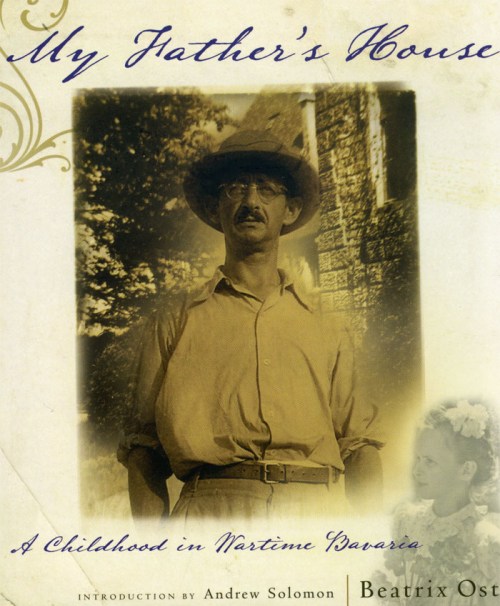
“My Father’s House” is unusual in many ways. It is an honest and loving portrait of the author’s father, beautifully written, that provides a unique window into Nazi Germany. The book is made up of numerous vivid details such as this passage:

Once, my parents had lived a truly magical life. In the early years of their marriage, between the wars, they lived with their friend Baron Wilhelm Farnbühler at his castle near Stuttgart. The Baron had his own wing; my parents, with Uli and Anita, had theirs. In the great hall, in a cage, there dwelt an owl, who preferred to eat living things: rabbits and mice. His lame wing folded into a crutch, he shrieked into the night and rattled the bars.

I simply happened upon the life and work of Beatrix Ost while in the process of exploring. It began while I was doing some research for a book review of, “Jerusalem,” a graphic novel that relates to the creation of the State of Israel. I had also just written a movie review of a documentary, “The Flat,” about the unusual relationship between a Jewish couple, who had emigrated to Palestine during World War II, and maintained a friendship, after the war, with a high ranking Nazi official. Life is complicated. Things are never quite as they seem. In the case of Beatrix Ost, this is an enormously talented person: writer, artist, desginer, actor, and theatrical producer. She is what she appears to be and so much more.

Beatrix Ost comes from a world of the rich, those F. Scott Fitzgerald has noted as “different from you and me.” Ost is not here to deny the world she was born into. She was born in 1940, in the castle from the above passage. However, given this difference or distinction, Ost finds a way for you to join in. It is, in fact, a world not so different from you and me. It is far more earthy and raw than you may imagine.

This may sound trite, but many readers may relate to the stories presented here if they think of the landmark musical, “The Sound of Music.” As jarring as it is to juxtapose Nazis with Bavarian folklife, general audiences understand, in the context of the musical, how two Germanys could coexist: one run by Hitler and another very different one. It takes a strength and boldness to be able to bring out a multitude of memories that are innocent and sweet amid a backdrop of war. Ost engages the reader on a Proustian level, never missing a beat of recovered memory and dipping deep into a well of language that consistently produces gems.

Think of this book as a collection of passages that, as a whole, bring out a greater truth. Each passage is like a little story of its own. Consider this passage from “The Gleaners,” describing people during World War II coming to the Ost family farm in search of food. They would come in search of even the smallest potato. Dieter, a member of the household staff would be dispatched to fetch a bunch of the teenaged girls from the girls school to help themselves to potatoes. They arrived in what they could muster up for the latest fashion, all hardened by the war but joyful:

The girls trudged along behind the plow, collecting potatoes in sacks. When the sacks were full, they were tipped into a cart. It started to rain. The girls sought shelter under the one available roof: the potato wagon. But the rain got through between the narrow planks, and after a short while, they were drenched. Their cheap dresses rode up above their knees, clinging to their thin bodies. Little rivulets of color ran down their legs.

It is Ost’s father, Fritz, who looms larger than life over this landscape of memory. He did his military service in Africa and subsequently retired, including his membership in the Nazi party. He had only belonged to the party to help his friends, particularly his Jewish friends, secure safe passage out of the country. He was a proud man that seemed to only want to be left alone to rule over his estate, Goldachhof, a rural paradise of manor, farm and stables, about twenty miles out of Munich. If there were Nazis amidst the circles he travelled in, he didn’t want to know. What he, and his wife, Adi, did know was to help those in need and Goldachhof proved a haven for refuges many times over. It is this backdrop that little Beatrix grew up in and learned the ways of the world, from getting by on rations to celebrating the dawn of a new world ushered in by the Americans.

This excerpt gives you a taste of the exuberance of youth faced with big change. The Americans, all brash and exciting, had finally arrived. But they make a few missteps. A couple of homesick Texans decide to ride a couple of the carriage horses, who were not meant for riding. Then some soldiers got the nutty idea of going fishing with hand grenades. This was far too much for Herr Ost and he finally managed to restore order by bringing in a high ranking American officer to have a talk with his men. But change had arrived and there was no turning back:

Now we children played Yank all winter long as we sledded down the granary path on our Jeeps. We still had our “Judenstrick,” ersatz cigarettes made from the winter-dried marrow of elderberry twigs, but we were infatuated with everything the Americans brought into our little world. They had landed among us with the exciting utensils of their exotic culture. Chewing gum. Nescafe. Powdered milk. Hershey’s chocolate. Blue jeans. Johnson’s lotion. Marlboros. Things useful and also symbols of hope, the end of terror. Our blue days were gone–love live The Blues.

Beatrix-Ost-My-Fathers-House

How such a book came into being is remarkable. “My Father’s House” is an inspiring and enlightening work. It can be appreciated on many levels, not the least of which is in the classroom. You can purchase it here.

2 Comments

Filed under Autobiography, Book Reviews, Books, History, Memoir, Nazi Germany, Nazis

Graphic Novel Review: JERUSALEM by Boaz Yakin and Nick Bertozzi

Jerusalem-First-Second-2013

How ironic if “Jerusalem” were not to receive wide recognition given that it is helping to set the standard for the relatively young literary art form that we know as the graphic novel. The general public is still getting to know it, compare it, and see what it can do. Let them read “Jerusalem,” the new graphic novel by Boaz Yakin and Nick Bertozzi.

“Jerusalem” provides a rich and dense texture to a narrative that invites a thorough reading. You can jump around and check it out but you’ll soon see that this is a multi-layered tapestry. It follows the pace of a good novel without the pretension. It also brings to mind the beautifully melancholy films of François Truffaut. Yakin and Bertozzi bring the colossal subject of Jerusalem down to a basic human level that we all immediately recognize and relate with. The story begins and ends with Motti, a little boy who only seeks love and understanding in his life. You don’t have to worry at all about the history. What you need to know it presented for you in crisp and concise ways.

JERUSALEM-First-Second-graphic-novel-2013

This is a story of family. It is these characters, connected by blood ties, that we rely upon to provide us with some truth, something to hang on to, as we witness the chaos and bloodshed that ensues. Compared to its 5,000 year history, Jerusalem was occupied by the British Empire for only a blip of time. But it was what came from that blip that continues to haunt us all to this very day. It was after World War I that Great Britain took control of land from the Ottoman Empire that was to become Palestine. Our story begins with the British Mandate, on the wane in 1946, giving way to a UN Partition Plan in 1947 that gives way to civil war and the Arab-Israeli War of 1948. The British occupation of a land and people it had no interest or understanding in was a powder keg just waiting to ignite.

Jerusalem-Boaz-Yakin-Nick-Bertozzi

In Motti’s immediate family, he has three brothers who all respond to the times with fervor. There is Avraham, the war hero, who becomes a Communist. There is David, who works the system to help Jews enter Palestine. And the is Ezra who is compelled to resort to terrorism. Motti is but a boy lost in the shuffle. His father is extremely distant, as present as a ghost. His mother is so stern there is little evidence of tenderness. And he has a sister, Devorah, very quiet and afraid. If not for a cousin, Johnathan, there would be no real friend for Motti. And this is not an easy friendship to maintain since Motti’s father, Izak, is at odds with his brother, Yakov.

Jerusalem-Yakin-Bertozzi-2013

Nick Bertozzi has a drawing style that is at once gritty and warm. But it’s more than that. Bertozzi has honed a style that looks effortless and conveys something of the human soul even in his most simple depictions. Whether it is buildings, or people, or specific characters, there is much to admire about his vigorous, expressive, yet well controlled, style.

Boaz Yakin’s script gives a human face to the conflict that arose as the State of Israel came into existence. We find characters compelled into action. There’s a very touching scene, for example, where the children gather to perform a wedding ceremony between two of them. They do this instinctively, from a need for love and order.

Motti, you will come to see, steals the show even though he appears to forever be pushed to the margins. He’s the little boy full of spirit and a willingness to fight. Just the sort of character you’d find in a film by François Truffaut, the creator of many wonderful films about misfits. There is magic in his films and there is magic in this graphic novel.

The graphic novel, of course, has made enormous strides over the years. We are moving past citing a select group of works as landmarks. The general public is working its way to looking forward to the next great graphic novel in the same manner as comics insiders do. “Jerusalem” has that special temperament about it, not self-conscious, not forced, just there to get the job done right. It is a quality that all readers will appreciate.

“Jerusalem” is published by First Second. Visit First Second here. “Jerusalem” is a 400-page hardcover, available as of April 16, 2013. You can get it here.

2 Comments

Filed under Comics, Graphic Novel Reviews, graphic novels, History, Jewish History, Jews, Nick Bertozzi

KICKSTARTER: A NIGHT AT THE SORRENTO AND OTHER STORIES is LAUNCHED!

A Night At the Sorrento Hotel Seattle Kickstarter 2013

The Kickstarter campaign has begun!

A NIGHT AT THE SORRENTO AND OTHER STORIES is a 200-page graphic novel that seeks funds for a print run. It brings together a variety of offbeat and urbane stories for the sophisticated reader. You’ve got everything from a man running for his life from a bear spirit to a quarrelsome couple with supernatural powers to a dog with an acerbic wit who has been launched into outer space. Plus so much more. View the campaign here. Thank you.

And for a more in depth look at the whole process of putting this book together, you can take a look here.

Leave a comment

Filed under Art, Comics, Comics Dungeon, graphic novels, Henry Chamberlain, History, Kickstarter, mini-comics, Phinney Neighborhood Association, pop culture, Seattle, Sorrento Hotel

MARCH, A Civil Rights Graphic Novel Trilogy, Begins August 2013

Rep-John-Lewis-D-GA.jpg

March-Nate-Powell.jpg

“March,” will surely be a high mark in comics. Chronicling the American Civil Rights movement, part one arrives in August. It is the first in a graphic novel trilogy written by one of the leaders of the movement, Rep. John Lewis. This will be the first time a sitting member of Congress has authored a graphic novel. It is co-written by Andrew Aydin, who has worked as a communications director and press secretary for Rep. Lewis. And it is illustrated by Nate Powell, one of the preeminent cartoonists working today, best known for his graphic novel, “Swallow Me Whole.”

You can view a 14-page preview here.

Press release follows:

Continue reading

Leave a comment

Filed under American History, Civil Rights, Comics, graphic novels, History, Nate Powell, Top Shelf Productions

Movie Review: LINCOLN

Tad Lincoln
It was on a bright day in January in 1865 that the United States, despite feverish opposition, passed the 13th Amendment and abolished slavery in the land. The fight to outlaw slavery, once and for all, is the focus of Steven Spielberg’s “Lincoln.” Even if the final outcome is already known to the audience, the full story will likely be new. Remarkably, this film, with its familiar director and familiar subject, feels new too. This is a 21st Century Lincoln led by Daniel Day-Lewis’s brilliant interpretation of a man of his time with a keen sense for the timeless.

Mr. Spielberg uses his Lincoln capital wisely as we begin this film. After some scenes of bloody fighting, we cut to a close-up of two African American infantrymen. They are being interviewed about the Civil War. One man seems content. The other lists the injustices suffered by his people. The interviewer is Pres. Lincoln. We then float up to a dreamworld and there’s the tall and lonely figure in a stovepipe hat standing on the bow of a vast ship. Restraint. Elegant restraint. “Lincoln” proves to have the elegant restraint to make such a movie.

After all the hype, and there’s more to come, “Lincoln,” proves to be a very engaging film. It is not a Frank Capra treatment of our 16th president and that is an understandable concern. As we now know, Daniel Day-Lewis turned down more than one screenplay for this film. The one that finally won him over is based on the book, “Team of Rivals,” by Doris Kearns Goodwin and adapted for the screen by Tony Kushner. It provided a way to maintain that elegant restraint that Mr. Day-Lewis knew was essential.

With the sense of urgency clearly stated, we see a president determined to use all his political capital to steer the country in the right direction. In short order, he means to legitimize his Emancipation Proclamation. The only way to end slavery in the United States is to pass a Constitutional Amendment and the only way to do that is to act immediately. For political junkies, the ensuing dramatization is nirvana. You can almost hear Doris Kearns Goodwin reciting from her popular book in the background. However, this film does offer much more. There is a special urgency you feel in the filmmaking. When Lincoln speaks, everyone listens. We see a jaw drop a bit when the president exercises his distinctive skill to make a point. We feel history being made in a refreshing way as all the players are allowed to live and breathe.

At one point in the film, we see Mr. Day-Lewis in an scene where he ponders over Euclid, the ancient Greek mathematician. It is during a pivotal moment in the war that Lincoln thinks out loud with a couple of young staffers. One of them says he’s an engineer by profession. This sparks Lincoln to quote some Euclidean geometry, “Any two sides that are equal to the whole are equal to each other. Euclid, three thousand years before, stated that this was self-evident.” It is a delightfully low-key moment, one of many, that Mr. Day-Lewis plays masterfully.

In keeping with the restrained vibe in this film, we follow the journey of radical Republican, Thaddeus Stevens, played by Tommy Lee Jones. At first, we don’t seem to know which side he’s on or whether he can be relied upon to check his ego at the door when he needs to. It’s a great performance. One particularly good scene is when he’s confronted by the First Lady, played by Sally Field. She is greeting visitors at a reception and seizes the opportunity to put Stevens in his place. Coming across as a Hillary Clinton complaining over Whitewater investigations, she chides Stevens for his investigating her overseeing renovation of The White House. We see that Stevens can take a good chiding and take it to heart.

The Spielbergian touch is most evident in what we see from a child’s point of view in this film. There was a little boy who lived in the White House, the President’s son, Tad Lincoln. He’s there so often in the film as to be its anchor, conscience, and sense of innocence. When Lincoln and his men gather for a war meeting, the war map is found to have suffered a burn at one corner. Tad Lincoln was there. When Lincoln is patiently awaiting the final vote of the 13th Amendment, he is entertained by Tad Lincoln building a monument from various books and legal briefs. When Lincoln needs to keep up his sense of purpose, all he needs to do is observe the photographs of slaves that Tad Lincoln has been observing. And, when the President is shot, it is Tad Lincoln’s sorrow we focus upon. This is not Doris Kearns Goodwin’s or Daniel Day-Lewis’s doing. This is Steven Spielberg’s.

1 Comment

Filed under American Civil War, Golden Globes, History, Movie Reviews, movies, Oscars, Steven Spielberg

EXTRA: HYDE PARK ON HUDSON

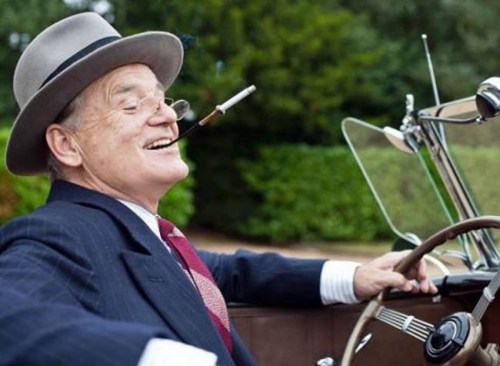
Bill Murray playing the role of FDR makes a lot of sense. We all think we know Bill Murray. He has that unique set of skills required to portray FDR, another person everyone felt familiar with. While “Hyde Park on Hudson” does not have the same scope and sense of awe you will find in “Lincoln,” it is just the sort of movie you can appreciate for its dry wit and charm. Here is an interview with the great man himself, Mr. Bill Murray, and a quick look on the set of the movie.

The central thing to consider is Bill Murray. He is someone we enjoy seeing perform. As this interview demonstrates, he is genuinely in tune with this film. He effortlessly sells you on it.

Hyde Park on Hudson Movie 2012

Then there is the controversy over the script. Did the screenplay by Richard Nelson go too far in its speculation over FDR and the women in his life? In the “hooking up” age we live in, maybe cranking up the speculation meter on what happened between FDR and his distant cousin, Daisy, rings more true, although this will offend some. It sure offended political writer (not entertainment writer) Melinda Henneberger at The Washington Post. For those too easily offended, the thing to remember is that this is a historical fiction so maybe an attitude adjustment is in order.

“Hyde Park on Hudson” is brought you by Focus Features. Visit them here and learn more about the film.

Leave a comment

Filed under Bill Murray, FDR, History, movies, politics, pop culture