Category Archives: pop culture

Book Review: ‘All of Us Are Dying and Other Stories’ by George Clayton Johnson

Illustration by Henry Chamberlain

Illustration by Henry Chamberlain

“Maybe she is right. Maybe nobody is interested in another science fiction story about the paradoxical nature of time or the mystery of existence. Maybe all they want is a simple love story with a happy ending.

Fantasy and science fiction doesn’t really exist unless it has a reader.

He has come to believe he will have a reader, so he has always tried to make his behavior justifiable, and as a consequence he spends a large part of his time explaining himself to an invisible judge he calls, “Your Honor,” becoming verbally adept at defending himself.”

— George Clayton Johnson, from “Every Other War”

I am really thrilled to own this book. It is a book that you, dear reader, will likely never own. It is hard to come by. Originally published by Subterranean Press in 1999, it has long since gone out of print. But prove me wrong. Seek it out! In fact, I do hope that will change some day. I strongly recommend that Subterranean Press or some other publisher, say Penguin Random House, create a new version of this 450-page collection.

Keep in mind that the author of this collection, “All of Us Are Dying and Other Stories,” is George Clayton Johnson who wrote the first episode broadcast of the original Star Trek series. “The Man Trap” first aired on 8 September 1966. That first broadcast is what marks the 50th anniversary of what has become one of the most iconic television series in history. What was it about George Clayton Johnson that earned him that distinction? This was someone born into abject poverty at the start of the Great Depression, an 8th grade dropout, forced to leave home at age 15, and yet he would go on to great heights.

For those of you who faithfully keep up with my writing, you know that quite often the source of my various tangents goes back to my first meeting George Clayton Johnson some years back. When I found out about all the pop culture franchises he was a significant part of, then found out about his life, and then found myself charmed my the sheer decency of the man himself, I started seriously considering creating some sort of book about him. I was able to tell him about it as well as show him some of it before he passed away. He gave me his blessing. I told him, at the time, that I was still figuring out how to best present the issue of cannabis, as that was very important to him. He listened. He talked. He said to follow my passion. The meeting with him, in his home, in December of 2014, would be the last time I’d get to see him. I had gone to see him again, in December of 2015. I’d been invited and he still sounded hearty and joyful. But it was too late. He had been moved to hospice by then.

“I told you the other night how I’d re-read ‘All of Us Are Dying’ and how much I enjoyed it. When I came to the end of this story and read the last lines, I got goose flesh on my neck. What greater tribute can I offer you? Thanks for the neck bumps.”
–Ray Bradbury

George hung on until Christmas. George died on Christmas Day. His great mentor, Rod Serling, was born on Christmas Day. There certainly seemed to be some cosmic and poetic thing going on. And then you add George’s favorite subject, Mr. Death, the defying of death, the taunting of death. George, no doubt, left this world on his own terms. And here I am telling you yet again about what has become quite a subject for me: George and all things related to George. Yes, this is how creative people such as myself think. And, dear God, there will be a final resolution as I do intend to put the book out as soon as possible. It will be in a graphic novel format with plenty of room for the art and plenty of room for the text. They will need to trade places from time to time. Anyway, all this leads to my getting my hands on this particular book. I dare say, it is something of a Holy Grail for some geeks such as myself. My copy is a Publisher’s Copy and was from the library of writer Stanley Wiater. Stanley, if you wondered what became of your book, I’ve got it now, mate.

George Clayton Johnson with Robert Redford on the set of "Nothing in the Dark"

George Clayton Johnson with Robert Redford on the set of “Nothing in the Dark”

Each story in this book will tug at you. Take the story of two boys, George and Abraham. They just figured they’d make great friends, with great prospects, considering they each had the best of presidential first names. This was during the Great Depression when these two reveled in each other’s company. Neither of them had a cent between them. Then one day, they thought about how much they’d love to own a bicycle. If only they had a bike, the roads would be free for them to explore at will. They decide upon buying a beauty in flaming red enamel that they spot in a shop in town. The price of twenty-two dollars and ninety-five cents seems out of reach. But they find various odd jobs and their goal becomes attainable. They while away the time by mostly doing things that don’t cost them anything like listening to the radio perched on the windowsill of Abraham’s bedroom. George would be at that very same windowsill as he sits in vigil for his friend dying from scarlet fever. And so the friendship, the bicycle, that time and place make up this short story, “A Bicycle Like a Flame.” This is just one of the many gems to be found in “All of Us Are Dying and Other Stories” by George Clayton Johnson.

"All of Us Are Dying and Other Stories" by George Clayton Johnson

“All of Us Are Dying and Other Stories” by George Clayton Johnson

Fans of the original television show, The Twilight Zone, will readily come to see which of these short stories in this collection would have made for another great teleplay by Johnson. But, as this book makes abundantly clear, you don’t need any prior Twilight Zone knowledge to enjoy Johnson’s work. How about “The Hornet,” a story of man versus insect with the insect seeking justice? Or perhaps “Dealer’s Choice,” a story about soldiers endlessly playing cards in order to avoid death? Or “The Freeway,” a story set in the future when cars mostly drive themselves and contribute to much less alert humans. Johnson wrote some of the most memorable Twilight Zone episodes thanks to the show’s creator and main contributor, Rod Serling, taking a chance on him. Johnson’s first accepted story submission was “All of Us Are Dying.” Serling bought it and did the necessary reworking to have it better fit his vision, including changing the title to, “The Four of Us Are Dying.” Johnson always maintained that it was a great lesson in how to write for Serling. But, in the end, he liked his version best and thus the title to this collection. In both versions, it is essentially a shape-shifter story: a man who can change his face. In Serling’s version, there’s this specificity about the man attempting to exploit his gift. In Johnson’s version, the man is all the more vulnerable, not in control, and all the more universal.

As this book demonstrates, Johnson’s overriding plan was simply to create the best work. In later years, he went on to create more inventive work with the same care and precision as when he first started out. There’s the short story “Thorndyke,” for example. A couple argue at a party. It is a male and female. The female has been badgering the male all night. She wants to know why he won’t sleep with any of the other females. Thorndyke insists that he isn’t interested. Finally, at his wife’s insistence, he goes to see a psychiatrist about his disorder. It is determined that Thorndyke has a severe case of manogomy. And, as it turns out, these characters are actually rabbits. Thorndyke is the rebel seeking to remain faithful to his wife.

Check out the amazing cover art by Burt Shonberg, 1957.

Check out the amazing cover art by Burt Shonberg, 1957.

Wow, what do you think of the book’s cover art? That’s by Burt Shonberg, 1957. George would have been around 28 years-old when that portrait of Frankenstein playing a saxophone was first created. George and Burt and Doug Myres (the Gateway Singers) together ran a little shack of a cafe on Laguna Beach called Café Frankenstein from 1958–59. Burt created various Frankenstein art for the cafe. Apparently, he always favored a Frankenstein motif and, in his own way, so did George.

The most unusual work in this collection is “The Edge of the World,” a screenplay commissioned by Sid and Marty Croft for quite a quirky movie. It is an ambitious and colorful romp of a tale with Christopher Columbus transported to modern day New York City. What a movie this could have been! It’s fun to read such a sprawling and loose work. Johnson manages to get Columbus down into the bowels of the NYC subway system where he makes friends with a tough motorcyclist named, Cheyenne. The two get along and share a joint. This is significant subtext as it brings in references to Johnson’s home state and his lifelong support for cannabis. It also cues the reader to the building conflict, and irony, of Columbus interacting with Native Americans.

Like a rocket, Johnson’s career blasted off with his co-writing the novel that was the basis for the Rat Pack classic movie, “Ocean’s Eleven.” Johnson was only 30 years-old in 1959, when he became part of the TZ writing team. By the mid-1970s, he had written for the original Star Trek TV series and co-written the novel, “Logan’s Run,” the basis of the blockbuster 1976 movie, the most lavish sci-fi film of its day, only to be surpassed the following year by “Star Wars.” Johnson kept on writing. He even created a show ahead of its time, “A Man’s World,” where women are in charge and maintain a male figurehead for appearance’s sake. While Johnson’s show was rejected, a similar show would subsequently get the green light, “Charlie’s Angels.”

“George Clayton Johnson continues to write what he believes in regardless of the marketplace. He is the real deal. He is what other writers mean when they point to someone and say that he is a writer. He is a fellow traveler in search of the Greater Truth, of a kind of unified field theory for the human condition. For this is the true subject of his writing and the abiding core that gives it such weight and strength.
–From the Afterword by Dennis Etchison

The case of George Clayton Johnson is unique in that this was a writer who was most concerned with quality and originality. His worst enemy, Johnson was prone to say, was a meddling producer eager to copy the latest hit show. Johnson was attracted to a challenge, something unusual. A perfect example is his flash forward narrative for an episode of “Kung Fu.” Instead of a conventional flash back, the main character to this story is dependent upon something happening in his future. It is this desire to strive for the most inventive, and most immersive, storytelling that is a hallmark of Johnson’s work. This brings me back to the above quote. For those who knew George Clayton Johnson, they know he was quite a jovial and energetic defender of his work, and deservedly so.

Reading "All of Us Are Dying and Other Stories"

Reading “All of Us Are Dying and Other Stories”

You can always look up video of Johnson’s work for Star Trek, Ocean’s Eleven, Logan’s Run, and, of course, The Twilight Zone. Here is a quote from “Kick the Can,” one of the most iconic TZ episodes and one of the four that was later to be showcased in 1983’s “Twilight Zone: The Movie,” directed by Steven Spielberg, John Landis, Joe Dante, and George Miller.

“Maybe, the fountain of youth isn’t a fountain at all. Maybe, it’s a way of looking at things – a way of thinking.”
–From “Kick the Can” (Episode aired 9 February 1962)

As Johnson describes in his short autobiographical novel, “Every Other War,” he had been struggling to sell short stories he knew in his heart would find a buyer–and yet did not. That includes the above mentioned, “A Bicycle Like a Flame.” Things looked very bleak at the time. “Kick the Can” was still in its early drafts. It would prove to be one of Johnson’s best works.

What I want to leave you with, the goal of my own book on George, is to celebrate an individual who fought for the integrity of his work and went the extra mile to be insightful, poetic, and heroic. Take a look at his teleplay for Route 66 and you see an unusual story of playing the game of life. Take a look at his teleplay for The Law and Mr. Jones and you find an offbeat path to seeking justice.

Boil it all down, and George’s favorite among his work is his Twilight Zone teleplay, “Nothing in the Dark.” And his favorite lines are delivered by Robert Redford with all the grace one could ever hope for.

“You see. No shock. No engulfment. No tearing asunder. What you feared would come like an explosion is like a whisper. What you thought was the end is the beginning.”
–From “Nothing in the Dark” (Episode aired 5 January 1962)

George was definitely attracted to the theme of death. It was H.P. Lovecraft who famously said, “The oldest and strongest emotion of mankind is fear, and the oldest and strongest kind of fear is fear of the unknown.” Death is the ultimate unknown. Lights out. What now? It’s the only game in life where, in the end, you’re guaranteed not to come out alive. It’s just a question of what you do while you’re around. George lived his life to the fullest. He won.

6 Comments

Filed under Dennis Etchison, George Clayton Johnson, Native Americans, pop culture, Ray Bradbury, Rod Serling, Star Trek, Television, The Twilight Zone, Wyoming

Interview: Bob Proehl and ‘A Hundred Thousand Worlds’

Bob Proehl

Bob Proehl

A HUNDRED THOUSAND WORLDS, the debut novel by Bob Proehl, is a beautiful and quirky book mixing pop culture satire with a compelling family journey. It is published by Viking, an imprint of Penguin Random House. Read my review here.

“For all its acrobatic wit and outsize charm, at its heart this is the love story of two everyday heroes–a mother and son–who, like their author, possess the superpower of storytelling. A ‘Cavalier & Clay’ for the Comic-Con age, ‘A Hundred Thousand Worlds’ is a bighearted, inventive, exuberant debut.”

–Eleanor Henderson, author of “Ten Thousand Saints”

BOB PROEHL grew up in Buffalo, New York, where his local comics shop was Queen City Bookstore. He has worked as a bookseller and programming director for Buffalo Street Books, a DJ, a record store owner, and a bartender. He has written for the 33⅓ book series and worked as a columnist and reviewer for the arts and culture site PopMatters.com. Proehl currently lives in Ithaca, New York with his wife, stepson, and daughter. It is my pleasure to share with you this interview.

Continue reading

4 Comments

Filed under Bob Proehl, Book Reviews, Books, Comics, Fiction, Penguin Random House, pop culture, writers, writing

Book Review: ‘A Hundred Thousand Worlds’ by Bob Proehl

"A Hundred Thousand Worlds" by Bob Proehl

“A Hundred Thousand Worlds” by Bob Proehl

Bob Proehl is in touch with the natural, yet complex, details of a mother and son relationship. In Proehl’s debut novel, he has Valerie Torrey face the bittersweet transition of her son, Alex, leaving behind childhood and quite literally having to say goodbye to his mom. It’s complicated but, in this case, inevitable.

Alex Torrey is a nine-year-old boy who hasn’t seen his dad, Andrew, in six years. In Alex’s world, his dad is three things: an actor in Los Angeles; a movie star he can see on TV; and, just for fun, the character he plays, a time traveling secret agent. It was Valerie who made the reckless decision to kidnap her son and raise him in New York. Now, Val seems to want to make things right by reuniting Alex with Andrew. Throw in an assortment of superheroes, monsters, and robots, and you have the engaging debut novel by Bob Proehl, “A Hundred Thousand Worlds,” published by Viking.

This story hangs together very well on the tiny frame of nine-year-old Alex, who is at that magical age of still being very much a child and yet capable of profound observation. He is a character type that has been brilliantly employed in some great fiction from such diverse writers as Günter Grass, John Irving, and Jonathan Safran Foer. So, Proehl has created his very own charming and sad little imp. Alex questions everything. He has certain rituals he follows to help him find answers like reversing the letters to various names hoping to tap into some hidden meaning. It makes no sense to an adult but follows kid logic. From this heartbreaking innocence we can compare our own journey to self-discovery.

Valerie met Andrew while the two were starring in the hit sci-fi series, “Anomaly.” The mystery is what triggered Valerie to run away with Alex to New York. Proehl sets in motion a clever device to get Valerie, Andrew, and Alex reunited. Six years of separation from his father has taken its toll on Alex, a situation crying out for resolution. Valerie leverages her pop culture status and picks up some appearances on the comic book convention circuit, enough to cover her expenses on her odyssey with Alex, from New York back to Los Angeles. Along the way, we get plenty of jokey references to the comic book industry, many which will be appreciated by diehard fans.

Proehl’s work is ambitious as he juggles numerous pop culture references while developing something deeper. He does a wonderful job of straddling the lighthearted accessibility of a young adult novel with the richer field of literary fiction. Valerie, for example, is quite compelling as a flawed character. Andrew has made some obvious bad choices but Valerie has much to work out like her smothering overprotective nature.

Proehl knows how to satirize pop culture quite well. It is remarkable that he also knows how to evoke the qualities that attract us to mass entertainment. Nothing is ever so simple, not a divorce, not a child, not even a comic book.

“A Hundred Thousand Worlds Hardcover” is published by Viking, an imprint of Penguin Random House, available as of June 28, 2016. For more details, visit Penguin Random House right here.

1 Comment

Filed under Book Reviews, Books, Comic-Con, Comics, pop culture, Superheroes

Star Wars: Go Behind the Scenes with ELSTREE 1976

Extras on the set of "Star Wars," 1976

Extras on the set of “Star Wars,” 1976 from the documentary, “Elstree 1976”

I was an extra in a big movie and it was no fun at all. I got a lot of face time with the director but, since he chose to only speak in German, we never spoke, even when I tried to ask him a simple question. He just stared at me as I steadily baked in the sun. The only time he dropped his refusal to speak in English was when I had inadvertently left the set. Someone came over to tell me to get back into costume and report to the set. And that’s when the director let me have it, in English, “No one, but no one, walks off my set!” Now, he’s talking to me, in an abusive tone no less! So, I would not recommend being an extra. However, what if that movie was really something else? What if it was 1976 and you were one of the lucky bunch of extras on the set of “Star Wars”? That is the subject of a new documentary, “Elstree 1976.” And, if you’re wondering, Elstree Studios are commonly known to all Brits as that entertainment studio that can be relied upon for something good on the telly. In fact, as far as these extras knew, the sci-fi adventure flick they were a part of was assumed to be some sort of TV movie.

Filmmaker Jon Spira does a great job of having you get to know these individuals who would go on to be part of cinema history. We have ten portraits and each person is a gem with wonderful bits of observations. I especially like Paul, a classically trained Shakespearian actor. He recounts how he was led into this giant warehouse where he was left alone with a magnificent looking aircraft, which turned out to be the Millennium Falcon. Paul walked around it and noticed a man sitting off to one corner. He approached the man and asked if he knew where he might get some coffee. The man offered to get him some. Paul got his coffee and thanked the man. Then he asked his new friend if he might know where he could find the director, George Lucas. The man nodded and admitted that he was George Lucas. Paul got to experience the greatest possible experience any extra could ever dream of!

If you enjoy DVD bonus features, then think of this documentary as the ultimate in extras–on the subject of extras. This is for the Star Wars fan who thought he’d seen it all. No one in this film will bowl you over with their star power and that’s the point of this film. These are just nice everyday people who just happened to have a small role to play in the biggest blockbuster movie of them all. What is truly compelling about this film are the individual portraits. You’re going to like this especially if you like the Up Series, the Granada Television series that’s been following the lives of fourteen British children since 1964. Yes, the whole endeavor does ring a bit bittersweet but it’s also quite fascinating. And it’s Star Wars we’re talking about, so that adds another level of quirk to the whole thing.

ELSTREE 1976 has a US theatrical run as of May 6th in select cities including Los Angeles and New York City. For the full list of theaters and ticket information, go here. This movie will be available on DVD on June 28th via MVD Entertainment Group. The DVD can be pre-ordered now at the MVD Shop or on Amazon. You can also find ELSTREE 1976 on iTunes right here.

4 Comments

Filed under Documentaries, pop culture, Star Wars

Book Review: REFOCUSING CHAPLIN

The Little Tramp off into the sunset. Illustration by Henry Chamberlain

The Little Tramp off into the sunset. Illustration by Henry Chamberlain

Aristotle speaks of the mimesis of the first order and the mimesis of the second order. When creating art, the goal is to distance oneself from the source. Mimesis of the first order is simply art imitating nature. Mimesis of the second order is art perfecting nature and turning it into something transcendent. That rule is certainly at play in the work of Charlie Chaplin. As Marco Grosoli points out in his essay on Chaplin, this was an artist keenly aware of his myth and in a unique position to go on to make great art from that myth. Marco Grosoli’s fascinating essay is part of a collection of essays from various writers on one of the masters of cinema, “Refocusing Chaplin,” published by Rowman & Littlefield.

There may never be another artist quite like Charlie Chaplin. However, his influence and relevance continues to evolve. And so that gives this collection of essays a great sense of urgency. In the same way that an artist of the first rank like Ray Bradbury could have anticipated social media some fifty years ago, so too did Charlie Chaplin foresee the power of a meme in a career that began over one hundred years ago. To say that Charlie Chaplin was beyond famous is an understatement. He reached the level of myth. It is not short of phenomenal that he continued to grow as an artist through a career that spanned the evolution of cinema.

Chaplin in 1941's "The Great Dictator"

Chaplin in 1940’s “The Great Dictator”

In Marco Grosoli’s essay, he examines the friction between two formidable myths in Chaplin’s “The Great Dictator,” from 1940. By then, Chaplin was more than ready to leverage some of his celebrity for the sake of his art. The timing could not have been more perfect. The difference between the myth of Hitler and Chaplin could not have been more extreme. As Grosoli indicates, Chaplin was not merely imitating Hitler. Chaplin was channeling the myth of Hitler. In that respect, Chaplin was getting at a greater truth. In a work that deeply explores the power of meme, Chaplin plays both the role of Dictator Adenoid Hynkel and a Jewish barber who looks identical to Hynkel. Dictator and barber are, in a sense, interchangeable. In the proper costume and context, everyone accepts whatever the Jewish barber has to say, dressed as Hynkel, even if it is the total opposite of what Hynkel would say. Push two extremes together, Grosoli suggests, and they strangely equate each other, form a perfect nothingness.

"Refocusing Chaplin: A Screen Icon Through Critical Lenses"

“Refocusing Chaplin: A Screen Icon Through Critical Lenses”

Essays in this collection feature a wide spectrum of themes including Marxism, feminism, gender studies, deconstruction, psychoanalytic criticism, new historicism, performance studies, and cultural criticism. This critical study covers a wide reach of films including The Circus (1928), The Gold Rush (1925), City Lights (1931) Modern Times (1936), The Great Dictator (1940), Monsieur Verdoux (1947), and Limelight (1952). This collection proves to be a valuable resource on one of the leading masters of cinema.

“Refocusing Chaplin: A Screen Icon through Critical Lenses” is a 250-page hardcover, published by Rowman & Littlefield. Visit them right here.

Leave a comment

Filed under Art, Book Reviews, Books, Charlie Chaplin, Critical Studies, film, Hollywood, movies, pop culture, Rowman & Littlefield

Open Letter to George Stephanopoulos: Time to Push Harder on Donald Trump, Don’t You Think?

(Why did the above train wreck of an answer from Donald Trump not derail the Trump campaign? The nuclear triad is basic knowledge but Trump had no clue.)

Dear George,

I write to you because you are in a unique position as someone a whole lot of people admire and trust. You’re a smart and capable person. Otherwise, why should I even bother? Alright, that said, I would like you to seriously consider pushing harder on Donald Trump as he edges closer and closer to a viable occupant of the White House. What do you think?

You played a hard-hitting journalist on “House of Cards.” Let’s do this in real life, “for reals,” as the kids say. You were interviewed on your own show, “Good Morning America,” about what was real on “House of Cards” and you responded that nothing on that show is real. Nothing? Not even being a hard-hitting journalist? Oh, the irony! Say it ain’t so, George!

Do you want to be like most of the American media and keep throwing softballs to Donald Trump? Why, George, why? Would you like to say that I am being naïve about this? Don’t worry, George, I know about your very special connection to the Clintons. That is hardly a secret, am I right? Nudge, nudge, your secret is good with me. Actually, just go for it, no need to be loyal to anyone. Be hard-hitting with your questions to Hillary too.

Here are some great examples to consider:

4 November 1979: Roger Mudd, CBS News, presses Edward Kennedy on why he is running for president and Kennedy, while eloquent, does not seem to warm up to his answer:

11 September 2008: Charles Gibson, ABC News, asks Sarah Palin about the Bush Doctrine, keeps his focus, and it quickly becomes apparent she does not know what the Bush Doctrine is:

30 March 2016: Chris Matthews, MSNBC, engages Donald Trump in conversation to reveal that Trump believes women should be punished for having an abortion:

Each of these interviews became a news story in its own right.

Focus every ounce of journalistic integrity you may have and help to steadily bring down Trump. He is such an easy target. Why not do this, show Trump for what he is, an ignorant irresponsible demagogue. Worth a try, don’t you think?

If you are scratching your head and wondering how to do this, which is highly doubtful, just press him the next time he gives a messy, uneven, and thoroughly unacceptable answer to a question. Yes, Trump has given some really odd responses comparable to Sarah Palin at her worst. (See the above video displaying Trump’s utter ignorance of the U.S. nuclear triad and his attempt to cover himself.) So, just keep that in mind. Trump can easily be toppled. Are you game? Surely, you have nothing to lose except perhaps some rating points but that is really Trump’s biggest bluff of all. It worked out alright for NBC when it fired him.

Here is what you do when you start to lose your nerve, just repeat to yourself this refrain, “Trump is not the boss of me! Trump is not the boss of me!” That may seem silly but I think it could work and you will help save our country from a Trump administration. Look, Katie Couric decided she just wasn’t going to go all warm and fuzzy on Sarah Palin and, well, you know, the rest is history. Check out the video below: here is a typical interview between you and Trump. You’ll note that when Trump feels the heat, he’ll deflect with a vague, “We’ll see what happens.” Or if called out on a fact, he’ll double down on his answer and just move on. Next time, don’t let him just move on. Act like you did when you played a hard-hitting journalist on “House of Cards.” And, by the way, Trump should never have been allowed to phone in his interviews.

Lastly, put out of your mind any blowback from Trump. Oh sure, it will sting, whatever he does, whether in person or later on Twitter. But it is only a brief and temporary sting. Stay focused. Be friendly and respectful going into an interview. But at some point, George, pivot to the tough questions. Once you’ve caught him, don’t let him off the hook. Go to it, George!

Your friend,
Henry

Leave a comment

Filed under Donald Trump, George Stephanopoulos, Hillary Clinton, Humor, Journalism, news, pop culture

Kickstarter: Seymour Chwast’s AT WAR WITH WAR

"At War with War: An Illustrated Timeline of 5000 Years of Conquests, Invasions, and Terrorist Attacks" by Seymour Chwast

“At War with War: An Illustrated Timeline of 5000 Years of Conquests, Invasions, and Terrorist Attacks” by Seymour Chwast

Bob Dylan and Joan Baez flanking a Seymour Chwast poster, 1964. Photo: Courtesy SVA Picture Collection.

Bob Dylan and Joan Baez flanking a Seymour Chwast poster, 1964. Photo: Courtesy SVA Picture Collection.

Legendary graphic designer Seymour Chwast has chosen to run a Kickstarter campaign in support of his latest book project, “At War with War.” Kickstarter, at its heart, is community based. And the issue of war resonates with each and every community. What Chwast has done is review war in a unique way by illustrating five centuries of conflict, chaos, and violence on a continuous timeline. The book is made up of 35 two-page spreads featuring a series of Chwast’s black-and-white pen-and-ink drawings and woodcuts. The Kickstarter campaign will run from 26 April to 7 June 2016. You can find it right here.

Anti-war poster by Chwast, 1968

Anti-war poster by Chwast, 1968

Subversive. Personal. Obsessive. Radical. There is no mistaking the work of Seymour Chwast. As co-founder with Milton Glaser of Push Pin Studios, he led a revolution in graphic design producing bold, vibrant work that pushed the limits of nearly every visual medium: posters, advertisements, book jackets, magazine covers, album covers, product packaging, typography, and children’s books. His pioneering role as a designer, author, and activist continues to influence and inspire 21st-century designers.

Seymour Chwast and Milton Glaser at Push Pin Studios, 1968

Seymour Chwast and Milton Glaser at Push Pin Studios, 1968

For more than six decades, Chwast, who celebrates his 85th birthday this year, has used his signature blend of design, illustration, and social commentary to wage a campaign against war.

Excerpt from AT WAR WITH WAR

Excerpt from AT WAR WITH WAR

Chwast finds, “It’s the ongoing relentlessness of the thing, the seemingly never-ending urge to resolve disputes with deadly conflict, century after century. That’s the nagging notion through the years that keeps bringing me back to the subject of war.”

Excerpt from AT WAR WITH WAR

Excerpt from AT WAR WITH WAR

Among Kickstarter rewards offered to backers, Chwast has opened the doors to his archive, with both new and vintage items. Included among the special items are three of Chwast’s personal copies of his first antiwar publication, A Book of Battles, which he self published in 1957; his Vietnam War era poster “War is Good Business, Invest Your Son”; and a one-of-a kind four-color mechanical for a book he wrote with Steve Heller.

Seymour Chwast, at work, 2016

Seymour Chwast, at work, 2016

Be part of a significant book, “At War with War: An Illustrated Timeline of 5000 Years of Conquests, Invasions, and Terrorist Attacks.” The Kickstarter campaign seeks funding for the production of the book, which will involve a master letterpress printer and a specialised process used for creating fine and limited editions. At War with War will include an introduction by former editor and publisher of The Nation, Victor Navasky and edited by renowned graphic design writer, Steven Heller.

Excerpt from AT WAR WITH WAR

Excerpt from AT WAR WITH WAR

The Kickstarter campaign runs run from 26 April to 7 June 2016, and you can find it right here.

2 Comments

Filed under Crowdfunding, Edward Sorel, Graphic Design, Kickstarter, Milton Glaser, New York City, pop culture, Protest, Push Pin Studios, seymour chwast

ECCC 2016: The Pulp Roots of Today’s Comics and Entertainment

The Shadow Knows!

The Shadow Knows! “I see a Batman in your future.”

Pulp fiction, at its peak in the ’20s and ’30s, is an often misunderstood phenomena. However, the pulps are very much still with us: accessible, iconic, and familiar, just like they were always meant to be. They have certainly evolved from the thrilling days of yesteryear. What began with the pulps made its way into other media: comics, radio, movies, and television. Pulp provided the source. Some pulp writers crossed over to other media. Other writers were influenced by the pulps. And some writers simply took characters and stories directly from the pulps and transferred them to other media. Think of it this way: Doc Savage is Superman; The Shadow is Batman. Plus a whole lot more going on. In a fascinating panel discussion at Emerald City Comicon, Rob Salkowitz moderated a conversation between comics scholar Greg Hatcher, artist Dan Schkade (The Spirit), and writer Chris Roberson (The Shadow, iZombie).

The Pulp Roots of Today's Comics and Entertainment

The Pulp Roots of Today’s Comics and Entertainment

Rob Salkowitz asked each panelist to name their favorite pulp character and the answers help give you a window into the appeal. For Chris Roberson, his favorite is Doc Savage. He said that growing up in the ’70s was a perfect time for a kid to read the pulps since there was a boom in avenues for distribution but limited content. So, Chris got to enjoy all the reprints of Tarzan, Conan, and Doc Savage he could ever want to read. This, of course, left a tremendous impression upon the budding young writer.

Moderator Rob Salkowitz, Greg Hatcher, and Dan Schkade

Moderator Rob Salkowitz, Greg Hatcher, and Dan Schkade

It was great to see Dan Schkade, with his witty enthusiasm, be quick to say that the best character in pulps is The Shadow. But his personal favorite character is The Avenger, “the dead middle between Doc Savage and The Shadow, both similar and less than the sum of their parts. He’s just so creepy with his dead face that he molds to look like other people. And his weapons, a switchblade and a Mauser, which he’s given first names to.”

And Greg Hatcher, coming from a historian’s point of view, recalled as a boy seeing his first comic books based on the pulps and immediately hitting the library to do research! His favorite pulp character is The Spider. “As Will Murray used to say, it was the good kids who read The Shadow; and it was the bad kids who read The Spider. There was this incredible hell-for-leather deranged momentum behind a Spider story. For the main character, Richard Wentworth, each Spider mission was personal!”

"Legends of a New Pulp Fiction," from editor Ron Fortier and Airship 27

“Legends of New Pulp Fiction,” from editor Ron Fortier and Airship 27

The subject of pulp fiction is definitely not one to take lightly. Once you make one assumption, there is always something else to consider. For instance, while pulp fiction was designed to have broad appeal that did not mean that all stories were the same or of a low quality. In fact, there are numerous examples of great writing in the pulps. Great writers first began in the pulps: Ray Bradbury, Edgar Rice Burroughs, Dashiell Hammett, Raymond, Chandler, and James M. Cain, to name a few. At one point, Schkade made a brilliant observation regarding how pulp is presented today. “Many people have the misconception that pulp is inextricably linked to the past, that everything has to have a retro look to it. But, when you think about it, the stories during the pulp era were set in the present.”

Chris Roberson

Chris Roberson

Pulp is with us more than you may know. Consider any number of fantastic, hard-hitting, action-packed stories that you read or view today, and they will owe something to pulp fiction. The grandest examples: Indiana Jones, Avatar, and Star Wars. The interest in pulps is tremendous and it is not an exaggeration to say that it has never let up since its earliest days. In fact, that is the deepest well of them all for fan fiction. Since the ’60s, there has been a growing New Pulp movement with fans creating their own versions of their favorite pulp stories. One recent anthology that will be of interest to you is “Legends of New Pulp Fiction,” which you can find on Amazon right here. It is a dazzling collection that includes a story by Greg Hatcher. This is a special benefit anthology. Proceeds from the book go to benefit New Pulp writer/editor/publisher Tommy Hancock suffering from congestive heart-failure. You can learn more about this right here.

9 Comments

Filed under Batman, Comics, Emerald City Comicon, New Pulp, pop culture, Pulp Fiction, Robert Salkowitz, Superman, writers, writing

Chris Rock Leaves Big Shoes to Fill

Once upon a time, you could rely on one host for the Oscars, Bob Hope, who hosted for 19 years, a record that is never to be broken. No, not when we look upon Ellen DeGeneres, Jon Stewart, and Chris Rock as old-timers with each of them having hosted twice. No doubt, each would make a great host again, maybe as early as next year. Speculation is already brewing on who the next host will be for 2017. As for this year, the Oscars will be remembered for one thing: what Chris Rock had to say.

We once had the Bob Hope gold standard full of wry humor and brash for its time. Bob Hope told it like it was. And Chris Rock tells it like it is today. After all the mounting pressure from #OscarsSoWhite, Rock masterfully defused, and refocused, the situation with some passionate humor and honesty. He began by asking, “Why this year? Why now?” and then went for the kill, “In all those other years, we had more important things to protest about, like getting lynched!” His monologue was the highlight of the show, a message for today and beyond. As I had stated earlier, I was in a perfect vantage, the 25 Degrees bar in the Hollywood Roosevelt Hotel, site of the first Academy Awards ceremony in 1929. What I observed was a very attentive audience for Mr. Rock.

Making a political statement at the Oscars is far more challenging than it may appear. Chris Rock did it with skill and heart. He had been honing new material in the days leading up to his monologue and it resulted in something that ranks up with the best. The Oscars have that tradition of protest. It rarely works. However there are exceptions. The best, perhaps the first, is Sacheen Littlefeather refusing to accept the Best Actor Oscar on behalf on Marlon Brando for “The Godfather” in 1973. This was a protest over the treatment and depiction of Native Americans in the media as well as reaction to Wounded Knee. Talk about arguing for diversity! It is a graceful, articulate, and authentic moment, a far cry from the blather of today.

Chris Rock interviews Compton moviegoer

Chris Rock interviews Compton moviegoer

The 88th Academy Awards ceremony had a number of responses to the current outcry. One of the funniest had notable African-American stars Leslie Jones, Whoopi Goldberg, Tracy Morgan, and Chris Rock green-screened into nominated films. Leslie Jones steals the show as the bear from “The Revenant.” And Tracy Morgan follows with his line, “I’m a Danish Girl!” as he bites into a pastry. More to the point, a segment with Chris Rock interviewing moviegoers in Compton helped to demonstrate that the typical outcrop of Oscar nominated films like “The Big Short” and “Spotlight” did not resonate with a black audience.

In the end, Chris Rock rose to the occasion. He was presented with a significant moment in time, recognized it, and ran with it. On that night, he filled the big shoes of the likes of Bob Hope and left a pair of big shoes of his own.

2 Comments

Filed under Chris Rock, Entertainment, Hollywood, Hollywood Roosevelt Hotel, Hotels, Oscars, pop culture, Race, Race Relations, Racism, Travel

LA Journal: Meltdown Comics & Collectibles

One thing I love in this life is an awesome comic book shop. Such is the case with Meltdown Comics & Collectibles. On the Sunset Strip, this is the place you want to make time for during a visit to Los Angeles. And, if you’re a native, then you likely know what I’m talking about. Okay, let’s say you’re a tourist and you have your list of places to go to while in LA, well, I am here to tell you that Meltdown is a landmark you’ll want to hit.

MELTDOWN 7522 Sunset Blvd

MELTDOWN 7522 Sunset Blvd

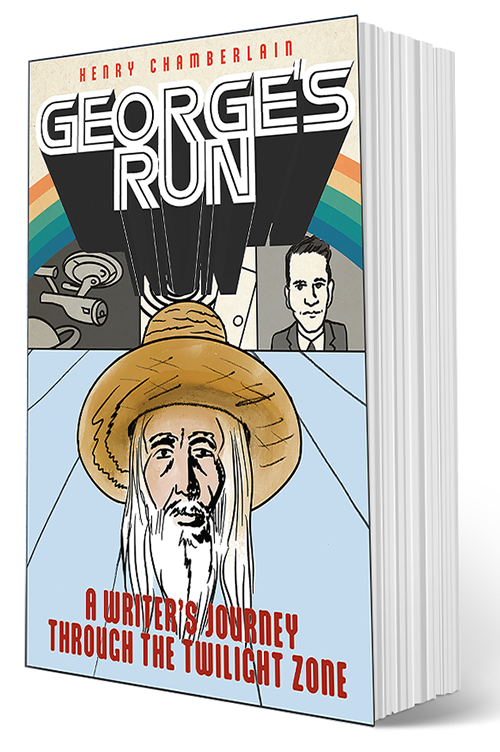
In the spirit of full disclosure, I was at Meltdown to promote my own ongoing comics series, GEORGE’S RUN, about the life and times of screenwriter George Clayton Johnson. However, as my regular readers know, and those of us in the industry fully appreciate, this is a labor of love, very interconnected, so I’m there just as much to embrace the scene and my fellow creators. Stay tuned because I will be posting reviews of some awesome comics that I picked up during my visit. If you are a creator, be sure to contact me about reviewing your work. For this post, I am providing you with a little guided tour that will whet your appetite.

ZINES & MINICOMICS

ZINES & MINICOMICS

As you can see from the photos and video, Meltdown is a fully stocked, and fully loved, place for comics and related items. Keep in mind, for those of you still unsure, that comics are not only part of the zeitgeist. Comics are definitely an art form in their own right. That’s been said many times and bears repeating. Comics provide an outlet, a platform, that is a highly specific form of expression. It attracts many stripes of folk including some of the brightest and whipsmart. The word “comics” means many things and, no doubt, is inextricably linked to the world of comedy, even when it’s far from funny. It’s no surprise then that the likes of comedy genius Patton Oswalt cannot help but love comics and write for comics too.

STAFF PICKS

STAFF PICKS

The day I made my visit, a special Bernie Sanders event was being set up. There are all kinds of cool things going on here from music to comedy. And, of course, there are all sorts of special comics events. The next big one is a March 18th signing by Daniel Clowes in support of his latest masterpiece, “Patience,” published by Fantagraphics Books.

MIKE LE'S OPEN IP WALL

MIKE LE’S OPEN IP WALL

Here’s the deal, there is not, or should not be, a great divide between indie/alt comics and superhero comics. That’s a given for a lot of us. But it’s one of those things I feel compelled to repeat as often as necessary. I want readers out there who have not been around comics for a while to come back and see what’s been brewing. That just instantly comes to mind when I’m in such a fine place as Meltdown. The love and the knowledge is clearly here, each member of the staff is carrying the torch. You see it in the careful and thoughtful displays and staff picks. What Amoeba Music is to music, Meltdown is to comics. I rest my case. So, be sure to visit our dear friends at Meltdown right here.

2 Comments

Filed under Comics, Daniel Clowes, Fantagraphics Books, LA Journal, Los Angeles, Media, Meltdown Comics, Patton Oswalt, pop culture